
Vandaag of morgen in huis

Kwaliteit gegarandeerd

Welkomstaanbiedingen ontgrendelen: GRATIS bezorging | Tot 80% korting | Gratis 30 dagen JoyPlus-proefperiode
Download de app
A ratchet set may seem straightforward at first: choose a few sizes, add a ratchet handle and you’re ready to go. In practice, the drive size, tooth count and access in tight spaces can make a big difference. Choose the wrong set and the ratchet may not fit, a socket could slip off or a spanner may be awkward to position around a nut.
This buying guide will help you compare ratchet sets based on features you can check. That way, you can find the right tools for car maintenance, machinery, installation jobs or tasks around the home without relying on marketing claims alone.
A set with lots of pieces isn’t automatically practical. First, check which sizes and drive types are included. A 1/4-inch ratchet set is handy for smaller jobs, but less suited to larger bolts. For general maintenance, 1/4, 3/8 and 1/2 inch drives are often a sensible choice.
Also check whether you’re buying a ratchet handle or a complete set with sockets. A handle on its own is only useful if you already have compatible sockets.
According to product specifications, a 72-tooth ratchet often has a working arc of around 5 degrees. A 90-tooth ratchet may have a working arc of around 4 degrees, according to the product information. This means you need to move the handle less before the mechanism engages again.
This is most useful when working in confined spaces. On its own, it doesn’t mean the ratchet is suitable for every heavy-duty application. So check the permitted torque, drive size and manufacturer’s instructions too.
Many ratchet spanners are made from chrome vanadium steel or a similar steel alloy. This is a useful specification to look for, but also consider:
A smooth finish can make dirt and grease easier to wipe off. A storage case with clearly marked sizes can help you avoid losing pieces.
The drive size determines which sockets fit the ratchet:
For metric fasteners, sizes in millimetres are important. A set covering, for example, 8 to 19 mm includes many common nut sizes, but check whether your job also requires 6, 7 or 22 mm, or any less common sizes.
A 72-tooth ratchet requires a relatively small return movement. According to the product information provided, a 90-tooth ratchet is designed to work with an even smaller operating angle. In an engine bay, under a sink or around machinery, this can make the difference between working smoothly and having to reposition the ratchet every time.
Don’t use a ratchet as a substitute for a torque wrench when the manufacturer specifies a particular tightening torque. For accurate tightening, a dedicated torque wrench is more suitable.
A flexible ratchet spanner, also known as a flex-head ratchet spanner, can make it easier to reach fasteners when pipes, panels or other parts are in the way. However, a hinged head isn’t necessary for every job. For straight, unobstructed work, a fixed head is often simpler and more compact.
For brake lines, a dedicated flare nut spanner is a better choice than a standard open-ended spanner. It grips more of the pipe nut and is specifically designed for this type of connection.
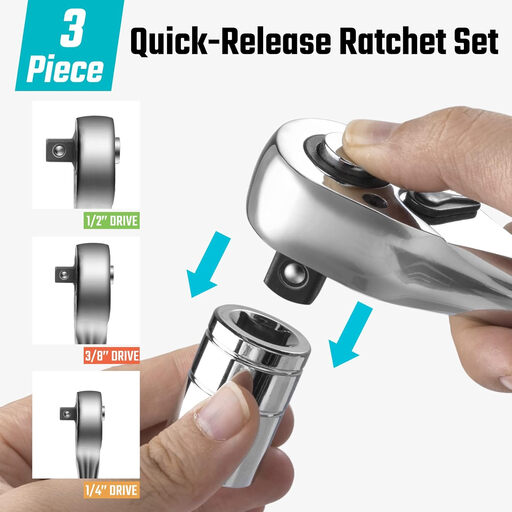
Why it suits these needs: These three separate ratchets cover the most commonly used drives for jobs at home, on the car or in a small workshop. The set comes in a storage case.
The three drive sizes are clearly split between the ratchets. According to the product description, they have 72 teeth and a 5-degree working arc, so you don’t need to focus on the number of pieces alone.
1/4-, 3/8- and 1/2-inch drives, quick release, reversible mechanism and a storage case.
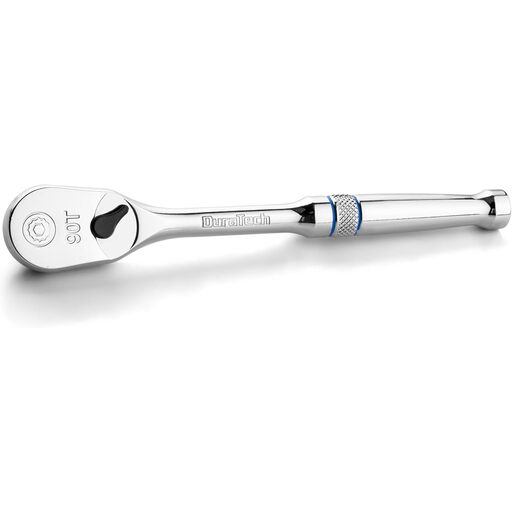
Why it suits these needs: This 3/8-inch ratchet spanner is designed for people who often work in a dusty workshop or a cramped engine bay and need a compact ratchet handle.
According to the product description, the mechanism has 90 teeth and a 4-degree operating angle. The fully enclosed head is designed to help keep dirt out, according to the same description.
3/8-inch drive, reversing switch, polished chrome finish and a small working arc.
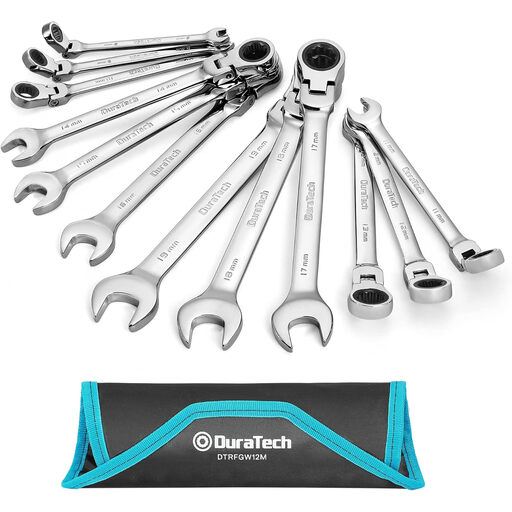
Why it suits these needs: These metric ratchet spanners are designed for mechanics and DIY enthusiasts who regularly work with different sizes and need extra reach around pipes or machine parts.
The set lists twelve sizes from 8 to 19 mm and a flexible head with a 180-degree range. According to the product description, the 72-tooth mechanisms have a 5-degree swing.
12 metric sizes, flexible head, chrome vanadium steel and a storage pouch with marked sizes.
Wipe oil, moisture and dirt off the tools after use. Store ratchets and sockets in a dry place, and keep pieces from moving loose around your toolbox. Use the correct socket size: a poor fit can damage the fastener. Don’t use a ratchet as a hammer or breaker bar unless the manufacturer explicitly allows it.
For brake lines, spark plugs or connections with a specified tightening torque, choose a dedicated tool. An ordinary socket ratchet isn’t the right solution for every job.
We’ve put together a complete, up-to-date list of products that meet these strict selection criteria and the applicable European safety regulations.
For many jobs on a passenger car, a 3/8-inch ratchet set is a practical starting point. A 1/4-inch ratchet can be useful for smaller fasteners, while larger bolts may require a 1/2-inch drive. Always check the socket size and the required tightening torque.
A 72-tooth ratchet can be useful in tight spaces, as its stated working arc is often around 5 degrees. For everyday use, the material, reversing switch, socket lock and correct loading are important too. Tooth count alone doesn’t determine whether a ratchet is suitable.
Choose a flexible ratchet spanner if you regularly work around obstacles, pipes or hard-to-reach fasteners. For straight, heavy-duty work, a fixed head may be more stable and straightforward. So consider your working environment and the range of sizes you need first.
