
Vandaag of morgen in huis

Kwaliteit gegarandeerd

Welkomstaanbiedingen ontgrendelen: GRATIS bezorging | Tot 80% korting | Gratis 30 dagen JoyPlus-proefperiode
Download de app
A good ratchet set is an indispensable tool for anyone who works on cars, bikes or assembles furniture. But the market is flooded with sets that look impressive at first glance, only to disappoint in practice. As a Joybuy Product Recommendation Officer, I see the purchases buyers regret every day. Before you invest, it's smart to know how to navigate the pitfalls of marketing hype and hidden defects.
Many sets seem like a great deal, but looks can be deceiving. Watch out for these common problems to avoid a bad purchase.
To find a set that will last for years, focus on the technical details that truly matter. These are the three most important specifications to check.
The drive size determines the size of the square connection between the ratchet and the socket. Each size has a specific purpose. A good tool set with a ratchet often includes multiple sizes.
A ratchet set with 1/4, 3/8, and 1/2 drives offers the most flexibility for a wide range of projects.
The number of teeth in the ratchet mechanism determines the swing arc: the minimum angle you need to move the handle to make the next "click."
The material determines the durability and strength of your tools. The two most common types of steel are:
Based on these criteria, we have selected a number of products that fit different user profiles.
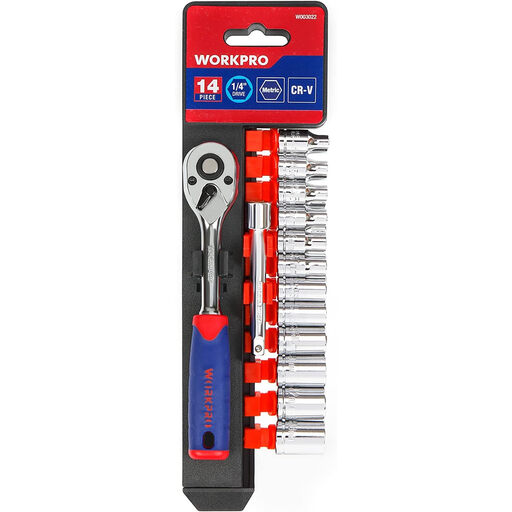
Why This Fits Their Persona: Perfect for those starting out with DIY projects who need a reliable basic set for furniture assembly, bike repairs and small jobs around the house. No superfluous parts, just the essentials.
This set avoids the "quantity over quality" trap. It focuses on the most commonly used metric sizes (4-13 mm) and combines this with a solid 72-tooth ratchet, which is uncommon in this price range.
72-tooth ratchet: Works smoothly in tight spaces.
CR-V steel: Durable and rust-resistant material for a long lifespan.
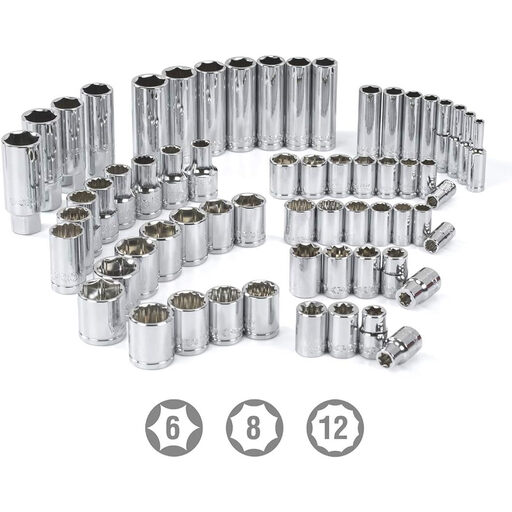
Why This Fits Their Persona: For the homeowner or hobbyist who wants to be prepared for any job. From assembling a garden shed to replacing a car battery, this comprehensive ratchet set in a case has a solution for almost any bolt or nut.
Although this set is huge, it doesn't compromise on the fundamentals. It includes ratchets and sockets in all three drive sizes (1/4", 3/8", 1/2") and is made of CR-V steel, ensuring the core of the set is reliable.
Extremely complete: Includes metric and SAE sizes, combination wrenches and a wide range of bits.
Organized case: Everything has its own place, keeping your tools neat and organized.
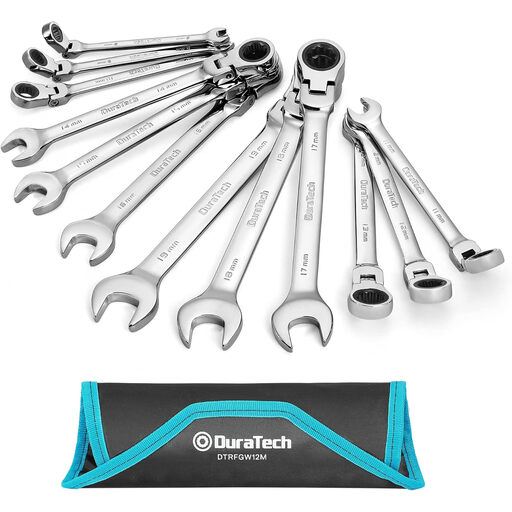
Why This Fits Their Persona: For the serious mechanic who works in tight and awkward spaces daily. This is not a traditional socket set, but a specialised ratcheting wrench set that combines speed and accessibility.
This set focuses purely on performance. It avoids the weak mechanism trap by combining a 72-tooth ratchet with a flex-head. This is a tool designed for efficiency, not just to fill a case.
180° flex-head: Reaches bolts at awkward angles where a standard ratchet can't.
Compact design: The combination of a box-end and ratcheting wrench is slimmer than a ratchet with a socket, ideal for limited space.
We have compiled a complete, up-to-date list of products that fully meet these strict selection criteria and all applicable safety regulations.
A 72-tooth ratchet has a 5-degree swing arc, while a 90-tooth ratchet only needs 4 degrees. In practice, this means you can tighten a bolt or nut in an even tighter space with a 90-tooth ratchet. For most jobs, 72 teeth is more than sufficient, but for professional mechanics who often work in compact engine bays, that extra degree can make all the difference.
Absolutely. A good ratchet wrench set, especially one with a 3/8" drive, is very versatile. The metric sockets you use for your car (e.g., 10mm, 13mm, 17mm) are also commonly used for furniture assembly, playground equipment or securing appliances. A comprehensive set is therefore an investment for both the garage and the household.
Maintenance is simple but important. Clean the sockets and ratchets with a cloth after use to remove dirt and grease. Store the set in the provided ratchet set case in a dry place to prevent rust. The ratchet mechanism itself rarely needs maintenance, but a drop of lubricating oil every few years can improve smoothness if you use the set intensively.
