
Vandaag of morgen in huis

Kwaliteit gegarandeerd

Welkomstaanbiedingen ontgrendelen: GRATIS bezorging | Tot 80% korting | Gratis 30 dagen JoyPlus-proefperiode
Download de app
A ratchet set may seem straightforward at first: choose a case with lots of components and you are ready to go. In practice, sets vary considerably in sizing, drive size, materials and ease of use. A large socket set is not automatically suitable for car repairs, while a compact ratchet can be more practical for bicycle or machine maintenance.
Pay particular attention to these three common pitfalls:
The drive size determines which sockets and accessories will fit. The most commonly used sizes are:
For most Dutch vehicles, a metric socket set is important. Check that the set includes the sizes you actually use, such as 8 to 19 mm for many general maintenance tasks. A combination of metric and SAE sockets can be useful for older, imported or American vehicles.
Also look for deep sockets, extension bars, universal joints and spark plug sockets. These accessories often determine whether you can actually reach a nut in a difficult-to-access position.
A 72-tooth ratchet has a working angle of approximately 5 degrees according to the product descriptions of several models mentioned. This means you do not have to move the handle as far before the mechanism engages again. According to the product descriptions, a 90-tooth ratchet can operate with an angle of approximately 4 degrees.
The difference may seem small, but in a cramped engine bay, one extra degree of movement can make a real difference. Also check:
A fine-tooth mechanism makes turning more efficient, but always use the ratchet within the specified load limits. For controlled tightening of wheel bolts, brake components or other fasteners to a specified torque, use a torque wrench.
Many ratchet sets use Cr-V steel, also known as chrome vanadium steel. In the product descriptions of the sets mentioned, this material is associated with heat treatment, hardness and wear resistance. These are verifiable product specifications, but they do not mean that every component is indestructible under all conditions.
A chrome-plated or polished finish can make cleaning easier after contact with oil and dirt. Also consider the quality of the storage solution. A sturdy case with marked positions helps prevent sockets from going missing. A roll-up tool bag is particularly practical for a ratchet combination spanner set or loose combination ratchet spanners kept in the car.
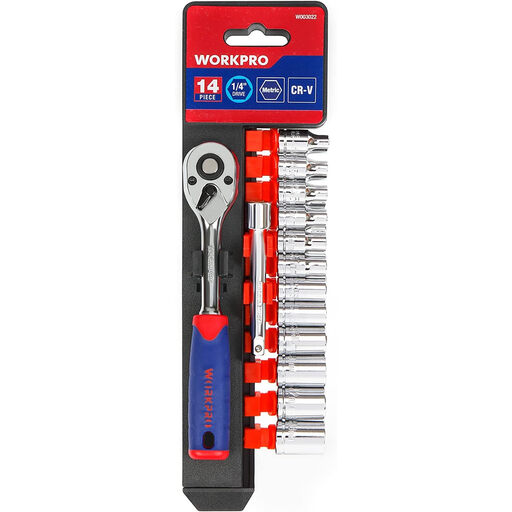
Why it suits this profile: This compact set is designed for general DIY jobs, household maintenance and light mechanical work. The metric sizes from 4 to 13 mm are easy to navigate for anyone looking to start with one practical basic set.
The contents and sizing are clearly specified. This means you do not pay for a large, confusing case when you mainly need smaller metric sizes.
14-piece set with 1/4-inch drive, 72 teeth, quick release, extension bar and marked holder.
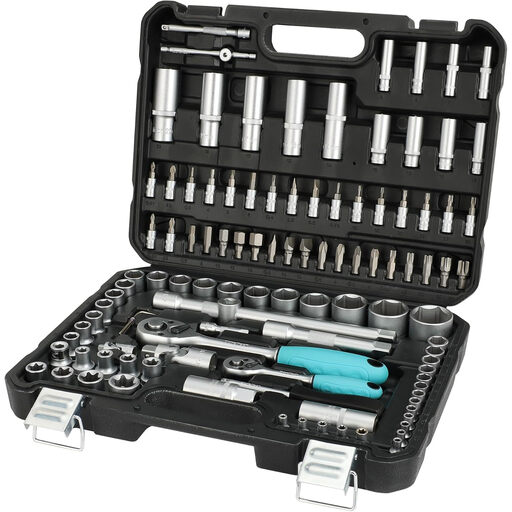
Why it suits this profile: The combination of 1/4- and 1/2-inch ratchets, sockets, bits, extension bars and universal joints is ideal for users who combine car, motorbike and workshop jobs.
The set lists the included drive sizes, accessories and materials separately. This allows you to check in advance whether the contents match the tools you already have in your garage.
108 components, Cr-V sockets, S2 bits, two 72-tooth ratchets, quick release and a sturdy storage case.
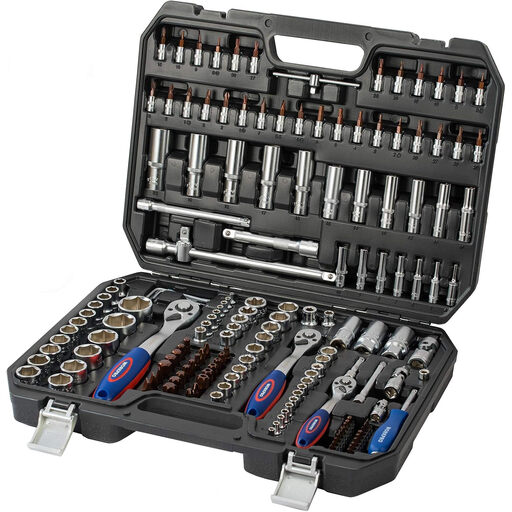
Why it suits this profile: For a workshop, car repair business or dedicated DIY enthusiast, this set offers multiple drive sizes and a wide selection of sockets, deep sockets, Torx bits, bits and accessories.
The extensive parts list makes it clear which sizes and attachments you receive. However, check in advance that you need this range and have room to store the case.
172 components, 1/4-, 3/8- and 1/2-inch ratchets, 72 teeth, deep sockets, spark plug sockets, Torx and universal joints.
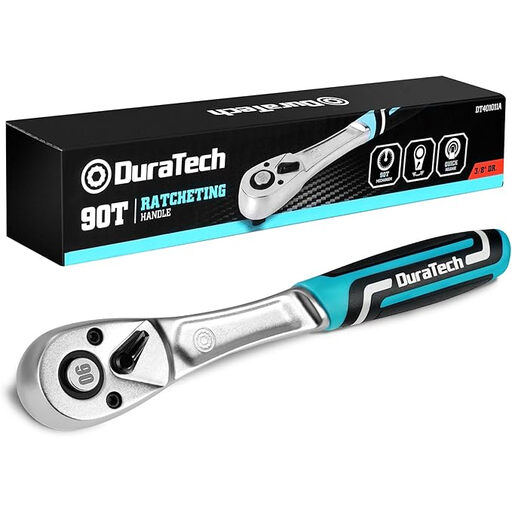
Why it suits this profile: This standalone ratchet is ideal if you already have a socket set and mainly need a fine-tooth mechanism for hard-to-reach fasteners.
The stated 4-degree working angle is more specific than simply advertising a ‘fine-tooth’ mechanism. Also check compatibility with your 3/8-inch sockets.
90 teeth, 4-degree working angle, 3/8-inch connection, quick release and reversible direction.
We have put together a complete, up-to-date list of products that fully meet these strict selection criteria and the applicable European safety regulations.
For general car repairs, a set with 1/4-, 3/8- and 1/2-inch drive sizes is versatile. Look for metric sizing, deep sockets, extension bars and, where necessary, spark plug sockets. For specific jobs, first check the sizes of the bolts and nuts on your car.
A 90-tooth ratchet generally has a smaller return angle than a 72-tooth model: the product descriptions mentioned give approximately 4 degrees compared with 5 degrees. This can be helpful in confined spaces. A 72-tooth ratchet is sufficient for many maintenance tasks. Also consider the head shape, handle and maximum load.
Wipe sockets and ratchets clean and dry after use, particularly after contact with oil, moisture or dirt. Store each component in its marked position. Some models recommend lightly oiling the ratchet mechanism periodically. Do not use a ratchet as an impact tool and do not exceed the specified load limit.
