
Cook preparing a full dessert table
You’d prefer to make the sauce in one go, so you’re looking at the usable blending capacity and how easily you can pour the coulis from the beaker.


For a small amount of coulis, a hand blender with a suitable beaker is a practical choice. For a larger batch to serve a group, a jug blender gives you more room to blend, while a personal blender is best suited to small portions. If you want seedless coulis, be sure to strain it and check the usable capacity, permitted ingredients and cleaning instructions for the model you choose.
You’d prefer to make the sauce in one go, so you’re looking at the usable blending capacity and how easily you can pour the coulis from the beaker.
You care about a smooth texture and know that blending alone won’t remove the need to strain it.
You make smaller portions and weigh up compact storage and easy washing-up against the option to prepare a batch for a group in one go.
Best for: a small to medium amount that you want to purée in a tall, suitable beaker.
Bear in mind: the beaker determines how much you can make at a time. Strain the sauce separately if you want to remove the seeds.
Best for: larger quantities you want to make for several people at once.
Bear in mind: the jug takes up space and isn’t necessarily practical for a small portion. Check the minimum working quantity.
Best for: small batches where a compact beaker matters more than making one large batch for a group.
Bear in mind: a larger quantity may require several blending rounds, as well as pouring and straining.
| Consideration | What to look for | Who is it most important for? |
|---|---|---|
| Smooth, seedless sauce | Keep a fine sieve to hand if you want to remove the seeds from the sauce. | If you want to serve smooth coulis, remember to strain it after blending. Around 29% of consumers in this buying context prioritise a seedless texture. |
| Enough sauce in one go | Compare the quantity you want to make with the permitted working capacity, not just the beaker’s stated capacity. | For a meal with others, you’ll ideally want to make enough sauce in one batch. Around 29% of consumers give top priority to making one batch. |
| Blending small portions | Check the minimum quantity of ingredients and the instructions for hot ingredients. | If you only need a small amount, you won’t want to use a larger jug than necessary. Around 24% of consumers prioritise suitability for small portions. |
| Cleaning after use | Check the cleaning instructions for each part, including the blade and beaker. | If you want to spend less time washing up after cooking, easy cleaning matters. Around 18% of consumers say it’s their top buying priority. |
The raspberry coulis recipe strains the sauce after blending. So a smooth sauce isn’t automatically seedless.
First choose an appliance that suits the quantity, then plan to strain the sauce separately if you want to serve seedless coulis.
Straining takes extra preparation time and adds a sieve to the washing-up.
The stated capacity doesn’t necessarily tell you the minimum or maximum quantity you can process according to the manual.
Check the permitted fill levels for the exact model so you can match its capacity to your recipe.
A small amount may need several blending rounds in a compact beaker, while a large jug may be impractical for a small quantity of sauce.
Cleaning instructions may vary between parts. For the NB603DG, nutribullet provides separate instructions for the blade and beakers.
Follow the instructions for each part. For the NB603DG, nutribullet says to rinse the blade with soap and water and place the beakers on the top rack of the dishwasher.
Braun offers a hand blender option with the MultiQuick MQ50236M, as well as a separate jug blender option with the PowerBlend 3 JB3150.
The VitaPower range includes the compact MMB2111S with a 0.6 l beaker and the MMB6141B jug blender with a 1.5 l jug.
The Original 600 NB603DG is a personal blender supplied with a 700 ml Tall Cup, worth considering for smaller batches.
These Joybuy products include jug blenders for larger batches, personal blenders for small portions and hand blenders for puréeing in a suitable beaker. Check the manual for the exact model for guidance on hot ingredients and cleaning, and read the product information about safety and parts that come into contact with food.
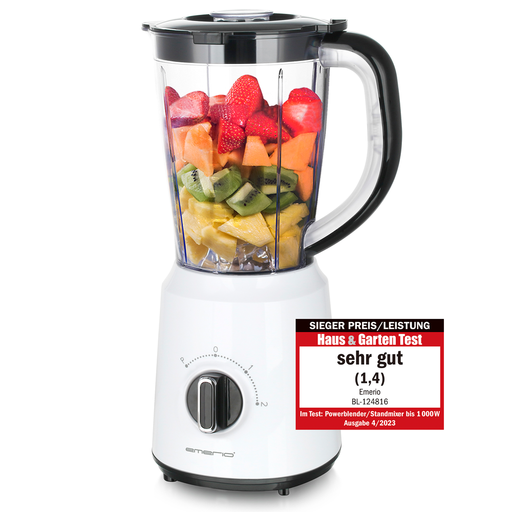 Image unavailable
This jug blender is an option for puréeing fruit to make a larger quantity of sauce.
Capacity: 1.5 l. It has two speeds, a pulse function and four stainless steel blades. The product description warns against filling the jug with liquids above 60 °C.
 Image unavailable
This jug blender is designed for fruit and vegetable blends and could suit making a larger quantity of sauce.
It has a stated power of 600 W, a capacity of 1.5 l and three speed settings.
 Image unavailable
The 500 ml jug makes this one to consider for a smaller quantity of sauce.
It has a stated power of 250 W and one speed.
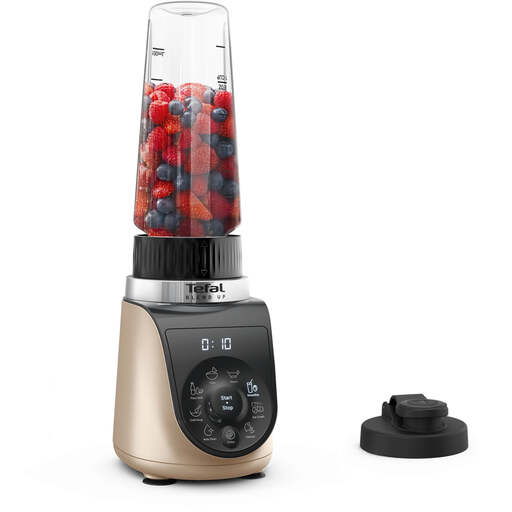 Image unavailable
The product name suggests this is a personal blender for smoothies. Check the product information to see whether this version is suitable for the quantity of coulis you want to make.
 Image unavailable
This hand blender lets you purée sauce in a suitable beaker.
It has 25 speeds plus a turbo setting, a splash-control system and a chopper. The description also mentions a 600 ml blending beaker.
Don’t assume it will: the raspberry coulis recipe strains the sauce after blending. Include this step if you want to serve seedless coulis.
No. Don’t assume you can based on the product category. Check the manual for the specific model to see which temperatures and fill levels are permitted; a recipe isn’t a product specification.
Follow the instructions for each part. For the NB603DG, nutribullet says to rinse the blade with soap and water and place the cups on the top rack of the dishwasher. This guidance doesn’t automatically apply to other models.
Applicable European safety requirements apply to electrical kitchen appliances; Ondernemersplein mentions CE marking and an EU Declaration of Conformity, among other things. Parts that come into contact with food are also subject to food contact material rules, as explained by the Netherlands Food and Consumer Product Safety Authority. This general framework doesn’t prove that a specific appliance complies.
No. According to the Dutch government, there is no fixed statutory warranty period in the Netherlands: what you can expect from a product depends on the product and the circumstances. Your statutory rights to a product that works as it should are separate from any manufacturer’s warranty.