
Cooking for a crowd
You want to make the coulis in manageable batches, so you’re looking at usable jug capacity and how many batches you’ll need to blend.


Choose a blender based on its usable capacity per batch, not just the total jug capacity, which can be considerably larger. A standard blender may be enough for soft raspberries, but you’ll still need a fine sieve for seedless coulis. If you’re cooking the raspberries anyway, a pan and sieve may be all you need. Also check which parts can be removed and how the product specifications say they should be cleaned.
You want to make the coulis in manageable batches, so you’re looking at usable jug capacity and how many batches you’ll need to blend.
You want as few noticeable seeds as possible and are prepared to press the purée through a fine sieve as a separate step.
You’re comparing which parts can be removed and how the instructions say they can be cleaned.
First, compare the quantity you want to purée per batch with the usable capacity. Then decide whether you’re happy to include a separate sieving step and allow extra time for cleaning.
| What to consider | What should you check? | Who does this matter to? |
|---|---|---|
| Quantity per batch | Compare the usable capacity with your recipe and stay within the maximum fill line. Philips lists an effective capacity of 1 l and a maximum capacity of 1,9 l for the HR2041/00; Tefal lists a usable capacity of 1,25 l and a total capacity of 2 l for the BL420131. | If you’re making several portions for a community meal, you’ll want to know how much coulis you can purée at a time. Around 36% of consumers put the manageable quantity per batch at the top of their list. |
| Seeds and a smooth texture | Plan to use a fine sieve if you want coulis without bothersome seeds; a blender won’t replace this step. | If you want to serve a smooth sauce, allow time to sieve it after blending or cooking. Around 29% of consumers prioritise a seedless texture. |
| Cleaning | Check which parts can be removed for each model and which, according to the instructions, are dishwasher-safe. This can vary by part. | After several batches, you’ll want to remove fruit residue without unnecessary hassle. Around 21% of consumers give cleaning top priority. |
| Purchase and future use | Consider whether you’ll also use the blender for other dishes after the meal. If you’re cooking the raspberries anyway, a pan and sieve may be all you need. | If you’re buying the blender mainly for this one occasion, consider whether you’ll use it enough afterwards. Around 14% of consumers first look at the balance between the purchase and how much they’ll use it after the meal. |
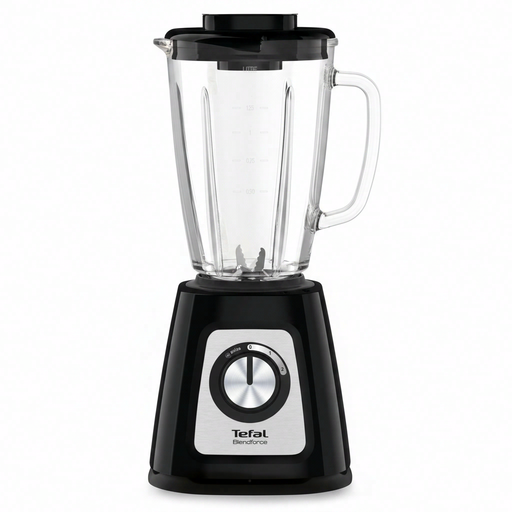
The Philips HR2041/00 has a maximum capacity of 1,9 l and an effective capacity of 1 l. For the Tefal BL420131, Tefal lists a total capacity of 2 l and a usable capacity of 1,25 l.
Plan your batches using the usable capacity of the exact model and stay below the maximum fill line.
Recipes from Allerhande and Rutger Bakt describe a separate sieving step for raspberry sauce or coulis.
Use a blender to purée the fruit, then pass the sauce through a fine sieve if you want to remove the seeds.
ACM ConsuWijzer explains that your statutory guarantee exists alongside any manufacturer’s or seller’s guarantee.
Check what any additional cover includes and, if a fault occurs, remember to consider your statutory rights with the seller too.
The HR2041/00 reviewed here is a jug blender with one speed setting and a pulse function.
According to Tefal, the Blendforce II BL420131 reviewed here has a usable capacity of 1,25 l and a removable blade holder.
According to Braun, the PowerBlend 3 JB3150BK reviewed here has a glass jug with a stated liquid capacity of 1,5 l and a pulse function.
According to Bosch, the VitaPower Serie 4 MMB6141B reviewed here has a jug capacity of 1,5 l. The separate MMB2111S comes with a 0,6 l cup.
This selection focuses on jug blenders for puréeing fruit or making sauce. For seedless coulis, you’ll also need to sieve it separately.
 No image available
The effective capacity of 1 l helps you plan your batches; you’ll still need to sieve the coulis to remove the seeds.
Maximum capacity: 1,9 l. One speed setting and a pulse function.
According to the product information, do not blend ingredients hotter than 60 °C.
 No image available
The stated capacity of 1,5 l is useful if you want to purée sauce in batches; keep a sieve handy too if you’re making seedless coulis.
Capacity: 1,5 l. Power: 1200 W.
According to the product information, let hot ingredients cool first.
 No image available
The stated jug capacity of 1,5 l can help you plan your batches; sieving is still a separate step if you want seedless coulis.
Jug capacity: 1,5 l. Power: 1000 W.
According to the product information, do not blend ingredients hotter than 80 °C and stay within the maximum fill line.
 No image available
The product name identifies this as an 800 W jug blender; you’ll also need a sieve for seedless coulis.
Power: 800 W.
 No image available
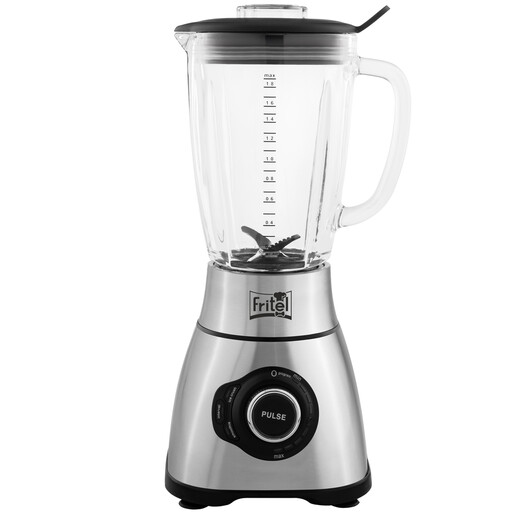
The product name specifies a 1,8 l glass jug; you’ll still need to sieve the coulis separately if you want it seedless.
Jug capacity: 1,8 l. Power: 1800 W. Nine speeds.
Press the puréed or cooked raspberries through a fine sieve. Both an Allerhande recipe and a Rutger Bakt recipe describe this as a separate step.
Don’t assume a blender is heat-resistant just because it’s a blender. Consumentenbond advises letting boiling liquids cool a little first. Also follow the instructions for your exact model, stay within the maximum fill line and make sure the lid is securely closed.
Wash your hands, clean your utensils and rinse fresh fruit under running water. Voedingscentrum recommends keeping your fridge at 4 °C and not leaving perishable food out of the fridge for more than 2 hours. An Allerhande recipe recommends refrigerating the coulis and making it no more than 3 days ahead; don’t automatically apply that recipe’s storage time to a different preparation.
These requirements don’t automatically apply to a one-off private dinner. NVWA describes a mandatory food safety plan for anyone who sells food several times a year, and a legal requirement for businesses offering food to consumers to provide allergen information. If you sell food or provide catering as an organisation, check which rules apply to your circumstances.
No. According to ACM ConsuWijzer, your statutory guarantee exists alongside any manufacturer’s or seller’s guarantee for as long as the product should last with normal use, based on what you could reasonably expect. The seller is responsible for providing an appropriate solution if the product is faulty; there is no fixed statutory period of exactly two years.