
Vandaag of morgen in huis

Kwaliteit gegarandeerd

Welkomstaanbiedingen ontgrendelen: GRATIS bezorging | Tot 80% korting | Gratis 30 dagen JoyPlus-proefperiode
Download de app
A bowl of instant noodles is quick to prepare, but the wrong choice can disappoint. The noodles may turn soggy, the broth may be too salty or the bowl may prove too small for a generous serving. The same applies to tableware: attractive photos are not enough. Dimensions, material and care instructions determine whether a ramen bowl is genuinely practical for everyday use.
In this guide from the Joybuy Product Recommendation Officer, we compare ramen noodles and bowls based on verifiable product information. This makes it easier to choose between instant noodles, Chinese instant noodles, Korean ramen and a ceramic ramen bowl for home use.
Words such as “beef”, “spicy” or “original soup” do not tell you how much seasoning, salt or how many allergens a product contains. Always check the ingredients list and nutritional information. For example, Lamianfan Spicy and Sour Beef Noodles lists 6.4 grams of salt per 100 grams. The 128-gram pack contains wheat, soya and sesame as allergens.
A flavour name is therefore an indication, not a guarantee that the product suits your preferences or dietary requirements.
A wide pasta bowl may be suitable for pasta or salad, but its actual capacity also depends on its height and shape. With ramen, you also need to consider whether there is enough room for noodles, broth, vegetables and toppings.
For example, a 15 cm bowl is more compact than a 7.5- or 9-inch model. As well as the diameter, check the capacity in millilitres. According to the product information, the YumiPLUS set has a capacity of 1200 ml per bowl, while the Maxcook ramen bowl is listed as holding 1.2 litres.
A product that is suitable for microwave use is not automatically suitable for an oven, hob or sudden temperature changes. Ceramic can crack due to thermal shock. Check each product individually to see whether microwave, oven, fridge, freezer and dishwasher use are specified.
The YumiPLUS 2-piece ceramic set is described as suitable for microwave use, but oven or hob use is not mentioned. Always follow the instructions on the product page and packaging.
Instant noodles are convenient for students, working days and quick lunches. Look out for:
Whether you are choosing Japanese noodle soup, Korean ramen or beef noodles, the broth can vary considerably in spiciness, salt content and the presence of fish or soya products.
Many instant noodles contain wheat. Chinese instant noodles may also contain soya, sesame or celery. NongShim Tempura Udon lists wheat and fish as allergens. Bai Xiang Chicken Noodle Soup lists wheat, soya and celery.
Read the current packaging before eating, particularly if you have allergies. Product information can change, and the packaging is the most direct source for the ingredients.
These features are practical for everyday use:
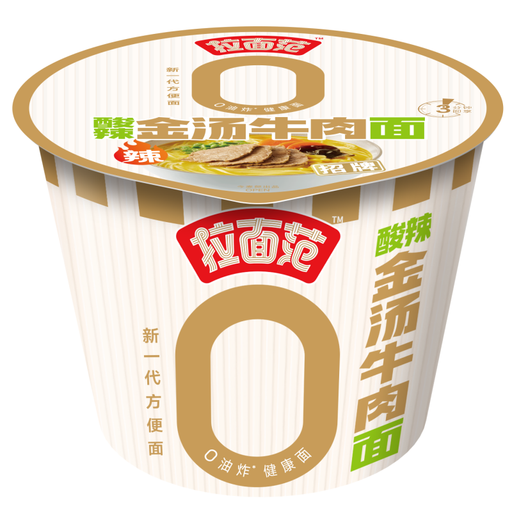
Why it suits you: A complete meal in a bowl for anyone who wants to eat quickly without buying separate ingredients. According to the product description, add boiling water and leave to stand for 3 minutes.
The product information specifies non-fried wheat noodles and separate sachets for soup and vegetables. However, check the allergens and salt content.
128 g per bowl, 3-minute preparation, with vegetables, soup base and noodle cake included.
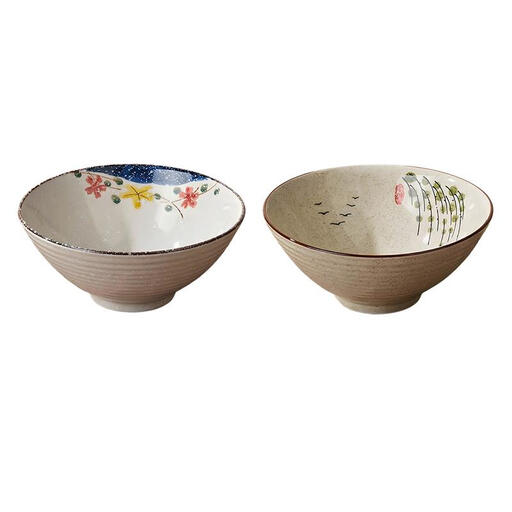
Why it suits you: For households wanting one bowl for ramen, soup, pasta, salad and rice dishes. The product information specifies 1200 ml per bowl.
The capacity is clearly specified, making it less likely that you will choose a noodle bowl that is too small. Oven use is not mentioned in the product information.
Set of 2, 1200 ml per bowl and described as suitable for microwave and dishwasher use.
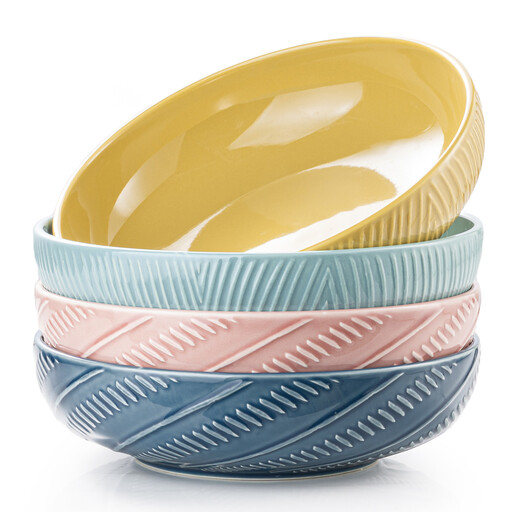
Why it suits you: A set of four is practical for families or anyone who regularly serves pasta, soup, salad and noodles.
The shape and dimensions are specified: 8.5 inches in diameter and 2.4 inches high. This helps you judge portion sizes and cupboard space.
Set of 4, stackable and described as suitable for microwave, oven, fridge and dishwasher use.
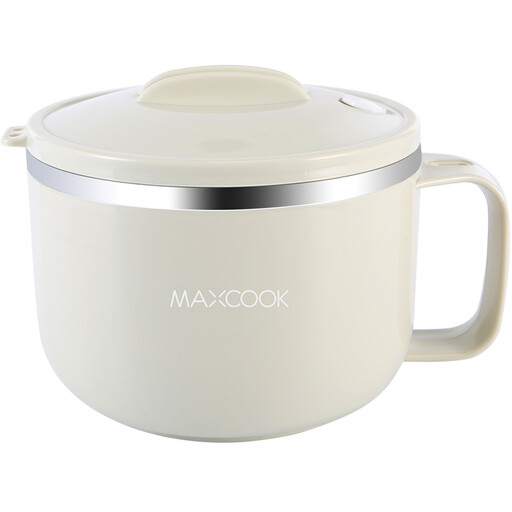
Why it suits you: A lightweight, shatter-resistant option for bedrooms, shared kitchens or lunches where you want to use a lid.
The 1.2-litre capacity is clearly specified. Stainless steel also avoids the risk of ceramic breakage, although the bowl is not the same as a microwave-safe bowl.
304 stainless steel, 1.2-litre capacity and a lid according to the product name.
Explore a current selection of noodle and soup bowls in a range of materials, sizes and styles.
Brand information about flavour or regional inspiration comes from the product description of the relevant brand. This is not an independent assessment of performance or taste.
For a standard portion of instant noodles, a bowl of around 800 ml is often suitable. If you are adding extra vegetables, egg or meat, 1000 to 1200 ml is more practical. Do not look only at capacity: consider the diameter and height too. A deep soup bowl holds broth more effectively, while a wide pasta bowl provides more space for toppings.
Only if the bowl is suitable for boiling water and the manufacturer permits this. Also check whether the bowl is microwave-safe if you want to use it for reheating. Do not pour boiling water into a cold bowl that has just come out of the fridge; a sudden change in temperature can damage ceramic.
Store instant noodles in a cool, dry place away from direct sunlight. The exact best-before date is shown on the packaging. Do not use a bowl product if its packaging is damaged, and follow the preparation instructions provided. For ceramic bowls, their lifespan mainly depends on careful use, avoiding thermal shock and checking for cracks or chips.
