
Vandaag of morgen in huis

Kwaliteit gegarandeerd

Welkomstaanbiedingen ontgrendelen: GRATIS bezorging | Tot 80% korting | Gratis 30 dagen JoyPlus-proefperiode
Download de app
At first glance, picking a ramen bowl seems straightforward. But a capacity that’s too small, an awkward lid, or a material that isn’t microwave-safe can quickly lead to disappointment. Terms like “Japanese style”, “bamboo” and “oven-safe” only mean something once you check the actual product specifications.
In this buying guide, we focus on the points that make a real difference in British households: capacity, material, heat use, cleaning and pack size.
A 6 or 7 inch bowl may look roomy, but the usable capacity depends on the shape and depth. For a small portion of noodles, around 700 to 900 ml is often practical. If you serve plenty of broth, toppings and noodles, you’ll need a large soup bowl of about 1.2 to 1.5 litres.
Always check the stated capacity. A tall, narrow bowl may retain heat differently to a wide one, but the most important thing is how much food and broth it can hold without spilling.
A bowl with a lid is handy for covering food or taking it with you. However, the lid may be made from a different material to the bowl. Check whether the lid is separately suitable for the microwave and whether it must not be sealed airtight.
Hot liquids can create pressure. Always follow the manufacturer’s instructions. For the YumiPLUS bowl with lid, the product description states, for example, that the lid must not be sealed airtight and should be removed before use in the microwave if any metal is present.
A ceramic bowl may feel sturdy, but ceramic remains fragile and is sensitive to sudden temperature changes. A stainless steel bowl is generally less prone to breaking if dropped, but it cannot go in the microwave.
With a disposable bamboo fibre bowl, it’s wise to check exactly what the bowl is intended for. Look at the capacity, the number of pieces per pack, the temperature limits and the information about food contact. “Bamboo fibre” is no reason to automatically assume a product is compostable or suitable for long-term reuse.
Choose the capacity based on how you’ll use it:
A wide rim can make the food easier to reach. A deep shape reduces splashing with soup, but does need enough stability on the table.
Look out for these differences:
A brand’s claim about, for example, scratch resistance, heat retention or colour fastness should be read as a statement according to the brand’s product description, not as a universal guarantee.
A stackable bowl saves space in a British kitchen cupboard. For decorative patterns, a soft sponge is better than an abrasive cleaner. For every bowl, check whether dishwasher and microwave are allowed; don’t take “assumed” or unspecified features as confirmation.
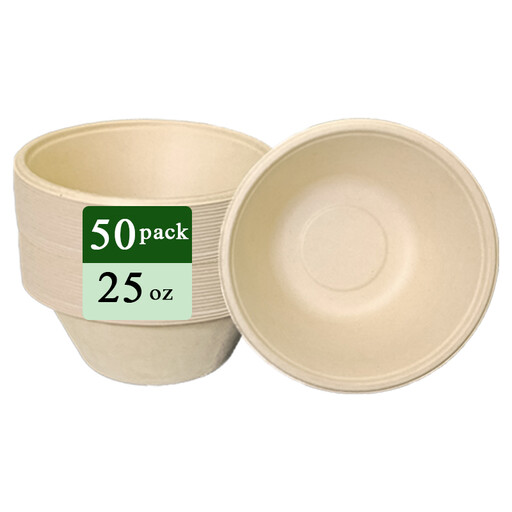
Why this fits the profile: A pack of 50 bowls is practical for student houses, birthdays or an event where washing up isn’t an option.
The 25 oz capacity and the pack size are clearly stated. Do check the temperature and usage limits before buying.
Bamboo fibre according to the product name; 50 pieces per pack; suitable for situations with many guests.
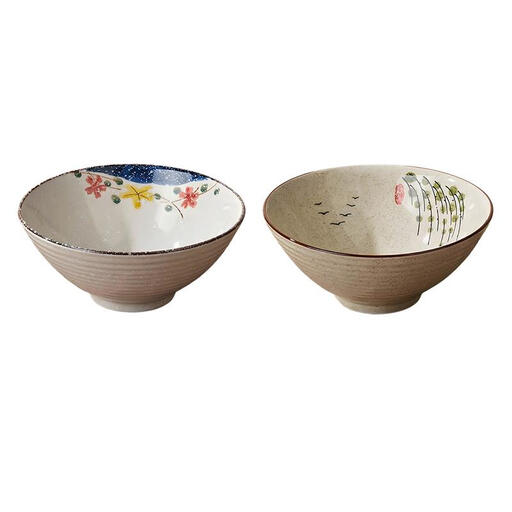
Why this fits the profile: This set of two large ceramic bowls suits anyone looking for ramen tableware that can also be used for pasta, salad and rice dishes.
The capacity is concretely stated as 1200 ml per bowl. The product description mentions microwave use; check the current instructions before heating.
Set of 2; ceramic; 1200 ml per bowl; Japanese style with underglaze decoration according to the product description.
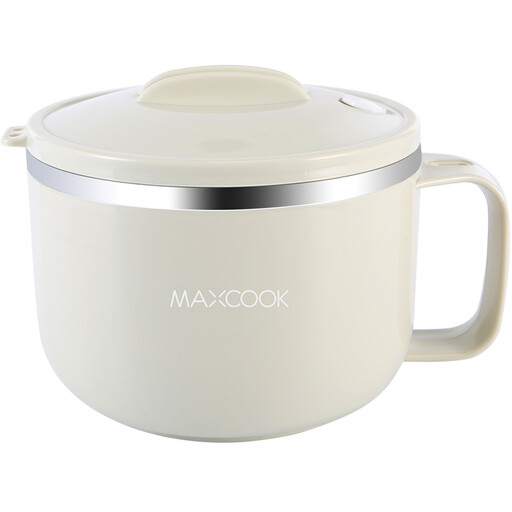
Why this fits the profile: The combination of 304 stainless steel, 1.2 litre capacity and a lid is aimed at regular use at home, school or the office.
The material type and capacity are specified. Because it’s metal, this bowl should not go in the microwave.
304 stainless steel; 1.2 litres; lid; design with the possibility to hold a mobile phone according to the product name.
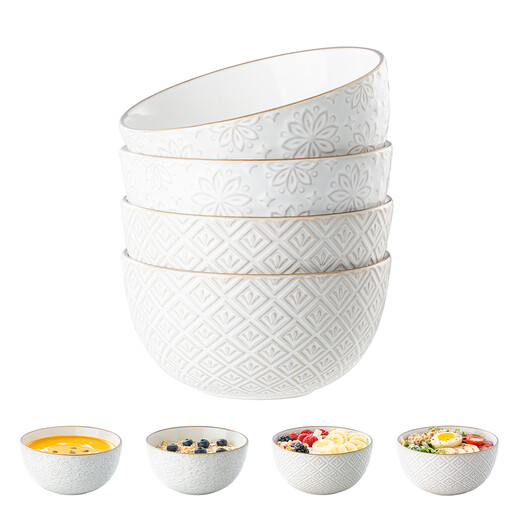
Why this fits the profile: A set of four is handy for families who want to use one type of ceramic bowl for soup, ramen, noodles, salad and breakfast.
The set size, 29 oz capacity and usage features are stated. Use oven gloves and avoid sudden temperature changes.
4 ceramic bowls; stackable; the product description mentions use in microwave, oven, freezer and dishwasher.
We’ve put together a full, up-to-date list of products that fully meet these strict selection criteria and current European safety regulations.
For a standard portion of ramen or udon, a capacity of around 1.2 litres is practical. If you use extra broth, egg, vegetables or other toppings, it’s better to look at 1.4 litres or more. For smaller portions, a bowl of around 700 to 900 ml will suffice.
This varies by product. Only use a ceramic bowl in the microwave when this is clearly stated in the product information. Also check the lid separately and avoid large temperature differences, such as filling a cold bowl directly with boiling hot soup.
Don’t use abrasive cleaning products, stack bowls carefully and check them regularly for cracks or damage. With ceramic, it helps to avoid sudden temperature changes. A stainless steel bowl is less prone to breakage, but has other limitations, such as not being usable in the microwave.
