
Workshop leader for a larger baking group
Wants to bake several trays per batch, so looks for suitable tray sizes, interior space and shelf levels specified for the chosen oven setting.


First, choose an oven based on how many raisin buns and baking trays you want to use per batch: the capacity in litres doesn’t tell you how many buns will actually fit. If you have a suitable kitchen unit and want to use several trays at once, it’s worth considering a built-in oven with a specified multi-level baking function. Without a suitable unit, a freestanding oven may be a good option, provided the tray and available space are suitable. Steam assistance is only necessary if it suits your teaching method or recipe.
Wants to bake several trays per batch, so looks for suitable tray sizes, interior space and shelf levels specified for the chosen oven setting.
Doesn’t always have a suitable kitchen unit and is weighing up a freestanding oven against smaller or consecutive batches.
Can install a built-in oven and choose between standard oven settings and optional steam assistance, depending on the teaching method.
Choose this when: you have a suitable kitchen unit and want to bake dough on more than one tray at a time.
Bear in mind: the unit dimensions and which trays are suitable for your preferred oven setting; Bosch specifies three shelf levels for the HBA534BB3, but supplies just one universal pan.
Choose this when: there’s no suitable kitchen unit or the workshop space calls for a freestanding set-up.
Bear in mind: the space available and the usable size of the supplied baking tray; you may need to bake smaller or consecutive batches.
Choose this when: you specifically want to demonstrate a recipe or baking method that uses added steam.
Bear in mind: steam assistance isn’t the same as full steam cooking; Electrolux specifies baking on two levels for the KODGH40BX.
Before buying, decide how many buns you want to bake per batch and consider the space, oven setting and cleaning involved in your workshop.
| What to consider | What should you check? | Who is this important for? |
|---|---|---|
| Number of buns per batch | Measure the oven interior and baking tray, and check which trays and shelf levels are suitable for your chosen oven setting. The Consumentenbond also recommends checking the internal dimensions. | If I’m leading a larger group, I want to know how many buns of my chosen size will fit at once, with enough space between them. Around 36% of consumers give baking capacity top priority. |
| Suitable oven setting | Check which settings and temperature options the exact model offers. Koopmans recommends 220 °C for an electric oven or 200 °C with fan assistance for one recipe for six cinnamon and raisin buns, for 30–35 minutes in a preheated oven. These are recipe instructions, not general settings. | If I’m basing the workshop on a particular recipe, I want to be able to use the recommended oven setting. Around 29% of consumers prioritise whether the oven suits the recipe. |
| Positioning and portability | For a built-in oven, compare the kitchen unit dimensions with the installation diagram for the exact model. For a freestanding oven, check the appliance dimensions and set-up instructions. | If I bake at different venues, a suitable set-up matters more than extra features. Around 21% of consumers give positioning and flexibility top priority. |
| Energy use and cleaning | Compare energy use on the same basis, such as per cycle, and check which parts are removable and what the manual says about cleaning. Milieu Centraal recommends considering energy use per use and choosing an oven that isn’t unnecessarily large. | If I use the oven regularly for workshops, I also want to factor in energy use and cleaning. Around 14% of consumers give ongoing running costs and maintenance top priority. |
The stated capacity isn’t the same as the usable tray space. Tray sizes and included accessories also vary between models.
Measure the oven interior and trays, then map out how you plan to arrange the buns, leaving enough space between them, before choosing a model.
Adding steam during a standard oven function isn’t necessarily the same as full steam cooking.
Check what the function does on the exact model and choose steam assistance only if it suits your teaching method.
For the Severin TO 2056, the manufacturer’s product description mentions fan assistance, while its technical table says the fan function isn’t available.
Before relying on an oven setting, confirm that it’s available on the exact model by checking the manual or contacting the manufacturer directly.
Built-in ovens for a dedicated baking space; the HBA534BB3 is one option for baking on multiple levels.
Freestanding ovens, such as the OV607B, for spaces without a suitable kitchen unit.
Built-in ovens with features including steam assistance; the KODGH40BX is worth considering if this function is part of your teaching method.
Compact freestanding baking and toast ovens, such as the TO 2056; check the model details before making a particular oven setting a deciding factor.
This selection includes freestanding and built-in ovens for a dedicated baking space. The right option depends on factors including the space available and how many baking trays you want to use per batch.
 No image available
This freestanding model is an option if the workshop space doesn’t have a suitable kitchen unit.
The product name specifies a 65-litre capacity and 2000 W power.
 No image available
A built-in model to consider if the workshop space has a suitable kitchen unit.
The product name specifies a 71-litre capacity and 3D Hot Air.
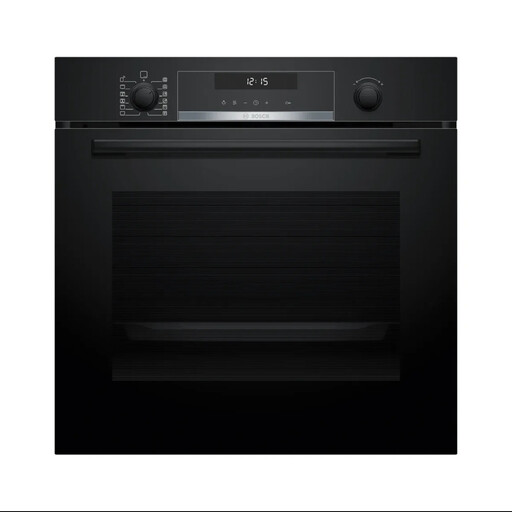 No image available
This built-in model is designed for a dedicated space with a suitable kitchen unit.
The product name specifies a 71-litre capacity, Air Fry, Home Connect and pyrolytic cleaning.
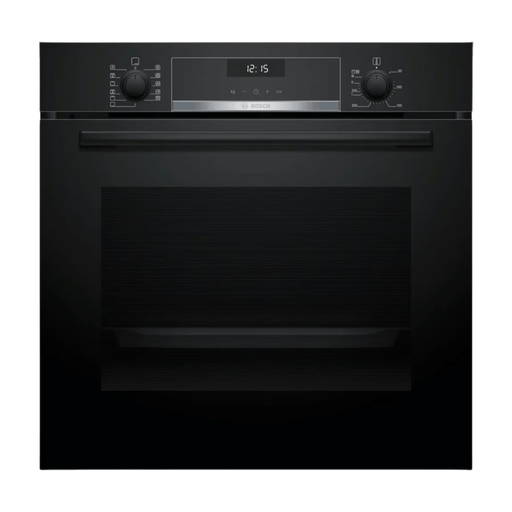 No image available
This built-in model is worth considering if you have a dedicated baking space with a suitable kitchen unit.
The product name specifies a 71-litre capacity, Air Fry and EcoClean Direct.
 No image available
This built-in oven is an option for a dedicated baking space; check beforehand that the trays you want to use will fit.
Bosch specifies a 71-litre capacity and 3D Hotair for up to three shelf levels. This model comes with one wire shelf and one universal pan, so you may need to buy extra suitable trays if you want to bake on multiple levels.
No, follow the settings for the recipe you’re using. For its recipe for six cinnamon and raisin buns, Koopmans recommends 220 °C for an electric oven or 200 °C with fan assistance, and says to preheat the oven. These settings aren’t automatically suitable for other dough or for baking on multiple trays.
Compare the measured kitchen unit with the built-in dimensions and installation diagram for the exact model, and check that the trays you want to use will fit inside. Electrolux specifies built-in dimensions of 590 × 560 × 550 mm for the KODGH40BX; those dimensions don’t automatically apply to other models.
An energy rating on its own doesn’t give you a complete comparison of the cost per baking session. Milieu Centraal also recommends checking energy use per use and avoiding an oven that’s larger than necessary. The cost per workshop also depends on how often and for how long you bake, and on your electricity tariff.
According to the Rijksoverheid, you’re entitled to a product that works as it should; there’s no fixed statutory guarantee period in the Netherlands. If a product is faulty, the seller must provide a solution. This explanation of consumer rights doesn’t necessarily apply to a business purchase for a workshop.
This depends on how the workshop is organised and whether you prepare, sell or supply food to customers. The NVWA requires relevant catering and craft businesses to have a HACCP food safety plan or an approved hygiene code. Rules on allergen information also apply when selling food to customers.