First, choose a print size that still gives the train and its surroundings room in your composition. Then measure the space the printer needs while in use. The Canon SELPHY CP1500 prints at 100 × 148 mm, the instax Link WIDE 2 has an image area of 62 × 99 mm, and the Epson EcoTank ET-8500 supports photos up to A4; A3+ requires more space. These specifications compare print sizes, not the independent print quality of railway photos.
Who is a photo printer for railway photos suitable for?
Railway photographer with a small desk
Wants to print train photos at home without leaving a large printer permanently on the desk. Print size and the space needed during use are important considerations; Canon Netherlands and Fujifilm document models with different print sizes and designs.
Creator of larger train prints
Wants to print trains, platforms and their surroundings at A4 or larger, and can set aside a permanent space for the printer. Epson Netherlands describes models for A4 and A3+.
Sharer of phone photos
Wants small prints from a smartphone and is happy with a limited image area and model-specific consumables. Fujifilm lists Bluetooth and separately available WIDE film for the instax Link WIDE 2.
What should you look for in a photo printer for railway photos?
First decide how much of the train and its surroundings you want to print. Then measure the printer in the place where you’ll actually use it, allowing room for paper and operation.
| What to consider |
What should you check? |
Who should pay extra attention? |
| Space while in use |
Measure the desk with trays open and the paper feed accessible; don’t compare only the printer’s dimensions when closed. |
If I have little desk space, I want to know whether the printer will fit while it’s printing too. Space is the top priority for around 36% of consumers. |
| Print size and composition |
Choose the print size you want and check that the train and its surroundings fit by making a test crop. |
I want to keep enough of the train and railway scenery on the page, even if that means choosing a larger machine. Composition and print size come first for around 29% of consumers. |
| Consumables |
Compare the paper, film or ink that suits your expected print volumes and sizes. |
If I print more often, I want to know in advance which materials the printer uses. Around 21% of consumers put ongoing print costs first. |
| How it works and maintenance |
Check how it connects to your source device and find out what maintenance the printer requires. |
I want a practical way to print photos from my phone or camera, and to know what checks maintenance involves. Around 14% of consumers prioritise how the printer works. |
Common pitfalls when choosing a photo printer
-
Measuring the printer only with its trays closed
The stated dimensions of the Canon SELPHY CP1500 are with its trays retracted. For a printer with rear feed, such as the Epson EcoTank ET-8500, you also need to allow access to the feed.
Measure the setup as it will be while printing, including room for paper and operation.
If there isn’t enough room to use the printer where you planned, you may have to move it every time you print.
-
Assuming small printers all print the same size
The instax Link WIDE 2 has an image area of 62 × 99 mm; the Canon SELPHY CP1500 supports 100 × 148 mm. A4 and A3+ are different print sizes.
Compare the actual image or media size and make a test crop of one of your own railway photos.
If your composition doesn’t fit the chosen size, you may need to print it again or use a different printer.
-
Looking only at the printer, not the consumables
Different printing methods require different materials. A stated ink yield isn’t a personal prediction; maintenance, such as cleaning the print head when quality drops, can also use materials.
Compare the printer, the compatible paper or film, and replacement ink based on your expected print volumes and sizes.
Regular printing means ongoing purchases of compatible paper, film or ink; maintenance can also take time and use materials.
Brands to consider for different print sizes
Canon
The SELPHY CP1500 is a compact option for postcard-sized prints; the PIXMA TS7650i is a separate A4 all-in-one option for anyone who also wants to print or scan documents. These are differences between these models, not features of every Canon model.
- Canon Netherlands lists a 100 × 148 mm print size, Wi-Fi, USB and a memory card reader for the SELPHY CP1500.
- The SELPHY CP1500 doesn’t print A4. The PIXMA TS7650i uses two FINE cartridges and has front and rear feeds.
Epson
The EcoTank ET-8500 is designed for photos up to A4; the ET-8550 offers A3+. Choosing between these models depends in part on your preferred print size and the space available for the printer and paper feed.
- Epson Netherlands lists six refillable ink colours for both models; the ET-8550 supports the A3+ size mentioned here.
- An inkjet printer needs space for both the printer and the paper feed. If print quality drops, maintenance may use ink and paper.
Fujifilm instax
The instax Link WIDE 2 is a portable phone printer for separately available WIDE instant film; it’s a different print option from an A4 photo printer.
- Fujifilm lists Bluetooth and an image area of 62 × 99 mm.
- The image area is smaller than a postcard-sized SELPHY print. Remember to factor in the cost of film, which is sold separately.
Products on Joybuy
Joybuy product options relevant to this topic. Check whether each model’s print size and printing method are right for your railway photos.
 No image available
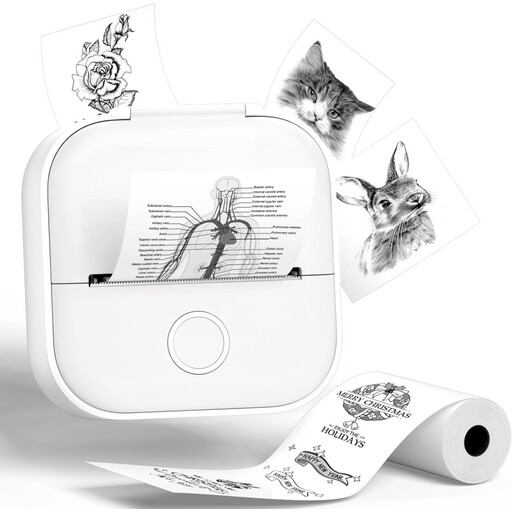
Portable Bluetooth thermal mini printer with 10 rolls
The product name describes photos as a printing use; check that thermal printing will give you the look you want for your railway photos.
Bluetooth thermal printer; the title includes 10 rolls of thermal paper. According to the product information, thermal paper can turn black through friction.
View at Joybuy
 No image available
Phomemo T02-WH mini printer, 1 piece
The product name describes it as being for notes and stickers; check that it suits your printing needs before choosing it for railway photos.
The product name describes this model as a portable mini printer for notes and stickers.
View at Joybuy
 No image available
Canon PIXMA MG2556S inkjet printer, A4, 4800 × 600 DPI
This A4 inkjet printer may suit you if you’re looking for A4 prints; check that the photo media and connection options meet your needs.
The product name lists A4 and 4800 × 600 DPI. The computer connection described is via USB 2.0.
View at Joybuy
 No image available
Epson WorkForce Pro WF-C5390DW colour inkjet printer, 4800 × 1200 DPI, A4, Wi-Fi
According to the product name, this is an A4 colour inkjet printer with Wi-Fi; check that the available space and supported paper are suitable for your photos.
The product name lists A4, Wi-Fi and 4800 × 1200 DPI.
View at Joybuy
Frequently asked questions about photo printers for railway photos
Which size is right for a railway photo: instant film, 10 × 15 cm or A4?
Choose the size that shows the train and its surroundings the way you want. Fujifilm lists an image area of 62 × 99 mm for the instax Link WIDE 2, Canon Netherlands lists 100 × 148 mm for the SELPHY CP1500, and Epson Netherlands lists photo printing up to A4 for the ET-8500. Check the crop of your own photo; these sizes are not an independent comparison of sharpness.
What should I do if an inkjet print has streaks or missing colours?
Epson recommends checking the nozzles first and cleaning the print head only when print quality has dropped. Cleaning uses ink and paper; follow your printer’s instructions.
What can I do if my printer breaks down too soon in the Netherlands?
According to ACM ConsuWijzer, if a product breaks down sooner than you could reasonably expect under normal use, the seller must resolve the issue free of charge, for example by repairing or replacing it, or refunding you. The Dutch Government states that the Netherlands does not have a fixed statutory warranty period of exactly two years for every product.
Can I print someone else’s railway photo or publish a print showing identifiable passengers?
The Dutch Government allows you to make a copy of a copyright-protected photo for your own use, but not to distribute or publish it without permission. The Dutch Data Protection Authority distinguishes between private use and wider publication; identifiable people may be covered by privacy rules when a photo is published.


