What should you look for when choosing?
Start with the distance between the performers and the microphone. Then decide how many voices you want to record separately at the same time, and whether freedom of movement or a separate recording of the hall is important.
| What to consider |
What should you check? |
Who is this most important for? |
| Clear dialogue |
Test the speaking positions in the hall and listen to both quiet and loud dialogue. |
If I want the dialogue to remain easy to follow despite the reverberation, I focus on choosing a suitably short microphone distance. Around 36% of consumers say clarity is their main concern. |
| Editing voices separately |
Count the performers speaking at the same time and check that you have enough suitable inputs and separate tracks. |
If I want to balance voices separately after recording, the recorder or interface needs to support the required number of tracks. Around 29% of consumers prioritise being able to edit voices separately. |
| Moving performers |
Work out where the actors will move, how microphones will be attached and whether a wireless frequency can be used at the venue. |
If performers move around the hall during scenes, I want the microphone to continue picking up their voices. Around 21% of consumers say freedom of movement is their main consideration. |
| Atmosphere of the hall |
Assess any ambient recording separately from the dialogue and check whether an extra recording channel is available. |
I want to preserve the sound of the space without letting reverberation overpower the dialogue; a separate track can be mixed in later. Around 14% of consumers prioritise capturing the atmosphere of the hall. |
Microphones for moving performers
These Joybuy products are wireless lavalier and lapel microphone sets for recordings with moving performers. Check that the receiver is compatible with your recording device and that the number of microphones included suits the performers speaking at the same time.
 No image available
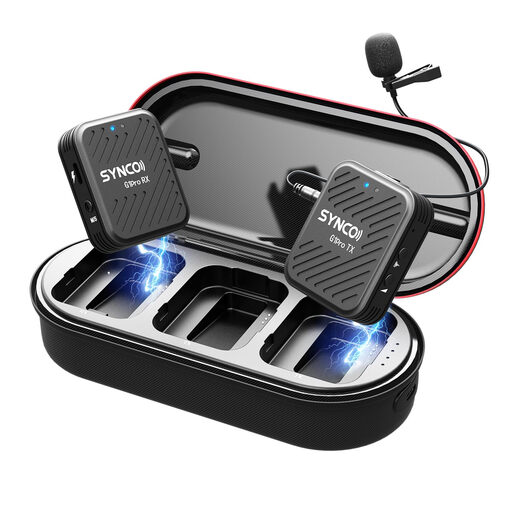
SYNCO G1(A1) Pro wireless lavalier system
A portable option for recording a moving speaker; check that the camera connection suits your recording setup.
2.4 GHz; listed for SLR cameras; monitoring via a 3.5mm connection.
Check which frequencies are available at the recording location and which connection you need.
View at Joybuy
 No image available
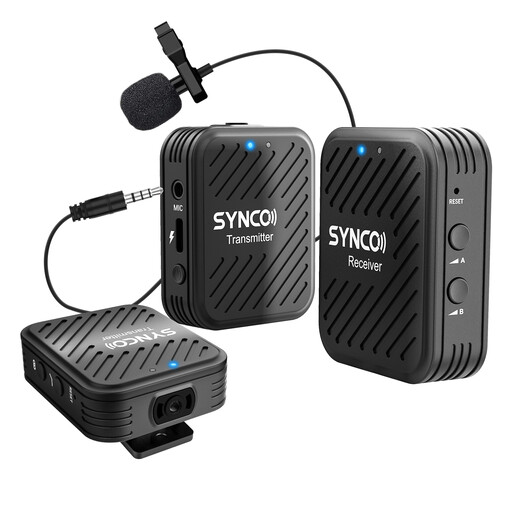
SYNCO G1(A2) wireless lavalier system with two transmitters
The set with two transmitters is an option when two moving performers need portable microphones at the same time.
2.4G; listed for cameras, smartphones and tablets. The description mentions monitoring and separate gain control for each transmitter.
Check that it connects to your device and that the frequencies are available at the venue.
View at Joybuy
 No image available
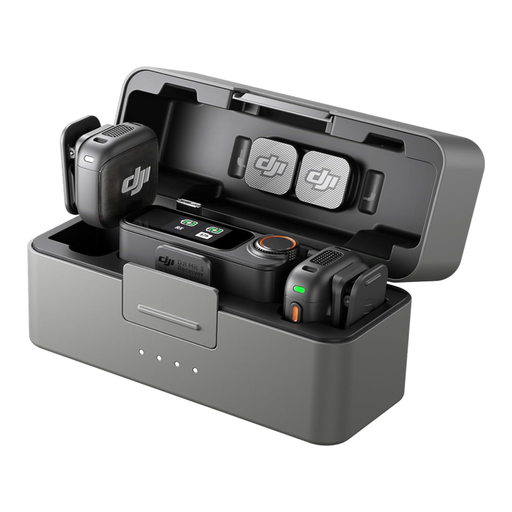
DJI Mic 3, 2 TX + 1 RX + Charging Case
The set with two transmitters may suit scenes with two moving performers; check that the receiver connects to your recording device.
The product title lists two transmitters, one receiver and a charging case. The product description mentions cameras, smartphones and computers as recording devices.
Check which frequencies are available at the venue and how many performers you want to record at the same time.
View at Joybuy
 No image available
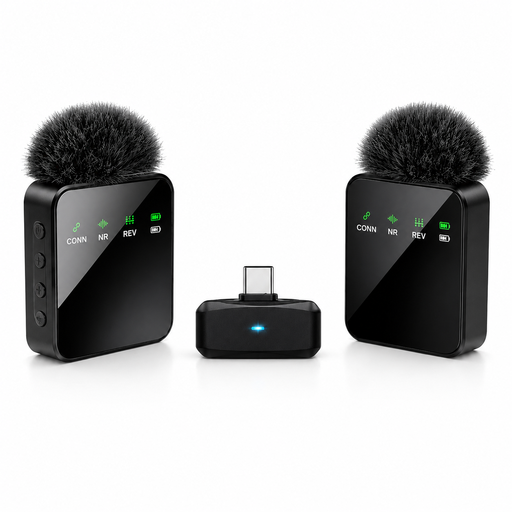
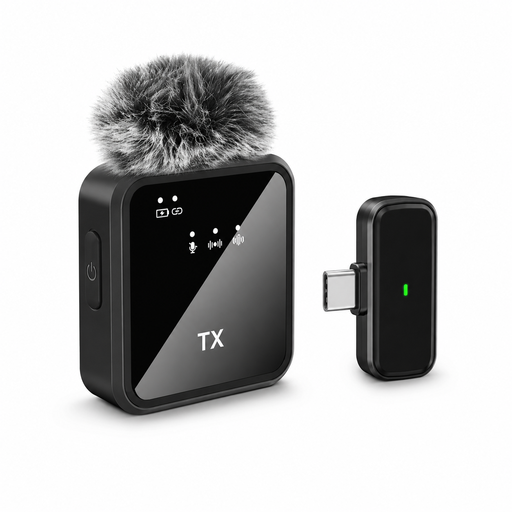
Verbex ST5 wireless set with two microphones, Type-C
This set of two lavalier microphones is designed for a portable recording setup with several performers.
The product title lists two microphones and a Type-C connection.
Check that your Type-C device and the frequency band are suitable for your recording location.
View at Joybuy
 No image available
Verbex ST5 wireless lavalier microphone, single microphone
A portable option for one moving speaker; the set doesn’t include a separate microphone for every performer speaking at the same time.
The product title lists one button-style wireless microphone.
Check that it connects to your recording device and that the frequencies are available at the venue.
View at Joybuy
Frequently asked questions
Is one microphone in the middle of the hall enough for all the performers?
Find out by making a test recording from the actual performance positions. Shure warns that a microphone placed at a distance can pick up too much reverberation, while a very close microphone may only pick up a few voices.
Do you need any other equipment with an XLR condenser microphone?
Check that your equipment has a suitable XLR input and provides the required power. Audio-Technica specifies 48 V phantom power for the AT2020; to record several performers on separate tracks, you’ll also need enough simultaneous inputs and tracks.
Do you need a licence for a wireless microphone in the Netherlands?
Not for every frequency band, but some bands do require a licence. The Dutch Authority for Digital Infrastructure publishes information about licence-exempt frequencies; also check your system’s frequency specifications and what is available at the recording location.
How do you maintain a microphone shared by performers?
Follow the cleaning instructions for the exact model. For its wired handheld microphones, Shure advises disconnecting the microphone, not cleaning the element yourself, and letting a removed grille or windscreen dry thoroughly before replacing it.
Can you publish recordings of identifiable participants without further consideration?
Don’t assume that you can. If the recording contains personal data and the GDPR applies to its processing, the Dutch Data Protection Authority says you need a lawful basis. Consent is one possible basis, but it isn’t automatically the only one. The applicable basis depends on the specific recording and publication.


