Who is this choice relevant to?

Restorer with a fixed photography set-up

You want to take before, during and after photos with the same framing. The camera needs to frame the radio well from a single position. A tripod helps you keep the framing consistent across a series of shots, as Canon Europe explains in its product photography tips.

Someone documenting the dial and fine details

You want to capture lettering and small restoration details without reflections making the dial hard to read. The Dutch Association for the History of Radio warns that direct flash can make the dial almost impossible to read.

Photographer who wants to keep things simple

You want a camera with a built-in lens and as few separate components as possible. If so, check carefully that the one lens can handle both the whole radio and the close-ups you want.

What should you look for when choosing?

Compact camera with built-in zoom

Choose this option if: you can frame both the whole radio and the details you want from your fixed position using the built-in lens.

Bear in mind: the lens cannot be changed, and the focusing distance can vary at different zoom settings. Canon Netherlands lists the PowerShot G7 X Mark III’s minimum focusing distance as 5 cm at the wide-angle setting and 40 cm at the telephoto setting, measured from the front of the lens.

Mirrorless camera with a suitable lens

Choose this option if: you want to adjust your framing or close-up capabilities by changing the lens.

Bear in mind: having an interchangeable lens does not mean the lens supplied in the kit is automatically suitable for macro photography. Check what the included lens can actually do.

Compact camera for very small details

Choose this option if: buttons, lettering or finishes matter more than simply taking an overall shot. OM SYSTEM says the TG-7’s microscope mode can focus from as close as 1 cm.

Bear in mind: a short focusing distance does not guarantee that the whole radio will fit well in the frame from the same position. The camera and lighting may also be reflected in a shiny dial.

What to consider What to look for when buying Who is this important for?
Consistent framing Measure the distance to the radio and its width, then check that the lens you buy can achieve the framing you want. Also check that the camera can be mounted securely on your chosen tripod. If I take before, during and after photos from the same position, I want to be able to repeat the framing easily. Around 33% of consumers mainly need consistent, repeatable framing.
A readable dial Take a test shot using soft or repositioned lighting, then check the dial on screen. Make sure you can adjust the exposure and focus. If the dial is shiny, I want its lettering to remain readable rather than disappear in a reflection. Around 25% of consumers prioritise a readable dial.
Small details Compare the focusing distance and magnification at the zoom setting or with the lens you will actually use. Check whether you can get close enough to the detail from your fixed position. If I want to capture buttons, lettering or finishes, I need to be able to focus on those details from my fixed position. Around 25% of consumers prioritise small restoration details.
Simple equipment Consider the complete set-up: camera, lens actually supplied, tripod and lighting. A built-in lens means fewer separate components, while an interchangeable lens gives you more choice. If I want to use as few separate components as possible, I’m looking for a complete set-up that can handle both overall shots and details. Around 17% of consumers prefer simple equipment.

Buying pitfalls

  • Buying a new camera to fix reflections on the dial

    A different camera will not, by itself, change how the light falls. The Dutch Association for the History of Radio explains that direct flash can make the dial almost impossible to read.

    First, try soft or indirect lighting with the radio in its intended position, then assess the dial in a test shot.

  • Looking only at the shortest focusing distance

    The minimum distance can vary between wide-angle and telephoto settings. So a figure for one zoom setting does not automatically tell you whether the camera will focus at another setting.

    Check the distance and framing at the zoom setting you actually want to use for the button, dial or lettering.

  • Assuming a mirrorless camera kit is automatically suitable for macro photography

    A kit may include a standard zoom lens, while its close-up capabilities depend on the lens you choose.

    Check which lens comes with the camera and whether its focusing distance and magnification suit the details you want to photograph.

Camera brands to consider

Canon

The PowerShot G7 X Mark III and EOS R50 illustrate two different options: a compact camera with a fixed lens and a mirrorless camera with interchangeable lenses.

  • Canon Netherlands lists different minimum focusing distances for the PowerShot G7 X Mark III: 5 cm at the wide-angle setting and 40 cm at the telephoto setting, measured from the front of the lens.
  • With the EOS R50, close-up capabilities also depend on the lens you choose. So assess the lens, not just the camera body.

OM SYSTEM

The TG-7 is a compact camera worth considering if you want to capture very small restoration details.

  • OM SYSTEM says its microscope mode can focus from as close as 1 cm.
  • That distance does not tell you whether the whole radio will fit well in the frame from your fixed position, or how reflections will appear on the dial.

Nikon

The Z50II with 16–50mm kit lens is an example of a mirrorless camera with an interchangeable lens.

  • According to Nikon Netherlands, the Nikon kit includes the Z50II camera and the NIKKOR Z DX 16–50mm f/3.5-6.3 VR zoom lens.
  • Nikon lists macro lenses separately, so the kit lens is not automatically the right choice for close-ups of small details.

Sony

The RX100 VII is a compact alternative with a zoom range of 24–200mm equivalent, according to Sony.

  • Sony lists a minimum focusing distance of around 8 cm at the wide-angle setting and 100 cm at the telephoto setting, measured from the front of the lens.
  • For small details from a fixed position, the key factor is the focusing distance at the zoom setting you use; the zoom range alone does not tell you this.

Panasonic

According to Panasonic, the LUMIX TZ99 combines a wide zoom range with a Focus Stacking feature.

  • Panasonic lists a range equivalent to 24–720mm. The brand says Focus Stacking can combine images taken at different focusing distances, particularly when depth of field is shallow in macro shots.
  • A long telephoto reach is not automatically an advantage when photographing a radio on a fixed table. Check that the lens settings suit your working distance and desired framing.

Cameras on Joybuy

These Joybuy products are cameras you can consider for photographing a radio from a fixed position. For each model, check whether it can achieve the framing and focus you want at your working distance.
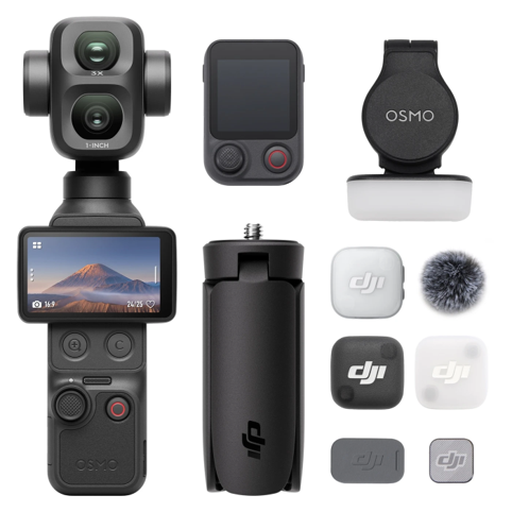
Osmo Pocket 4P Vlog Combo, black

Osmo Pocket 4P Vlog Combo, black

From your fixed shooting position, check whether you can frame and focus on both the whole radio and the details you want.

Joybuy
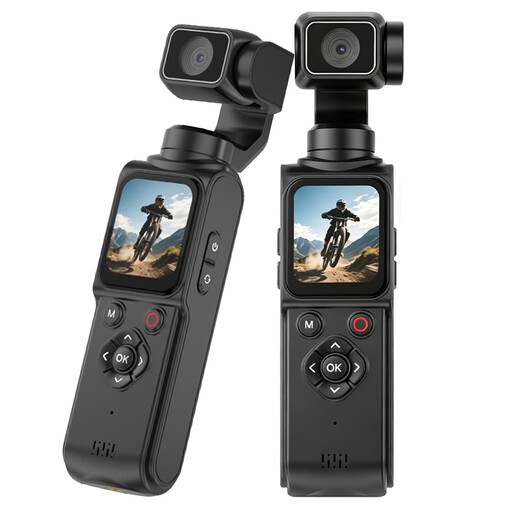
KINSI Mini Vlog Camera 4K, 64 MP

KINSI Mini Vlog Camera 4K, 64 MP

If you’re considering a compact camera, check that your fixed shooting distance works for both the overall view and the details. The product name lists 4K and 64 MP.

Also mentioned in the product name: a 330° rotating lens and a 1.72-inch touchscreen.

Joybuy
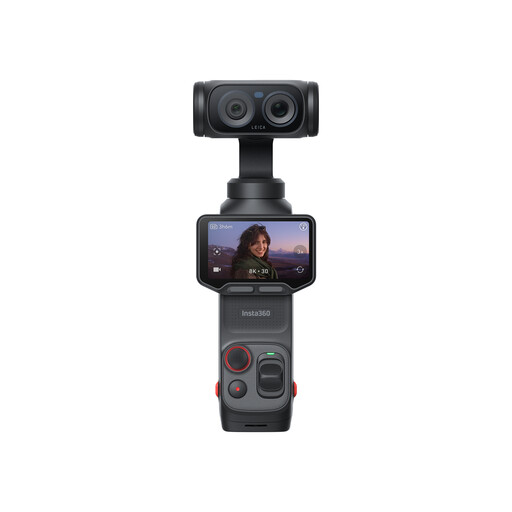
Insta360 Luna Ultra Standard Bundle, Cosmic Black

Insta360 Luna Ultra Standard Bundle, Cosmic Black

Check whether this camera can capture the radio and the details you want clearly and at the right size from your fixed working distance.

Joybuy

KOMERY G7-A 4K Digital Camera, pink

KOMERY G7-A 4K Digital Camera, pink

If you’re looking for a compact camera with zoom, check that you can focus on the radio from your fixed distance at the zoom setting you want. The product name lists 18× zoom.

The product name also mentions 4K.

Joybuy

KOMERY G7 5K Digital Camera, white

KOMERY G7 5K Digital Camera, white

At the zoom setting you want, check whether the camera can focus on both the radio and the small details from your fixed shooting position. The product name lists 18× zoom.

The product name also mentions 5K and 80 MP.

Joybuy

Frequently asked questions

Do I need the same lens for the whole radio and small details?

Not necessarily. First check whether the lens can frame the whole radio from your fixed position, then check the focusing distance and magnification for the details separately. The Canon PowerShot G7 X Mark III has different stated minimum focusing distances at wide-angle and telephoto settings. With a mirrorless camera, close-up use also depends on the lens you choose.

How can I keep successive photos consistent and the dial readable?

Set up the camera securely, keep the framing consistent and assess the shiny dial under the lighting you intend to use. The Dutch Association for the History of Radio warns that direct flash can make the dial almost impossible to read. If necessary, try softer lighting or point the light in a different direction.

Is a compact or mirrorless camera more convenient for photographing a radio?

A compact camera is suitable if its built-in lens can capture both the overall view and the details you want from your fixed position. A mirrorless camera gives you the option to choose a different lens, but check which lens is actually supplied with the camera and whether it’s suitable for the close-ups you want.

What are my rights when I buy a camera online?

For many distance purchases from a business, consumers have 14 days to change their mind, according to the Dutch government. You’re also entitled to a product that meets the terms of the agreement. If there’s a problem, the seller is your first point of contact to find a solution.
