
Vandaag of morgen in huis

Kwaliteit gegarandeerd

Welkomstaanbiedingen ontgrendelen: GRATIS bezorging | Tot 80% korting | Gratis 30 dagen JoyPlus-proefperiode
Download de app
At first glance, a radio-controlled toy car seems simple: get the remote control, charge the battery and off you go. In practice, RC cars vary considerably in terms of controls, age suitability, surfaces and maintenance. A model that works well on a smooth floor can quickly get stuck outdoors. And a car with lots of features is not automatically suitable for a young child.
So before ordering an RC toy car or another toy vehicle, watch out for the following pitfalls.
A remote-controlled car with drifting, spinning, lights and sound may seem appealing. For a three-year-old, however, too many buttons can be confusing. Check whether the remote control has clear functions and whether a low-speed or demonstration mode is available.
When choosing a remote-controlled car for children, the stated age range is an important starting point. A warning about small parts also means that supervision may be required, even when the product is marketed for children from a certain age.
An RC off-road vehicle is not automatically suitable for grass, sand or uneven paving. Look at:
Claims about grip or off-road performance come from the manufacturer’s or seller’s product information. Treat them as an indication rather than a guarantee for every surface or weather condition.
A rechargeable RC car means you do not constantly need to buy new batteries for the car itself. However, check exactly what is included. With some models, the battery is supplied, but the AA or AAA batteries for the remote control are not.
Also check the battery capacity, such as 3.7 V and 500 mAh, the type of charging cable and the charging time. A product description may mention “long play time” without giving a specific number of minutes. So compare the verifiable specifications in particular, and keep a spare battery or suitable batteries to hand if supported.
First, choose based on the child’s age and the environment in which the toy will be used. A CE marking indicates that the manufacturer declares compliance with relevant European requirements, but it is not a quality ranking. Always read the warnings on the product page and packaging.
For models with small parts, loose accessories or detachable components, direct supervision is advisable. Also avoid using a radio-controlled toy car near water unless the manufacturer explicitly states a particular level of water resistance.
A 2.4GHz remote control is often used with RC cars. According to the product descriptions of various models, this makes it possible to use several vehicles at the same time without their signals normally interfering with one another. Also check:
For young children, simple buttons are often more practical. Older children and hobbyists may instead value a gyro, adjustable speed, interchangeable tyres or a servo.
ABS plastic bodywork is often used for toy cars. According to the relevant product description, this material is suitable for sturdy, impact-resistant use, but normal handling remains important. After driving, check whether hair, sand or small stones have become caught in the wheels.
A scale such as 1:24 or 1:64 mainly indicates the size and appearance. A smaller model car is not necessarily suitable for younger children; the official age warning and the presence of small parts are more important.
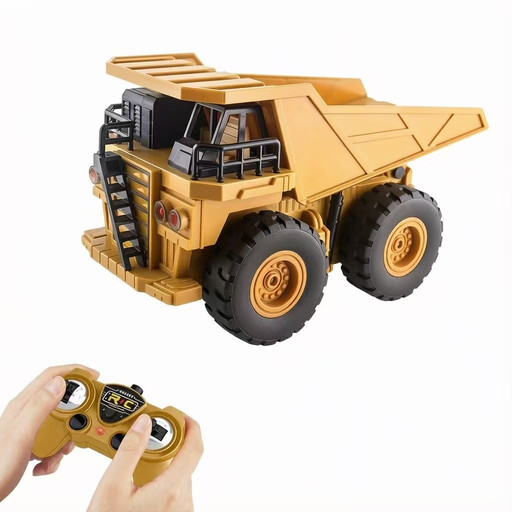
Why it suits this profile: The dump truck has simple driving functions and separate controls for the tipping body. This makes it a good choice for children who enjoy building and transport role play.
The product information lists six control channels, 2.4GHz control and a rechargeable 3.7V 500mAh battery. The included USB cable saves you from having to search for a specific charging cable.
Tipping body, rubber tyres, LED headlights and sound. The remote control requires 2 AA batteries, which are not included.
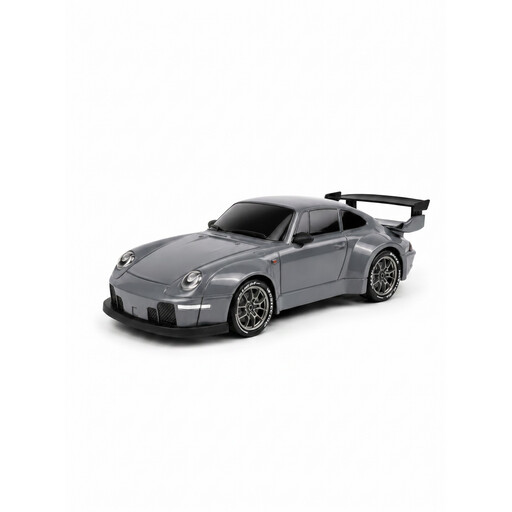
Why it suits this profile: This model is aimed at older children, hobbyists and users who want to practise controlling drifts rather than simply driving in a straight line.
The product description mentions two speed settings, an adjustable gyro system and two types of interchangeable tyres. This allows you to adapt the settings to the driver’s experience and the surface.
4WD, LED lighting, suspension and a 7.4V battery according to the product details. This is a more advanced RC model than a simple toy car.
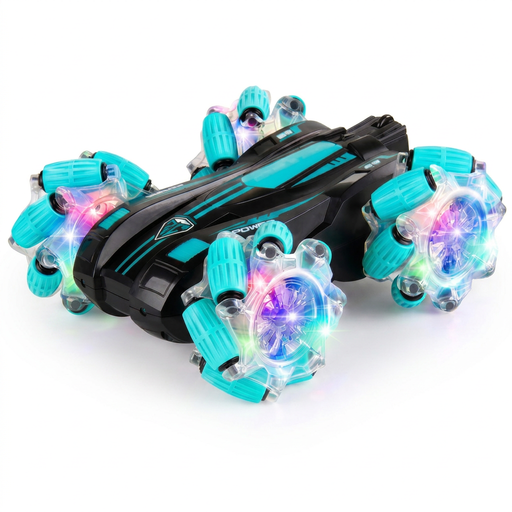
Why it suits this profile: For children who are mainly looking for stunts, lights and movement, this RC stunt car offers more ways to play than a classic model.
According to the product description, the car can drive on both sides and has 4WD. This means the vehicle does not need to be turned over by hand immediately after flipping.
Sideways driving, 360° spinning, double-sided driving and colourful LED wheels. Before buying, check which battery and batteries are included according to the current packaging.
We have put together a complete, up-to-date list of products that fully meet these strict selection criteria and the applicable European safety regulations.
That depends on the battery capacity, motor, speed, surface and how the car is used. A 500 mAh battery tells you something about its capacity, but not automatically how many minutes of play it will provide. Check the stated play and charging times, and charge the battery according to the instructions.
This can only be assessed responsibly based on the product information. Models with 4WD, treaded tyres and sufficient ground clearance are often designed for use on more surfaces, but do not use them in the rain or puddles when water resistance is not explicitly stated.
Choose a model with simple controls, clear age information and as few loose small parts as possible. A low-speed or demonstration function can help during the first play sessions. Stay close to young children and always follow the manufacturer’s safety warnings.
