
Vandaag of morgen in huis

Kwaliteit gegarandeerd

Welkomstaanbiedingen ontgrendelen: GRATIS bezorging | Tot 80% korting | Gratis 30 dagen JoyPlus-proefperiode
Download de app
A radio-controlled car can be a great gift for a child, teenager or adult. Yet many models look similar on paper. A low price tells you little about the drivetrain, and a long product description doesn’t always tell you what you really need to know.
Here are some common pitfalls to watch out for:
A 2WD model powers two wheels and is often suitable for flat floors and straightforward driving. A 4WD RC car distributes power to all four wheels. This can be useful on grass, sand, gravel and uneven terrain, but it often increases energy consumption too.
For outdoor use, large tyres, tread and ground clearance matter more than the stated top speed alone. An off-road RC car with suspension and sturdy tyres can handle small obstacles more easily. Always check the maintenance instructions after driving on sand, through mud or in wet conditions.
Check the battery voltage, capacity and connector type. A 7,4V battery delivers different performance from a 3,7V battery. Capacity, measured in mAh, gives an indication of how much energy is stored, but actual running time also depends on speed, terrain and driving style.
Also check:
For a model for children, easy charging is handy. For a hobby car for adults, spare batteries and replaceable parts may be more important.
A 2.4GHz remote control is a popular choice. According to the product descriptions for various models, this frequency can support the use of multiple vehicles, but always check the specific product details.
An adjustable speed setting is useful for beginners. A gyroscope can also help a drift model respond more steadily, according to the product description. This doesn’t guarantee that every driver will be able to drift smoothly straight away; practice, terrain and tyres all play a part.
For children aged 3 and over, small parts, batteries and ease of control are important considerations. Always use a model in line with its stated minimum age, and supervise children when required by the manufacturer. For example, a SIKU VW Beetle with caravan is a hand-push model, not an electric RC car. The product information gives a minimum age of 3 years, CE marking and a warning about small parts. This makes it suitable as a collectible or push-along toy, but not as an alternative to a radio-controlled model.
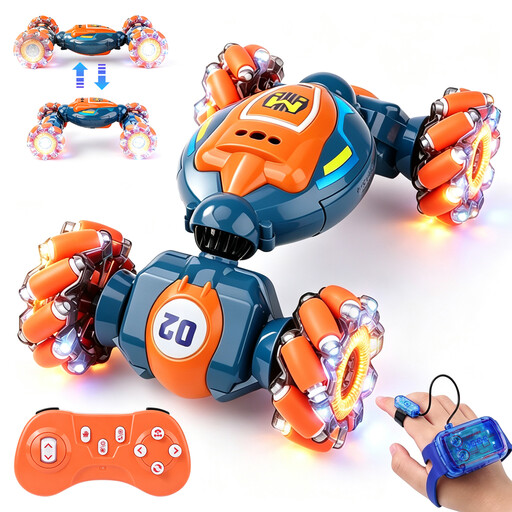
Why it suits this type of user: The car can be controlled using both a standard remote control and a gesture-sensing watch. This gives children more than one way to get to grips with a remote-controlled stunt car.
The product description lists a rechargeable battery and a USB cable. Do check the battery information, though, as the description gives different capacities and the controllers may need extra AAA batteries.
360° rotation, driving on both sides, LED wheels and switchable on-road and off-road modes, according to the product information.
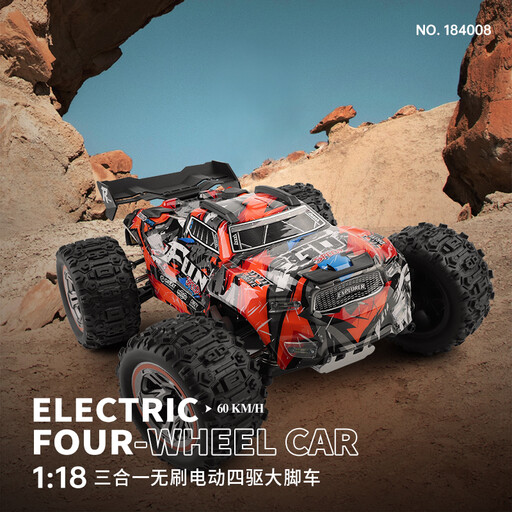
Why it suits this type of user: This model is designed for drivers looking for more control and greater off-road capability than basic remote-controlled toys offer.
The product description lists 4WD, independent suspension and a brushless drivetrain. This makes it clear what the vehicle is designed for: driving over rougher terrain and tackling controlled jumps, rather than just running on a smooth floor.
Three configurations according to the product description: monster truck, buggy and truggy. The electronics are described as water-resistant; follow the maintenance instructions after use.
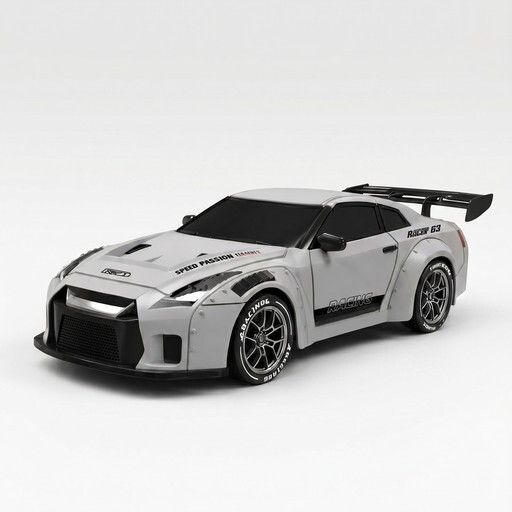
Why it suits this type of user: This model is a good fit for users specifically looking for a drift car, with the flexibility to switch between practice, racing and controlled drifting.
The product description lists two speed settings and two interchangeable sets of tyres. This lets you better tailor the handling to beginner practice, racing or drifting.
4WD, adjustable gyro stabilisation, LED lights and an ABS body, according to the product specifications.
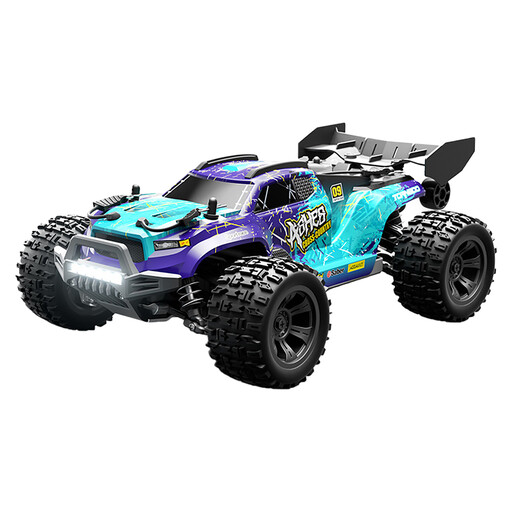
Why it suits this type of user: The combination of 4WD, off-road tyres and a 7,4V battery makes this a good fit for teenagers aged 14 and over and adults who want to drive outdoors.
The specifications state a recommended age of 14 and over, a professional transmitter and an aluminium chassis plate. This makes the intended user clearer than it is for general children’s toys.
7,4V 1500mAh battery, 4WD, off-road tyres and adjustable transmitter functions, according to the product description. The stated speed of over 40 km/u is a product specification provided by the seller.
We’ve put together a complete, up-to-date list of products that meet these strict selection criteria and the applicable European safety regulations.
That depends on its size, speed and the surface you’ll be driving on. A compact car with a low-speed setting can be used on a smooth floor. A fast 4WD RC car or monster truck needs more space and could hit furniture, walls or delicate items. Clear a route indoors and make sure small parts are kept out of reach of young children.
Running time varies depending on the model and how you use it. High speeds, grass, slopes and lots of stunt functions use more energy. Check the battery capacity, charging method and whether you can buy a spare battery. Charge a lithium battery according to the product instructions and store it somewhere dry and safe.
Choose a model with a clear minimum age, simple controls and adult supervision. Check for warnings about small parts and loose accessories. A hand-push model such as the SIKU VW Beetle could be a good choice for children who mainly want to push toys around and collect them. If they want to steer a car, they’ll need an RC car specifically designed for their age group.
