
Vandaag of morgen in huis

Kwaliteit gegarandeerd

Welkomstaanbiedingen ontgrendelen: GRATIS bezorging | Tot 80% korting | Gratis 30 dagen JoyPlus-proefperiode
Download de app
A radio-controlled car can make a fun gift for a child, teenager or adult enthusiast. However, a basic RC car, a drift RC car and an off-road model can differ considerably in use, maintenance and age suitability. If you only look at speed, LED lighting or an eye-catching body, you could end up buying a model that does not suit the surface or the driver’s experience.
So pay particular attention to these three common pitfalls:
It is also important to remember that a radio-controlled car is not the same as a diecast model car. A model car is generally intended for display or gentle play, while an RC car uses a motor, battery and transmitter.
A 2WD RC car powers two wheels and may be suitable for flat surfaces. A 4WD RC car distributes power across all four wheels. This can help with acceleration, cornering and driving on less even surfaces, but it does not automatically make a model suitable for deep mud or water.
For outdoor use, large tyres, suspension and ground clearance are important. An off-road RC car with a chunky tread and shock absorbers is better suited to grass, sand or gravel than a low-slung RC racing car with smooth tyres.
Check the battery type and capacity. A 7,4V battery is found in various hobby-focused models, while a smaller 3,7V battery is common in compact toy models. Also check whether a USB cable or charger is included.
Pay attention to the batteries used by the remote control, too. Some transmitters use AA or AAA batteries, which are not included in the package. This helps ensure that your first drive is not delayed while you buy additional batteries.
Lithium batteries must be charged and stored in accordance with the supplied instructions. Do not use a damaged battery, and children should only charge the battery under adult supervision.
A scale of 1:24 or 1:18 indicates the model’s proportions compared with the real vehicle; it does not directly determine whether it is suitable for a child. A faster, heavier model may require more space and experience. Therefore, consider:
A stunt RC car with 360-degree spins requires a different play area from a model designed mainly to drive straight ahead. For young children, simple controls and supervision are more important than a high top speed.
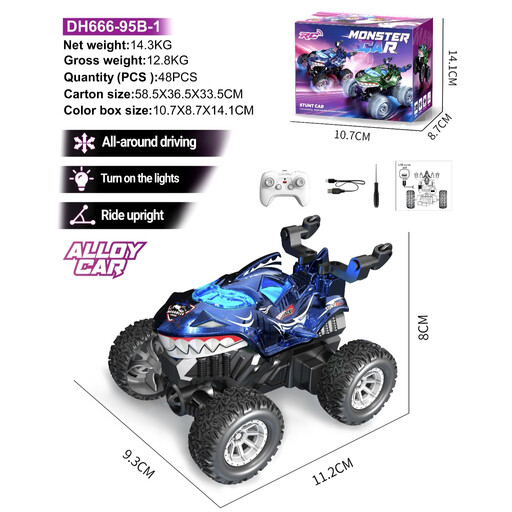
Why it suits this profile: Its compact scale, two speed settings and simple directional controls make this model suitable for anyone keen to try radio-controlled driving.
The product description lists a slow and a fast setting. This gives beginners more control than a model with only a high-speed setting.
2.4G remote control, LED lighting, 360° stunts and support for multiple cars at the same time, according to the product description.
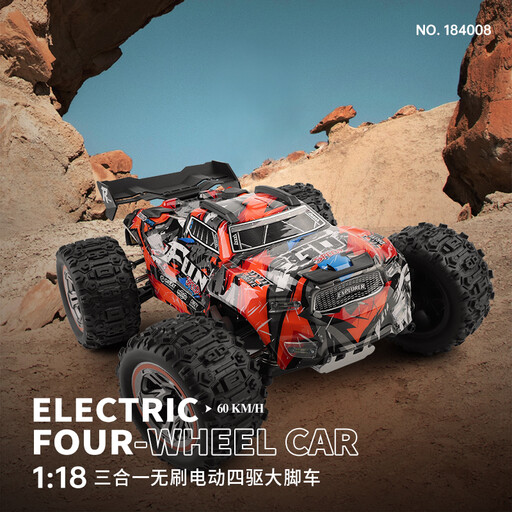
Why it suits this profile: This model is aimed at teenagers and hobbyists who want to try different driving styles and terrains.
The product description mentions independent suspension and a 4WD system. This means the design is not intended solely for flat indoor surfaces.
Brushless drive, 4WD, independent suspension and three configurations: monster truck, buggy and truggy, according to the product information.
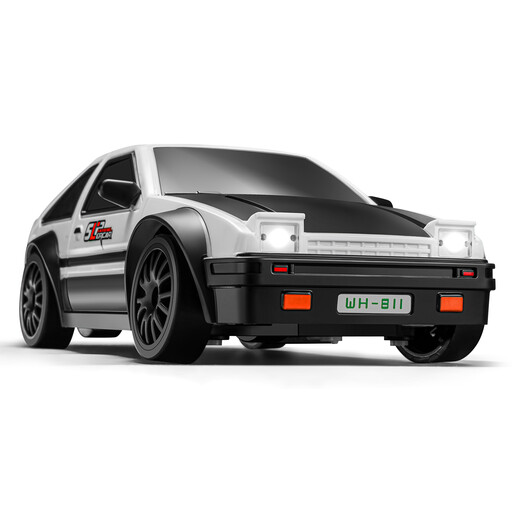
Why it suits this profile: For drivers who want to switch between drifting and racing, this model offers interchangeable tyres and adjustable steering assistance.
Drift tyres and racing tyres are included separately, according to the product description. This means you do not have to use one type of tyre on every surface.
4WD drive, gyro stabiliser, two speed settings, LED lighting, 7,4V battery and independent suspension, according to the product details.
We have put together a complete, up-to-date list of products that fully meet these strict selection criteria and the applicable European safety regulations.
Choose an RC racing car if you mainly want to drive on a smooth floor or a home-made track. A drift model performs most predictably on a flat, hard surface. An off-road RC car is better suited to the garden, park or driveway, but always check the information about water resistance. “Waterproof” does not mean that every component can be submerged.
A diecast model car is a different choice. Models such as a 1:43 racing car with a display base and acrylic cover are mainly intended for collectors and motorsport fans. They do not have a remote control or battery, but they are ideal for displaying on a desk or shelf. For this type of product, check the recommended age; some models are intended for children aged 14 and over.
For a toy car for children aged 3 and over, small parts, access to the battery compartment and supervision are important considerations. Check the warnings on the product page before placing your order.
First, charge the vehicle battery in accordance with the manual. Then insert the required batteries into the transmitter, switch on the car and remote control, and check the connection. Test the throttle and steering at low speed in a clear area. Keep children away from stairs, traffic and water.
Running time depends on the battery capacity, speed, surface and driving style. A higher-capacity 7,4V battery may provide longer driving time than a small battery, but the exact duration is not always given in the product information. Therefore, compare the voltage, capacity in mAh and whether a spare battery is available.
That depends on more than just 4WD. Consider the recommended age, speed, controls and weight of the model. A simple low-speed model may be more accessible than a fast hobby car. Use an RC car for young children under supervision and always follow the manufacturer’s safety warnings.
