
Evening viewer who wants a calm picture
You watch quiz shows in a darkened room and want dark parts of the picture to look clear and even. Compare the black levels of the specific models you’re considering.


For quiz shows in a dark room, OLED is a natural choice if deep blacks are your priority and you tend to switch between programmes. If you watch the same channel for long periods, with fixed logos or scoreboards on screen, an LCD TV with mini-LED is also worth considering. With either screen type, check how clearly voices come through, choose a size that suits your viewing position and look at how the specific model performs.
You watch quiz shows in a darkened room and want dark parts of the picture to look clear and even. Compare the black levels of the specific models you’re considering.
You want to follow the questions and answers easily. Alongside the screen, check how clearly speech comes through and how easy the TV is to use.
You often leave the same channel on for a long time, with fixed elements on screen. For this kind of viewing, compare the risk of OLED with an LCD alternative.
Don’t choose based on panel type alone. Compare speech clarity, screen size and your viewing habits too, and, where possible, assess the exact model with a dark scene.
| What to consider | What should you check? | Who is this important for? |
|---|---|---|
| Contrast in the dark | Compare black levels and any bright patches in a dark scene on the specific model. OLED and LCD with local dimming are two different screen technologies. | If you mainly watch in the evening, you’ll want dark scenes to look clear and even. Around 29% of consumers put contrast in the dark first. |
| Clear dialogue | Listen to everyday TV dialogue on the set and check that it has the audio connection you need. | If you don’t want to miss a question or answer, speech clarity matters more to you than picture technology alone. Around 24% of consumers give clarity their top priority. |
| Screen size from your seat | Measure your viewing distance and check the TV’s overall dimensions, including the stand. The Dutch Consumers’ Association suggests dividing viewing distance by 2.4 as a starting point for the screen diagonal in centimetres. | If you need to read text or scores clearly from your seat, you’ll want a suitable size that also fits your room. Around 18% of consumers prioritise screen size and readability. |
| Purchase and running costs | Compare the total purchase price and check the EU energy label for the exact model. The European Commission uses an efficiency scale from A to G for electronic displays. | If you want to consider both the cost of the TV and its use, compare the model and installation with your own needs. Around 17% of consumers make cost their top priority. |
| Fixed images on screen for long periods | Consider whether the same channel, with fixed elements on screen, really stays on for a long time. For OLED, check the model’s manual for panel care and compare LCD if needed. | If you watch the same channel or fixed graphics for long periods, you’ll want to take this usage risk into account. Around 12% of consumers put fixed on-screen elements over long periods ahead of other considerations. |
The panel alone doesn’t tell you how clearly voices come through on a particular model. The Dutch Consumers’ Association assesses speech clarity separately from picture quality.
Listen to spoken TV content on the set before deciding whether extra audio equipment would suit the way you watch.
If voices aren’t clear enough on the TV you choose, extra audio equipment could mean an additional expense.
LCD backlighting can create bright patches that stand out in a dark room. Local dimming doesn’t guarantee uniform blacks across the screen.
Where possible, watch a dark scene on the specific model and compare the experience with OLED and mini-LED options.
The risk with OLED is mainly a consideration when the screen is used in the same way for long periods, with fixed elements on screen. Accelerated tests using static content don’t predict how every viewer will use a quiz show with changing images.
Think about your own viewing habits and check the manual for your exact OLED model for panel care advice.
The LG OLED42C5ELB is a 42-inch OLED model to consider if you’re looking for a more compact OLED option.
According to Philips, the Philips 55OLED760/12 combines a 55-inch OLED screen with Ambilight.
The TCL 55C6K is an LCD option with QD mini-LED and local dimming.
The BRAVIA 8 II is a QD-OLED option for anyone who also wants to assess the controls and audio on the specific set.
Samsung’s Dutch range includes OLED and Neo QLED product lines.
This Joybuy selection includes OLED TVs and a QD mini-LED TV for watching quiz shows in a dark room.
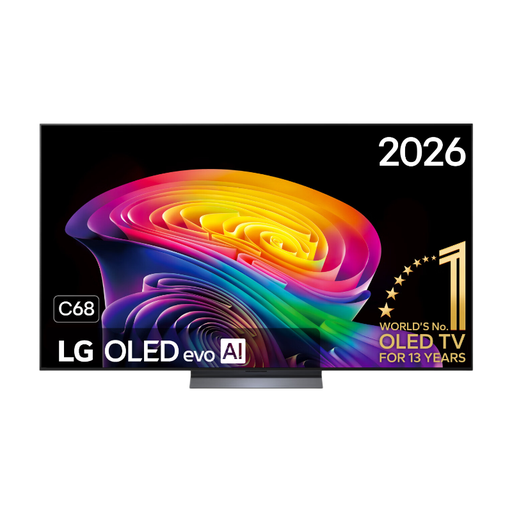 No image available
An OLED option to compare if you’re interested in black levels in a dark room; check how clearly voices come through on the set too.
65 inches and 4K. The product description lists a 40 W, 2.2-channel audio system and Clear Voice Pro. Check for yourself whether voices are clear enough for you.
Image retention remains a consideration if you watch fixed on-screen elements for long periods.
No image available
A 55-inch OLED option to compare for quiz shows in the dark; check speech clarity as well as picture quality.
The product description lists a 40 W, 2.2-channel audio system and Clear Voice Pro. These features are no substitute for checking how clearly voices come through on the specific set.
Image retention remains a consideration if you watch fixed on-screen elements for long periods.
 No image available
A 42-inch OLED option to compare if the screen size suits your viewing position and black levels matter to you.
4K Ultra HD. The product description lists a 20 W, 2.0-channel audio system; check how clearly spoken TV content comes through for you.
Image retention remains a consideration if you watch fixed on-screen elements for long periods.
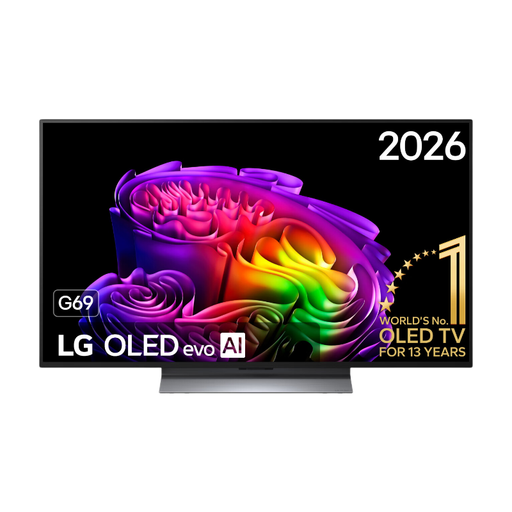 No image available
A 48-inch OLED option for comparing black levels in the dark, in a size that suits your viewing distance.
The product description lists a 40 W, 2.2-channel audio system and Clear Voice Pro; check speech clarity on this model for yourself.
Image retention remains a consideration if you watch fixed on-screen elements for long periods.
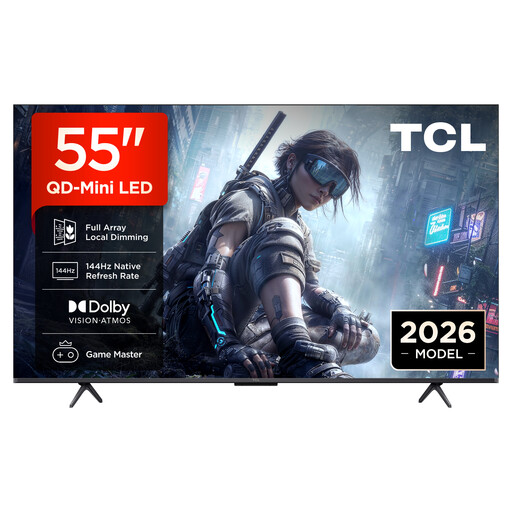 No image available
An LCD option with local dimming to compare if you watch fixed on-screen elements for long periods; check black levels in a dark scene too.
55 inches and 4K. The product description lists QD mini-LED dimming and a 2.0-channel audio system; these audio features alone don’t tell you how clearly voices come through.
Bright patches from LCD backlighting can stand out in a dark room; local dimming doesn’t guarantee uniform blacks.
No, OLED isn’t automatically the better choice for every quiz show viewer. It avoids LCD backlighting, but clear voices and the right screen size matter too. If you leave the same channel on for a long time, with fixed graphics on screen, bear the risk of image retention with OLED in mind.
Measure the distance from your eyes to where you plan to put the TV, and check its overall dimensions, including the stand. The Dutch Consumers’ Association suggests dividing viewing distance by 2.4 as a starting point for the screen diagonal in centimetres. Also compare nearby sizes with your room and viewing preferences.
First, check whether the issue is related to a channel or signal. LG describes a pixel-cleaning menu for OLED TVs from 2022 onwards running webOS 22 or later. The menu path varies by generation, so follow the manual for your own model.
Compare the EU energy label for the exact TV, and remember that your own energy use depends on how you use it. According to the Dutch government, there’s no fixed statutory warranty period in the Netherlands: you’re entitled to a product that meets reasonable expectations, and the retailer is your point of contact if it doesn’t.