
Quiz fans sitting to the side
These viewers want to be able to see the questions and answers clearly from the end of the sofa, too. For them, the screen’s viewing angle is a separate consideration from the projector’s position.


Start with the screen’s viewing angle: sitting at the side of the sofa doesn’t, in itself, mean you need lens shift. If the projector itself has to sit off-centre from the screen, compare the throw distance and horizontal lens shift of the exact model; digital keystone correction can affect the clarity of small quiz text. Choose a screen material that suits your seating positions and the light in the room, too.
These viewers want to be able to see the questions and answers clearly from the end of the sofa, too. For them, the screen’s viewing angle is a separate consideration from the projector’s position.
These viewers can’t position the projector centrally, so they need to match the throw distance, horizontal lens shift and any digital image correction.
These viewers want to read questions and scores with the room lights on. They should consider light control, viewing angle and screen compatibility together.
First, decide whether only the viewers are sitting away from the centre, or whether the projector also needs to be off-centre. Then choose a screen material to suit the seating positions and the light in the room.
| What to consider | What should you check? | Who is this important for? |
|---|---|---|
| Viewing from the side seats | Compare your seating positions with the viewing angle of the exact screen material. Also check that the material is compatible with the projector. | I want to be able to see questions and answers clearly from the ends of the sofa; around 31% of consumers prioritise the screen’s viewing angle. |
| Projector off-centre from the screen | Measure the distance from the lens to the screen and the horizontal offset. Check the throw ratio, optical zoom and horizontal lens shift of the exact model. | If the projector can’t be positioned centrally, I want to align the image to fit without unnecessary digital correction; around 25% of consumers prioritise projector placement. |
| Readability with the room lights on | View the image from every seat with your usual lighting on. If you’re considering an ambient-light-rejecting screen, check its viewing angle and compatibility with your projector, too. | I want to follow the quiz without having to change the usual room lighting completely; around 25% of consumers prioritise readability with the lights on. |
| Connecting to your TV source | Check the available connections, audio output and any app or account requirements for the source you plan to use. | If you want to use an existing receiver or streaming source, compatibility is essential; around 19% of consumers prioritise access to the quiz programme. |
Lens shift moves the projected image, but it doesn’t change the screen’s viewing angle for someone sitting to the side.
Map out the seating positions and projector location separately. For side seats, start by checking the viewing angle of your chosen screen material.
Elite Screens specifies a 90° viewing angle for CineGrey 3D and says that this material isn’t suitable for ultra-short-throw projectors. These specifications don’t automatically apply to other screen materials.
Check the viewing angle, minimum throw ratio and compatibility with your projector type for the exact material.
BenQ notes that keystone correction can affect factors including sharpness and image size. Samsung states that scaling or moving the image can make it smaller in some set-ups.
Where possible, align the projector physically first, then check from your seats that small questions and answers remain easy to read.
The EH-TW7000 is worth considering if the projector needs to sit off-centre from the screen and optical zoom and horizontal lens shift matter.
The W4000i is an option to consider for a fixed set-up with optical lens shift.
The Freestyle 2nd Gen is worth considering if you’re looking for a portable projector and automatic screen adjustment, rather than a specific solution for a limited screen viewing angle.
This brand is worth considering when comparing screen materials and their viewing angles and projection requirements.
These projectors are designed for home use; the selection also includes portable models and a bundle with a screen. When buying, check the CE marking and documentation for the exact version: the Dutch government states that electrical appliances placed on the market in the EU must have the applicable CE marking.
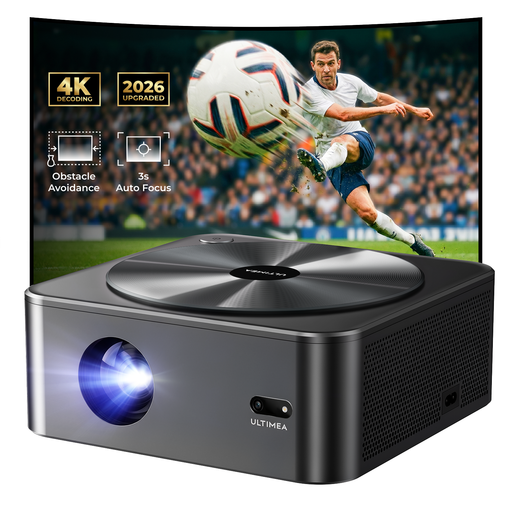 Image unavailable
For a set-up that changes regularly, the product description lists autofocus and automatic keystone correction.
The title lists 1080p, 700 ANSI lumens and HDR10.
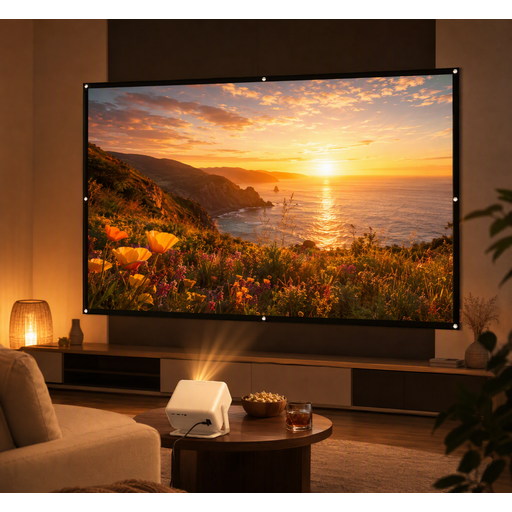 Image unavailable
This bundle may be a good choice if you’re looking for a projector and screen together; the product description lists a 100-inch screen.
For an external quiz source, the product description lists HDMI, USB and AV connections. Built-in stereo speakers are also mentioned.
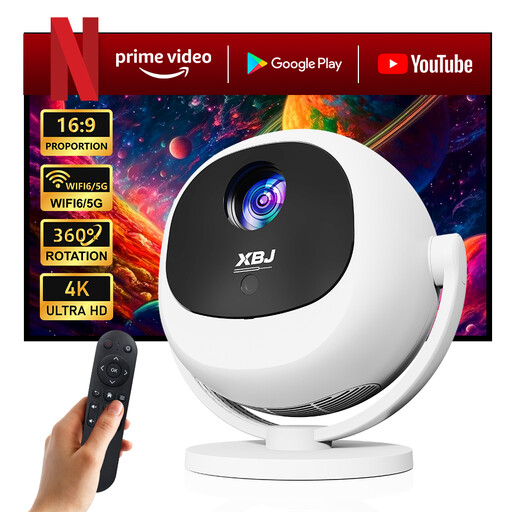 Image unavailable
For a flexible set-up, the title lists a 360° rotating stand and built-in streaming apps.
The title lists 1080p, Wi-Fi 6 and Bluetooth 5.0.
 Image unavailable
For a set-up that changes regularly, the title lists automatic image correction and 180° rotation.
The title lists an image size range of 50–200 inches. The description mentions connections including HDMI and TV sticks.
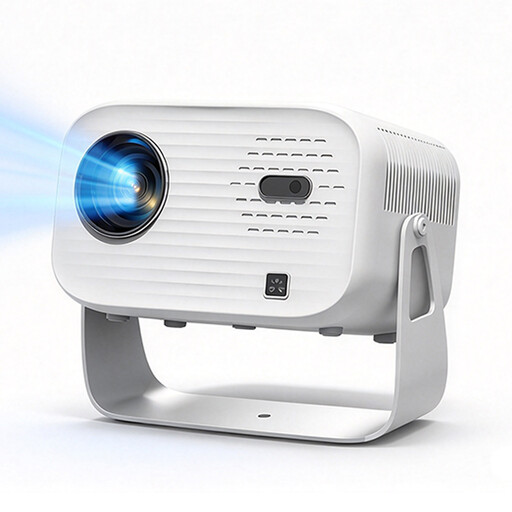 Image unavailable
For flexible positioning, the title lists a 360° rotating mount and automatic keystone correction.
The title lists native 1080p, HDMI, Wi-Fi 6 + 5G and BT5.4.
No, not for that reason alone. The screen’s viewing angle determines how the image looks from your seat; horizontal lens shift matters if the projector itself needs to sit off-centre from the screen.
Measure your desired image width, the distance from the lens to the screen and any horizontal offset. Compare these with the throw ratio, zoom and usable lens shift range at the same time for the exact model, and check the installation instructions.
Not necessarily. Viewing angles and projection requirements vary by material: for example, Elite Screens lists a 90° viewing angle for CineGrey 3D and says it isn’t suitable for ultra-short-throw projectors. So check the specifications for the exact screen material.
Not necessarily. Check whether the app or TV source you need is available and whether an account is required. An external source may also be an option if it can be connected to the projector.
The Dutch government states that electrical appliances placed on the market in the EU must have the applicable CE marking. Check the marking and documentation for the exact version on offer; a model listed on a brand’s website doesn’t automatically confirm that it’s the version you’re buying.