
Anyone looking to reduce distractions from clicking
You’re working on a form in a quiet space and want to consider scrolling as well as the main buttons. Logitech and Trust describe quiet operation on specific models.


Start by choosing a mouse with clicks that are quiet enough for your study space and that lets you position form fields comfortably. A standard mouse is a sensible starting point. Extra buttons are useful mainly if you’ll use them, while a vertical shape is worth considering only in light of your hand size and whether you’re left- or right-handed. Also check that your computer supports the required Bluetooth connection or USB receiver.
You’re working on a form in a quiet space and want to consider scrolling as well as the main buttons. Logitech and Trust describe quiet operation on specific models.
You want to find out whether precise scrolling or extra controls could help you place and review fields. The Arboportaal lists precise mouse use as a factor in computer-based work.
You’re looking for a shape and size that suit your hand and whether you’re left- or right-handed. Logitech describes different sizes and left-handed versions for specific models; using a different mouse doesn’t replace varying your tasks.
When If you want to stick with a familiar shape and mainly want quieter clicks.
Consider Check which version suits your hand size and whether you’re left- or right-handed. A claim about clicking doesn’t automatically tell you anything about scrolling noise.
When If extra buttons or horizontal scrolling would genuinely help when formatting forms.
Consider Extra features only add value if you use them; also check which controls your software supports.
When If hand position matters more to you than having a familiar mouse shape.
Consider The shape feels different. Check your hand size and whether you’re left- or right-handed, then see if the mouse feels comfortable to use.
| What to consider | What should you check? | Who is this important for? |
|---|---|---|
| Noise | Check which buttons are described as quiet and, if possible, assess the scrolling noise too. | If I’m working in a quiet study space, I want to know whether scrolling is audible too. Around 33% of consumers put quiet operation first. |
| Controls | Consider whether precise scrolling, a horizontal wheel or adjustable cursor speed would be useful for your work. | When positioning and checking fields, I want to navigate easily without choosing features I won’t use. Around 27% of consumers prioritise controls for formatting work. |
| Fit | Check your hand size, whether you’re left- or right-handed, and whether the shape feels comfortable to use. | For longer formatting sessions, I want a mouse that suits my hand and whether I’m left- or right-handed. Around 27% of consumers make fit their top priority. |
| Connection | Check whether your computer supports Bluetooth or can use the required USB receiver. | If I switch between computers or need a specific connection, I want to know in advance how the mouse connects. Around 13% of consumers put device connectivity first. |
Logitech’s sound comparison for the MX Master 3S covers left- and right-clicks compared with the MX Master 3, and was measured at 1 meter. Other buttons and the scroll wheel aren’t automatically covered by that comparison.
Check which controls the claim applies to and, if possible, assess scrolling and the other buttons too.
The Logitech M650 comes in different sizes and in a left-handed version; the Lift is also available in a separate left-handed variant. Choosing the wrong version could mean you need another mouse after all.
Check your hand size and whether you’re left- or right-handed against the exact version before you choose.
The wireless Trust Bayo II uses a 2.4 GHz USB receiver. Other mice may use Bluetooth or offer different connection options.
Check how the exact model connects and compare this with the ports on your computer.
The models mentioned range from a standard mouse to one with extra controls and a vertical design.
The Bayo II is a wireless vertical mouse, while the Mydo has a more conventional shape.
The M500 Silent is worth considering if you want several connection options.
The MW 4500 and MW 4500 LEFT have an angled shape and are available for different dominant hands.
This selection includes mice for quieter form work, with options for switching between devices and a vertical design for right-handed users.
 Image unavailable
An option if you’re looking for quiet clicks and connectivity with multiple devices; check that the controls suit your formatting work.
The product description lists Bluetooth and 2.4 GHz, switching between up to three devices, and DPI settings from 800 to 4000.
The product name mentions an AA battery.
 Image unavailable
A compact option if you want to consider quiet operation and more than one way to connect.
The product description lists quiet clicking and scrolling, RF and Bluetooth connectivity, and automatic switching between these connection options.
The description lists adjustable DPI up to 4020.
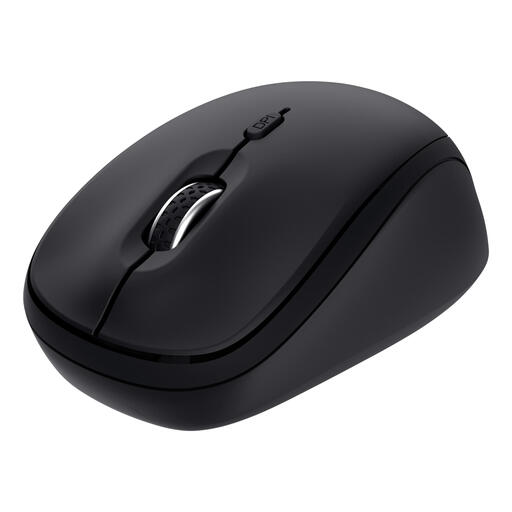 Image unavailable
A compact option if you’re looking for quiet buttons and connectivity with multiple devices; the product description notes that there’s less room to rest a large palm.
The description lists connectivity with up to three devices via a USB receiver and Bluetooth, and DPI settings of 800 or 1600.
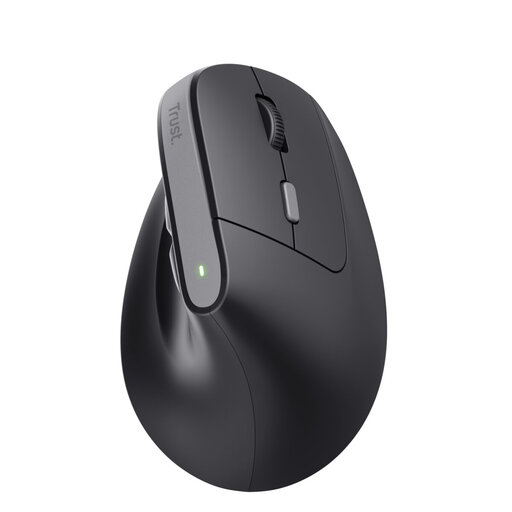 Image unavailable
A vertical option to compare if you’re right-handed and find this shape comfortable to use.
Trust lists a 57° angle, two quiet buttons and adjustable DPI from 800 to 2400.
This model is designed for right-handed use and has a 2.4 GHz USB receiver.
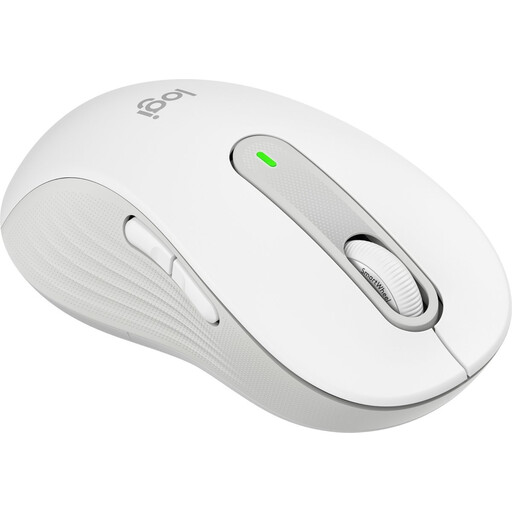 Image unavailable
A standard mouse for left-handed users with larger hands, when quieter clicks and precise scrolling are important considerations.
The product description lists Bluetooth Low Energy or a Logi Bolt USB receiver, and customisable side buttons.
This version is designed for left-handed users with larger hands.
No. Check which controls the claim applies to: for example, Trust describes two quiet buttons on the wireless Bayo II, while Logitech’s sound comparison for the MX Master 3S is limited to left- and right-clicks.
First, compare the required connection with the ports on your computer. Logitech lists Bluetooth Low Energy or a Logi Bolt USB receiver for the Signature M650; Trust lists a 2.4 GHz USB receiver for the wireless Bayo II. Follow the instructions for the exact version.
No. The shape alone doesn’t prove that a mouse will suit everyone better. Check your hand size and whether you’re left- or right-handed, and see if the mouse feels comfortable to use. The Arboportaal advises alternating computer work with other tasks or taking a break.
Alternate computer work with other tasks or take a break. The Dutch Arboportaal gives this advice for computer-based work; it doesn’t prove that a particular mouse model prevents discomfort.
The Dutch regulations consulted don’t specify a particular quiet or vertical mouse model. Employers do have obligations relating to safe computer-based work, including alternating it with other tasks or taking a break; these obligations don’t automatically apply to every personal study space.