
Anyone who writes for long periods
If you spend a long time writing and editing, you’ll want to make sure the sound of your keystrokes doesn’t dominate your quiet workspace. So pay attention to the switch variant, not just the model name.


Start by checking the exact switch variant: a quiet switch and case dampening are different features, and manufacturers’ specifications won’t tell you how loud a complete keyboard will sound in your study. Choose a full-size model if you often enter numbers; consider a TKL or compact model if you want to leave room for recipes and a mouse. Check that the physical layout and the keys you need suit the way you work.
If you spend a long time writing and editing, you’ll want to make sure the sound of your keystrokes doesn’t dominate your quiet workspace. So pay attention to the switch variant, not just the model name.
If you switch between text, quantities and page layout, first decide whether a number pad and dedicated navigation keys suit the way you work.
If you keep recipes or notes beside your computer, weigh up the keyboard’s width against the space you want to leave for paper and a mouse.
First, check the switch and whether the case has any dampening. Then choose a size and layout that suit the way you enter information, the papers on your desk and the computer you’ll use with the keyboard.
| What to consider | What should you check? | Who is this important for? |
|---|---|---|
| Key sound | Check the full switch name and what the manufacturer says about dampening in the switches and case. | If I write for long periods, I don’t want the sound of typing to dominate my quiet workspace. Around 36% of consumers choosing a keyboard for this kind of work prioritise quiet operation. |
| Number and layout keys | Look at the physical layout and work out which keys you use in your layout software. | When I enter quantities and pages, I want the keys I need to be within easy reach. Layout and number keys are a priority for around 29% of consumers. |
| Desk space | Measure the available space and check how much room the keyboard and mouse take up together. | I want to be able to put recipes and notes beside my keyboard while still leaving room for my mouse. Around 21% of consumers prioritise having free desk space. |
| Switching and customisation | Check the connections and whether the exact variant supports the key functions you want. | If I want to switch between devices or customise frequently used keys, I want to know in advance what the specific variant offers. This is a priority for around 14% of consumers. |
A model may be available with different switches. So the switch variant you choose matters if you want to keep typing noise down.
Before buying, check the full variant name and the switch included.
Case dampening and switch characteristics are separate features. Dampening foam alone doesn’t tell you how loud the complete setup will be.
Assess the case and the included switch separately. If you want a different feel when typing later, you may need to buy compatible replacement switches.
ANSI US and US ISO are different physical keyboard layouts; changing a software setting won’t change the physical position of the keys.
Compare the full variant name and product image with the keys you need for your layout work.
Logitech offers the MX Mechanical in a full-size model and the MX Mechanical Mini as a more compact option.
The LIGHT MOUNT TKL Silent Tactile US ISO is a TKL model which, according to be quiet!, has quiet tactile switches and a dampened case.
The compact KW 300 MX and wired KC 200 MX are two different keyboard options from CHERRY.
The V6 Max is designed for anyone looking for a full-size keyboard, wireless connections and customisable keys.
These models offer a range of sizes and switch variants to consider when formatting a cookbook in a quiet study. Check the exact switch and physical layout for each model.
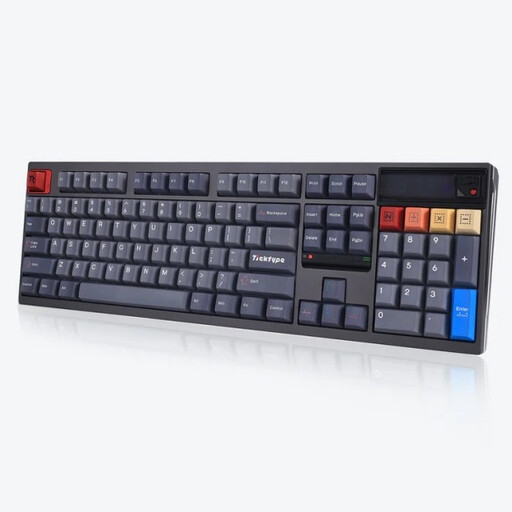 No image available
A full-size option to consider if you’d like to use a larger keyboard when formatting recipes.
The product name lists 108 keys, a US layout and Thocky Linear Switches.
No image available
This full-size model is an option if you’re looking for a 108-key keyboard for your layout work.
The product name lists Silent Tactile Switches and a US layout. If key sound is an important factor, check the exact variant.
 No image available
A more compact form factor to consider if you want to leave room for recipes and a mouse.
The product name lists a wireless mechanical keyboard with a 75% layout and US QWERTY.
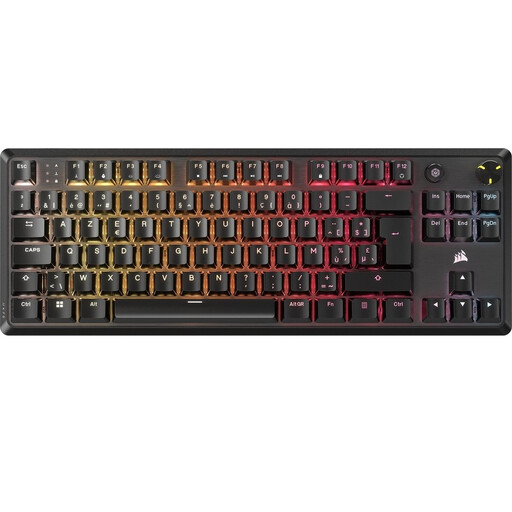 No image available
A TKL model to consider if you’re weighing up a keyboard without a number pad against the space you need for your notes.
The product name lists MLX Red and BE AZERTY. According to the product information, it doesn’t have a number pad.
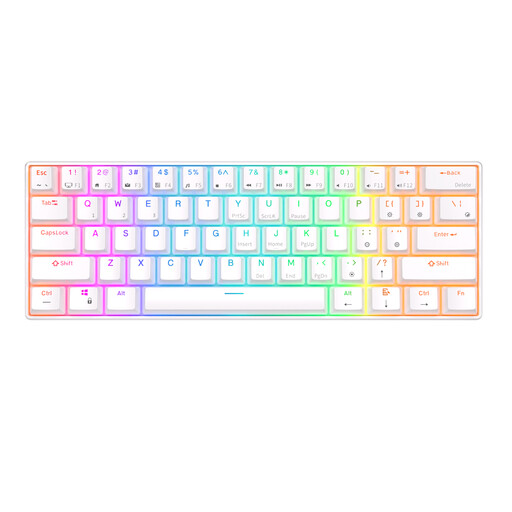 No image available
The 60% designation makes this an option to consider if you’re looking for a very compact keyboard for your workspace.
The product name lists Quiet Red Switch, tri-mode connectivity and a white finish. Check that the physical layout has the keys you need.
Not always. A full-size keyboard has a number pad, which can be useful for entering quantities; a TKL model leaves it out and can free up desk space. Also check which navigation keys you use in your layout software.
No. Hot-swap doesn’t mean that every replacement switch will fit or sound the same. be quiet! lists support for compatible 5-pin MX switches for the TKL model mentioned; for other models, check the connection and exact variant.
Set up your workspace so your shoulders stay relaxed and your forearms are roughly horizontal while you type. The Chartered Institute of Ergonomics and Human Factors also recommends leaving space between the keyboard and the edge of the desk to support part of your forearms; adjust the setup to suit your desk.
For distance purchases, you’ll usually have a 14-day cooling-off period, with some exceptions, according to the Dutch government. The Netherlands has no fixed statutory warranty period: if a product is faulty, your rights depend on what you can reasonably expect from it. Contact the seller if you have a problem.
According to Business.gov.nl, the relevant EU product rules apply to electronic equipment; the Radio Equipment Directive is also relevant for equipment with Bluetooth or a radio-frequency module. The manufacturer is responsible for meeting the applicable requirements and applying the CE mark. The Dutch government explains that the CE mark is not a quality mark; check the product documentation for a specific model.