
Writer in a shared study space
You prepare lesson plans and write text, and audible keystrokes could disturb others. CHERRY and Trust describe specific models as quiet; don’t treat this description as an independent sound measurement.


Start with the sound and layout of the exact model: a low-profile keyboard with scissor switches may suit quiet typing, while a compact model frees up space if you rarely enter numbers. Then choose the connection to suit your computer and the way you work; switching between devices is only useful if you actually use them. Some manufacturers describe their models as quiet, but there is no comparable sound measurement to rank them against one another.
You prepare lesson plans and write text, and audible keystrokes could disturb others. CHERRY and Trust describe specific models as quiet; don’t treat this description as an independent sound measurement.
You write and edit a lot of text and want to set up your keyboard and workspace to suit the way you work. Arboportaal recommends a relaxed posture with neutral joint angles as a starting point.
You actually use more than one device while preparing your materials and want to know whether the connection and switching features suit your needs. Logitech and Trust describe these features for specific models.
First assess the sound of the exact model and your working posture. Then consider the key layout and desk space, and finally choose a connection that suits your devices.
| What to consider | What should you check? | Who is this most important for? |
|---|---|---|
| Quiet typing | Check the key mechanism of the exact model and, if possible, assess the sound for yourself. | If I’m preparing teaching materials in a quiet study space, I want to know how much noise the model makes; around 36% of consumers say typing noise is their main concern when buying. |
| Long writing sessions | Consider the keyboard height and available space alongside your chair, screen and mouse. | During long writing sessions, I want to adjust my keyboard and workspace for relaxed typing; around 29% of consumers say working posture is their top priority. |
| Layout and space | Check for a numeric keypad and the physical key layout of the version on offer. | If I need space next to my mouse, I want to know which keys I’ll be giving up; around 21% of consumers prioritise layout and desk space. |
| Connection | Check whether your device uses USB or Bluetooth and whether you need the receiver supplied with the keyboard. | If I want to avoid connection problems or switch between devices, the connection needs to suit my setup; around 14% of consumers say connectivity is their main concern when buying. |
Keychron sells Silent Switch switches separately and lists them as compatible only with specific hot-swappable keyboard models. So you can’t assume a keyboard includes one just from its product name.
Before choosing a mechanical model, check which switches are fitted and whether they are compatible with the complete keyboard.
Modifying a keyboard may require separate switches and extra work.
The Trust Ody II version reviewed on Joybuy is offered with a US QWERTY layout and numeric keypad. You can’t tell which layout it has from the model name alone.
Check the product page for the version, physical key layout and whether it has a numeric keypad.
The Dutch government explains that a manufacturer’s or seller’s warranty is an additional benefit. There is no fixed statutory warranty period for all products in the Netherlands; you also have rights if a product is faulty or does not meet expectations.
Compare any additional warranty terms with your legal rights, and contact the seller if there’s a fault.
The STREAM KEYBOARD range features low-profile keys with an SX scissor mechanism; the wired TKL version does not have a numeric keypad.
The Ody II is a wireless keyboard with a USB receiver; the compact Nado II uses Bluetooth to connect to multiple devices.
The models discussed differ in their connections and features: MX Keys S for switching between devices, K120 for a wired USB connection, and Signature K650 with an integrated palm rest.
Keychron offers Silent Switch switches for anyone looking to build a mechanical keyboard with suitable dampened switches.
This selection includes wired keyboards with a numeric keypad, compact and foldable models, and wireless options for use with multiple devices.
 Image unavailable
Suits lesson planning on a phone or tablet if you want to switch between devices. The product information mentions a magnetic stand, Bluetooth for up to three devices and a rechargeable design. The title describes the keys as quiet; this is not a comparative sound measurement.
 Image unavailable
Suits a desk setup where you regularly enter numbers and want a wired connection. The product information lists a full-size layout and plug-and-play operation via a cable.
 Image unavailable
Suits anyone looking for a mechanical keyboard with a wired connection and wrist rest. The product information mentions a hot-swappable PCB; that alone does not indicate how loud it is.
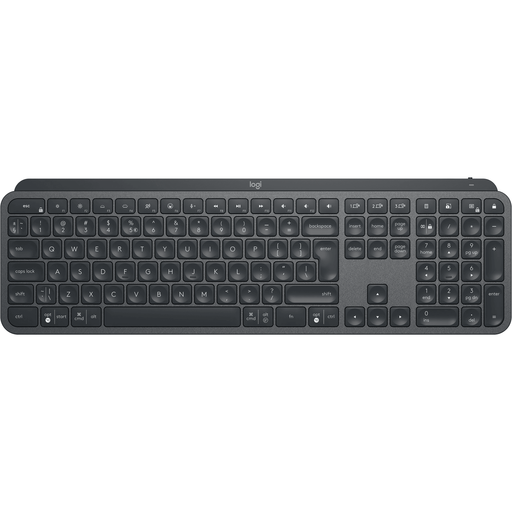 Image unavailable
Suits lesson planning where you switch between multiple devices. The product information mentions Bluetooth, a Logi Bolt receiver and switching between up to three devices. This is the QWERTY US version; check that the physical layout suits you.
 Image unavailable
Suits anyone looking for a compact mechanical keyboard with a US layout. The title lists 68 keys and a metal top plate; magnetic switches alone do not indicate how loud it is. Check that the US layout suits the way you work.
Not necessarily. If you mainly write text and want space for your mouse, the CHERRY STREAM KEYBOARD TKL leaves out the numeric keypad; the Logitech K120, by contrast, has an integrated numeric keypad. Check the layout of the version you choose.
Consider your whole workspace, not just the keyboard. Arboportaal recommends a relaxed posture with neutral joint angles as a starting point; readjust your setup if you work somewhere else.
First check which connection the exact model uses. The Trust Ody II works with a USB receiver; the Trust Nado II uses Bluetooth. For the Ody II, check the receiver and USB port; for the Nado II, check the Bluetooth pairing, following the instructions for your version.
For distance purchases from a business, you usually have 14 days to change your mind; the Dutch government lists some exceptions. You’re also entitled to a product that meets expectations, and can contact the seller if there’s a fault. There is no fixed statutory warranty period for all products in the Netherlands; a manufacturer’s warranty is in addition to your legal rights.
Under the conditions described by Arboportaal, yes: if you work at a screen for more than 2 hours a day, the screen and keyboard must not be attached to each other. If you use a laptop, your employer must then allow you to use a separate screen or keyboard. This is a conditional workplace requirement, not a general buying requirement for every reader.