
Student in a shared quiet study space
When other people are studying nearby, both typing and mouse clicks can be distracting. Manufacturers describe some models as quiet, but these descriptions are not independent sound measurements.


Start with a keyboard whose specific version is described as quiet, then check that its layout and connection suit your computer and the way you work. A compact model without a number pad takes up less desk space, while a full-size model may be more practical if you enter numbers frequently. Manufacturers’ claims about quiet operation are not independent sound measurements.
When other people are studying nearby, both typing and mouse clicks can be distracting. Manufacturers describe some models as quiet, but these descriptions are not independent sound measurements.
For longer typing sessions, key feel and layout can make a difference. A number pad is most useful if you also regularly enter scores or other figures.
If you need room for a laptop, notes and a mouse, you could consider a more compact TKL model. RTINGS describes TKL and 75% models as smaller than larger keyboards; a TKL layout omits the number pad.
First decide how much typing noise is acceptable in your study space, then choose the size and connection that suit the way you work on your quiz.
| What to consider | What to look for | Who should give this more weight? |
|---|---|---|
| Typing noise | Check the exact version and, if possible, look for a review of that model’s noise level. RTINGS notes that scissor and rubber dome mechanisms are generally quieter types, but that doesn’t automatically tell you how a particular keyboard sounds. | If you study alongside other people, you’ll want to avoid every keystroke dominating the room. Around 33% of consumers say noise is their top priority. |
| Long typing sessions and layout | Compare the key layout and labels with how you usually work; also check whether you need a number pad. | If you enter lots of questions, answers or scores, a familiar layout may feel more comfortable. Around 27% of consumers prioritise long typing sessions and the right layout. |
| Desk space | Measure the space available and consider whether you really use the number pad. TKL models don’t have one. | If you have little room for a laptop, notes and a mouse, a smaller keyboard may be more practical. Around 20% of consumers say desk space is their main consideration. |
| Connection to your device | Check whether your computer has Bluetooth or the required USB connection, and which connection the exact version uses. | If your keyboard needs to work with a particular laptop or tablet, you’ll want to know in advance how to connect it. Around 20% of consumers put compatibility first. |
CHERRY, Trust and Logitech describe specific products as quiet, but a manufacturer’s description can’t predict exactly how a keyboard will sound in your study space.
Check the full product version and, if available, look for an independent review of that exact model. Don’t directly compare a manufacturer’s claim with a measurement of a different keyboard.
Trust sells both a standalone Ody II keyboard and keyboard-and-mouse sets; the Logitech MK295 is a set.
Check the full product name and what’s included before deciding which version is right for you.
A set may also include a mouse you don’t need.
Similar names don’t automatically mean two full model versions are the same. Also check the layout and connection of the product you’re looking at.
Compare the full model name and version on the product page before deciding to buy.
The STREAM range includes wired versions with and without a number pad, as well as a ULTIMATE version with several connection options.
The standalone Ody II is a wireless keyboard with a USB receiver; the Trezo Comfort is a keyboard-and-mouse set with an integrated wrist rest.
The MK295 is a wireless keyboard-and-mouse combination for anyone who wants to consider both devices together.
These Joybuy products are intended as a starting point when choosing a keyboard for typing quiz questions. The list includes wireless and compact versions; quiet operation has not been independently measured for every model. So be sure to check the layout, connection and any manufacturer claims for the specific version.
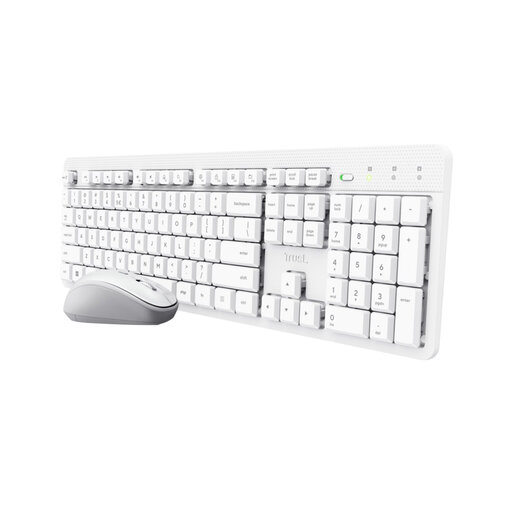 No image available
This set could suit you if you want to type and navigate with a mouse while creating quiz questions.
The product name mentions quiet keys. According to the product information, the set uses a USB receiver; check that the connection is compatible with your device.
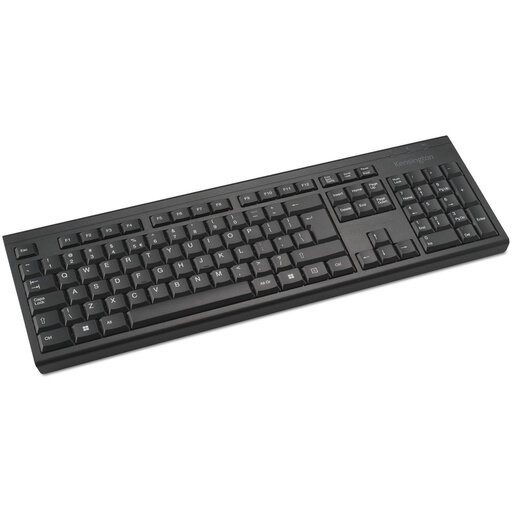 No image available
A wireless option to compare if you want to type quiz questions without a wired connection.
A USB receiver is required for the wireless connection; check that your device has a suitable port.
 No image available
The full-size layout with a number pad may be useful if you regularly enter figures while creating quizzes.
The product name mentions scissor keys and multi-device connectivity. This version has a US QWERTY layout; check that it matches your preference.
 No image available
The 75% layout may be worth considering if you’re looking for a more compact keyboard and don’t need a full-size one.
This version is wired and, according to the product name, has hot-swappable linear switches, 83 keys and white backlighting. The product description mentions sound-dampening layers; this is not an independent sound measurement of the model.
 No image available
This wireless version may be worth comparing if you’re looking for a keyboard with the listed Dutch QWERTY layout.
The product listing limits this version to Mac models with Apple Silicon. Check compatibility with your computer before choosing.
It’s most useful if you often enter scores or other figures. If you mainly type questions and answers and have a small desk, you could also consider a TKL model without a number pad.
It depends on the version. According to Trust, the standalone Trust Ody II uses a USB receiver that can be stored in the keyboard. Check which connections your device has, and don’t assume Bluetooth is available if the version is listed as using a USB receiver.
For a standard online consumer purchase in the Netherlands, you generally have a statutory 14-day cooling-off period after delivery; check which exceptions and returns conditions apply. If the product doesn’t perform as you could reasonably expect under normal use, you may also be able to rely on your statutory guarantee rights and contact the seller. ACM ConsuWijzer explains these consumer rights.
Not for every student. Arboportaal describes a workplace requirement for employees who work with display screens for more than two hours a day: the screen and keyboard must not be attached to each other, and when using a laptop, it must be possible to use a separate screen or keyboard. This is not a general requirement to buy one for private study.