
Creator working in a quiet study space
You’re creating or testing a game menu and want keystrokes to be as unobtrusive as possible. So first check exactly which quiet key or switch version you’re choosing.


In a quiet study space, choose a keyboard whose specific version is explicitly described as having quiet keys or dampened switches. Then check that its layout suits your text, symbols and navigation needs. A flat scissor-switch keyboard, a quiet mechanical version and a simple wired keyboard offer different combinations of key feel, customisation and connectivity. Manufacturers’ claims about noise are not comparable sound measurements.
You’re creating or testing a game menu and want keystrokes to be as unobtrusive as possible. So first check exactly which quiet key or switch version you’re choosing.
You’re working on menu text, shortcuts or code and want a layout with easy-to-reach symbols and navigation keys. Programmable features may be useful if they work with your computer and software.
You work on more than one device and want to decide whether easy switching matters more than a fixed connection. Logitech says the MX Keys S can switch between up to three devices.
A good fit if: a flat typing feel and minimal distraction are your priorities. CHERRY describes the scissor-switch mechanism on its wired STREAM KEYBOARD as quiet; Logitech says the MX Keys S has stabilised keys designed to reduce noise.
Check: the physical layout and connection type of the version you want to use.
A good fit if: you want mechanical feedback as well as an explicitly quieter option. Logitech offers the MX Mechanical with Tactile Quiet switches, among other options; CHERRY describes its standalone MX Silent Red switch as dampened.
Check: Logitech says the Clicky, Linear and Tactile Quiet versions of the MX Mechanical each have a different sound and feel. A standalone quiet switch is not a complete keyboard.
A good fit if: you want a simple wired connection or prefer to work without a cable. Trust describes the TK-150 as wired and the Ody II as wireless with a USB receiver.
Check: that your computer has the right port available. With a wireless model, you’ll also need to account for the receiver and battery management.
Manufacturers describe certain features as quiet, but these claims are not comparable sound measurements. Choose based on the exact version and the feature that matters most for your work.
| What to consider | What to check | Who is this most important for? |
|---|---|---|
| Key noise | Check the mechanism and exact switch version; don’t treat ‘quiet’ as a decibel comparison. | If I work in a quiet space, I want keystrokes to distract me and others as little as possible. Around 36% of consumers make quietness their top buying priority. |
| Layout for text and code | Check the exact layout and look at the symbols, arrow keys, function keys and, if needed, the number pad. | When I enter menus, text or code, I want the keys and symbols I need to be easy to reach. Around 29% of consumers prioritise the layout for text, code and navigation. |
| Connection and switching between devices | Check the connection required, the ports available and whether the model works with your devices. | If I switch between devices while working, I want a connection that suits my setup. Around 21% of consumers put switching between devices first. |
| Mechanical typing feel | Check the exact switch name; if you’re buying standalone switches, make sure your specific keyboard is hot-swappable and compatible. | If I’m looking for a particular mechanical typing feel, I want to choose the right version for that preference. Around 14% of consumers prioritise mechanical feel and customisation. |
Logitech describes the MX Mechanical’s Tactile Quiet, Clicky and Linear versions as having different sounds and feels. The product range name alone won’t tell you which version you’re getting.
Check the switch version in the listing before you order.
Keychron lists compatibility limitations for its Silent K Pro switches. These standalone components are not a complete keyboard.
Check the full keyboard model and whether it’s hot-swappable before choosing switches.
You’ll also need a compatible keyboard, so check whether your current one is suitable before buying standalone components.
According to Trust, the Ody II uses a USB receiver, while the TK-150 connects via USB-C or the included USB-C-to-A adapter.
Check in advance which ports are available and which connection is included with the version you’ve chosen.
If a port is occupied or incompatible, you may need a different connection solution. The right option depends on your equipment.
Worth considering for the wired STREAM KEYBOARD with its flat scissor-switch mechanism, or if you’re looking into the MX Silent Red switch.
The MX Keys S is worth considering for low-profile typing and switching between devices; the MX Mechanical is available in a Tactile Quiet version, among others.
The Ody II is a wireless option with a USB receiver; the TK-150 is a wired option with low-profile keys.
Worth considering if you want to customise a compatible mechanical keyboard with standalone Silent K Pro switches.
These keyboards offer compact or larger mechanical layouts, with a range of wired and wireless connection options. Check the layout and exact switch for each version; the product information is not a comparable sound measurement.
 No image available
A good fit if you want a compact mechanical layout with essential navigation keys. The product description lists Bluetooth, 2.4 GHz and USB-C; the product information doesn’t provide an independent sound measurement.
The title specifies Reaper switches.
 No image available
A good fit if you want a compact mechanical layout and a choice of connections. The product description lists three connection modes, PBT keycaps, a volume knob and a hot-swappable PCB.
The description mentions sound-dampening layers; this is not a comparative sound measurement. Check the exact switch version.
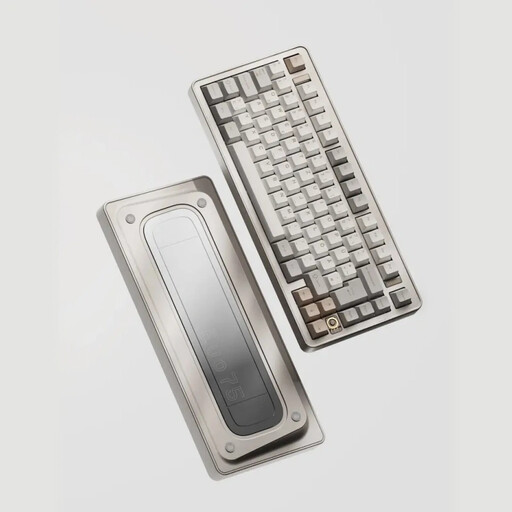 No image available
A good fit if you want a compact US layout and a choice of connections. The product description lists Bluetooth, 2.4 GHz and USB-C, plus a hot-swappable PCB.
The description mentions VIA compatibility; check that this feature suits your computer and the way you work.
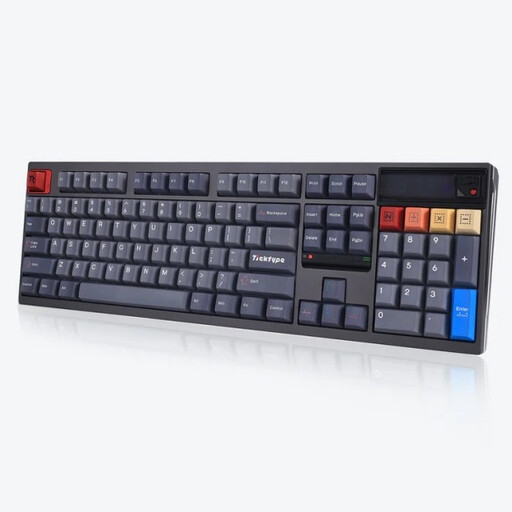 No image available
A good fit if you want a larger layout with dedicated keys for text and data entry. The product description lists Bluetooth, 2.4 GHz and USB-C, and says the switches are hot-swappable.
The product information lists linear switches, but doesn’t provide an independent sound measurement.
 No image available
A good fit if you want a wired mechanical layout with 94 keys. The product description lists interchangeable switches and a detachable wrist rest.
No sound measurement is provided; check the switch you choose and whether the layout suits your work.
No, not just because it has the word ‘gaming’ in its name. First choose the keys and layout your design or development work calls for, then check the noise level of the exact version. A keyboard with quiet keys and a mechanical model with Tactile Quiet switches are both options.
First check which ports are available and the exact model. According to Trust, the Ody II uses a USB receiver, while the TK-150 connects with a USB-C cable and an included USB-C-to-A adapter.
Only if that particular keyboard supports suitable replaceable switches. Keychron lists certain hot-swappable models as compatible with its Silent K Pro switches; check the full version of your keyboard before choosing standalone switches.
For online consumer purchases from a business, you generally have a 14-day cooling-off period; the Dutch government notes that conditions and exceptions may apply. You’re also entitled to a product of satisfactory quality. According to the Dutch government, there’s no fixed statutory warranty period in the Netherlands: what you can reasonably expect from a product depends on the product and the circumstances, and the seller must resolve problems with faulty goods.
Not every user does. Arboportaal says that for employees who spend more than 2 hours a day working with a screen, the screen and keyboard must not be attached to each other. When using a laptop, a separate screen or keyboard must then be available; this isn’t a general purchasing rule for every hobbyist.