
Vandaag of morgen in huis

Kwaliteit gegarandeerd

Welkomstaanbiedingen ontgrendelen: GRATIS bezorging | Tot 80% korting | Gratis 30 dagen JoyPlus-proefperiode
Download de app
Home fitness equipment can be a practical solution if you want to exercise regularly without the travel time to the gym. However, a purchase isn’t automatically a success. A machine can turn out to be bigger than expected, make more noise on a hard floor, or not quite suit your training goals.
As a Joybuy Product Recommendation Officer, I filter the key product specifications and put them side by side. This way, you can see what to look out for with an exercise bike, spinning bike, cross trainer, treadmill or walking pad.
A higher wattage or lots of resistance levels doesn’t tell you everything about the user experience. With an exercise bike, the flywheel, how the resistance is adjusted, the frame stability and the adjustability options are also important. With a treadmill, the running belt length, maximum speed and available space also matter.
Brands use different measurement conditions for noise claims. According to the product description, the Lugia bike operates under 20 dB and the YOSUDA cross trainer under 20 dB. These are product specifications from the supplier, not a guarantee that you’ll experience the same noise level in every home. Noise is also created by your pedalling rhythm, shoes, floor and maintenance.
A rubber protective mat can limit vibrations. In a flat, it’s still wise to consider your downstairs neighbours, especially when running or using high resistance.
A foldable treadmill only saves space if you can actually store it. So, check:
A walking pad might fit under a desk or bed, but the running surface can be smaller than on a traditional treadmill. You’ll notice this difference especially when jogging.
First, pick the movement you’re likely to stick with:
Magnetic resistance works without direct contact between resistance parts. According to the product descriptions, several of the bikes mentioned and the cross trainer use a magnetic system. This can contribute to a smooth movement, but also check whether the resistance is adjustable manually or electronically.
A belt drive can reduce maintenance compared to systems with more moving contact parts. For each product, check the maintenance instructions, such as checking bolts, keeping the drive clean and lubricating a treadmill when recommended.
The maximum weight capacity is a hard limit, not a guideline to exceed. Place the machine on a flat, stable surface and follow the manual.
For bikes, pay attention to:
With the products below, the stated weight capacities range from 130 kg to 160 kg. Always check the current product page, as specifications can vary by model.
An LCD or LED display often shows time, speed, distance and calories. These values are indicative and not a medical measurement. Bluetooth and app compatibility can be useful if you want to track your workouts, but check whether your smartphone, tablet or preferred app is supported.
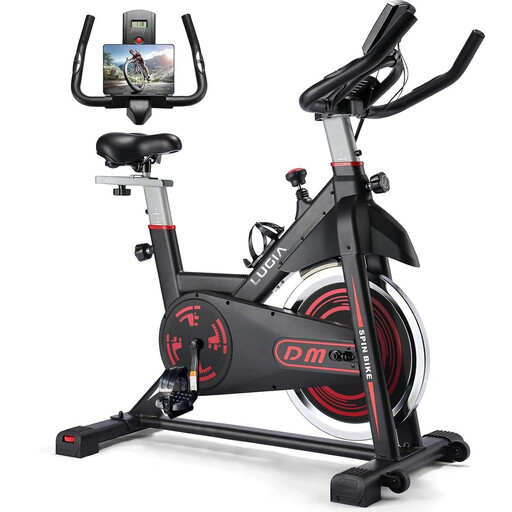
Why This Fits Their Persona: A straightforward choice for beginners who want to cycle at home without a large machine with complex features.
The product description mentions an adjustable saddle, a belt drive and continuously adjustable resistance. Do check whether the stated maximum weight capacity of 130 kg suits your use.
LED display with multiple training data points; according to the product description, a noise level under 20 dB.
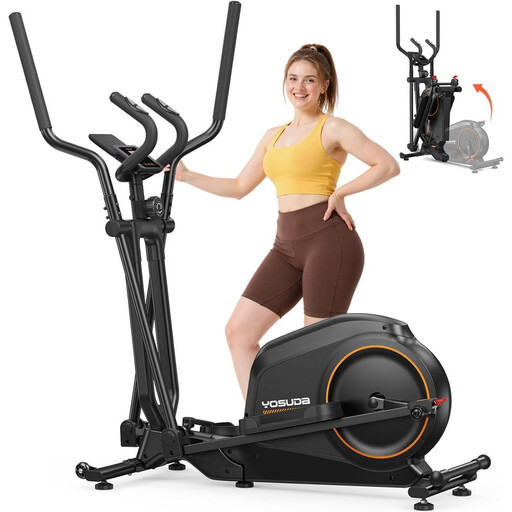
Why This Fits Their Persona: Suits small homes where compact fitness equipment needs to be stored away after use.
The product description mentions a three-step folding mechanism, transport wheels and a folded footprint of approximately 0.2 m². Measure your storage space beforehand.
16 resistance levels; large anti-slip pedals and a stated stride length of 38 cm.

Why This Fits Their Persona: Designed for walking in a home office or flat, with a foldable handle and transport wheels.
The stated speed is 0.6–3.8 mph, approximately 1–6.1 km/h. This means it’s mainly for walking; don’t expect a full running treadmill.
According to the product description, 10% manual incline; compact size of 47.2 × 22.4 × 5.5 inches.
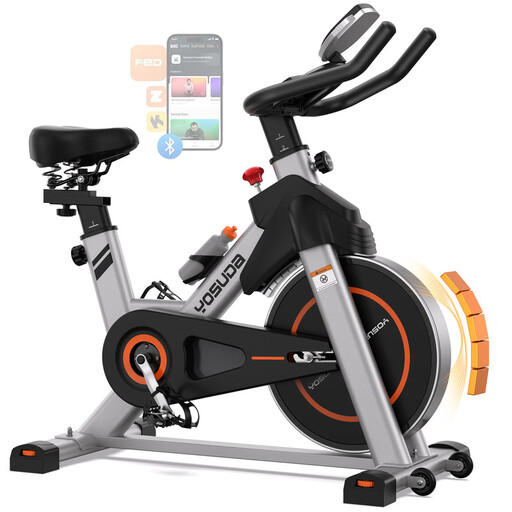
Why This Fits Their Persona: Interesting for users looking for a sturdy spinning bike for regular cardio and interval training.
The specifications mention a steel frame, magnetic resistance, belt drive and four-way saddle adjustment. The product information states a maximum weight capacity of 160 kg; check this on the product page.
8 kg flywheel; Bluetooth and app connectivity according to the product description.
Browse a current selection of portable training machines and compare dimensions, resistance, weight capacity and features.
An exercise bike, cross trainer or walking pad usually takes up less space than a full treadmill. Choose a model with transport wheels or a folding function and use a protective mat. Pay particular attention to vibrations: a quiet motor doesn’t automatically mean the floor won’t transmit contact noise.
The lifespan depends on frequency of use, user weight, maintenance and assembly. Regularly check bolts and pedals. Keep a treadmill clean, check the belt alignment and follow the manufacturer’s lubrication instructions. A warranty period, such as the two years mentioned in some product descriptions, is a purchase detail but not a prediction of the total lifespan.
The consumption depends on motor power, training duration and your electricity tariff. An exercise bike or cross trainer without a heavy electric motor typically uses a different amount than a treadmill with a motor. Look at the stated power and calculate for your situation: power in kW × hours of use × electricity price. Devices with Bluetooth, displays and apps can also have a small additional consumption.
