
Vandaag of morgen in huis

Kwaliteit gegarandeerd

Welkomstaanbiedingen ontgrendelen: GRATIS bezorging | Tot 80% korting | Gratis 30 dagen JoyPlus-proefperiode
Download de app
A sultry summer night in the Netherlands. You flip your pillow for the umpteenth time, searching for a cool spot. A fan seems like the solution, but the fear of a constant, irritating hum holds you back. Finding a quiet fan that is truly silent and also cools effectively can sometimes feel like an impossible task.
As a Product Recommendation Officer at Joybuy, I see the challenges consumers face every day. Many fans promise the world, but in reality, they leave you sweating with frustration. Before you buy a fan, it's important to recognise the most common pitfalls.
To avoid a bad buy, it's essential to look beyond the marketing slogans. Pay attention to the following three objective specifications to find a fan that suits your needs.
The noise level, expressed in decibels (dB), is the most important factor for a quiet fan. But don't be fooled by a single number.
A fan doesn't cool the air, but it creates an airflow that provides a cooling effect on the skin. Its effectiveness depends on the type and power of the airflow.
Modern fans offer more than just an on/off button. Features that genuinely make life easier include:
Not all fans are created equal. We've highlighted some popular choices and matched them with specific user profiles, so you can find a model that truly fits your needs.
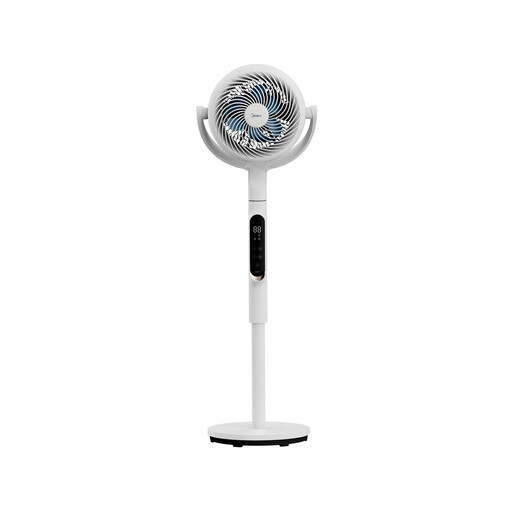
Why This Fits Their Persona: For those who wake up at the slightest sound, this model is a godsend. It is specifically designed for quiet operation, ideal for the bedroom or a quiet study.
This model bypasses the "whisper-quiet" lie by claiming a specific, very low noise level of 18 dB(A), made possible by a high-quality brushless DC motor and a special blade design.
Extremely quiet, 15 speed settings for precise control, and a special sleep mode. The wide oscillation ensures even air circulation.
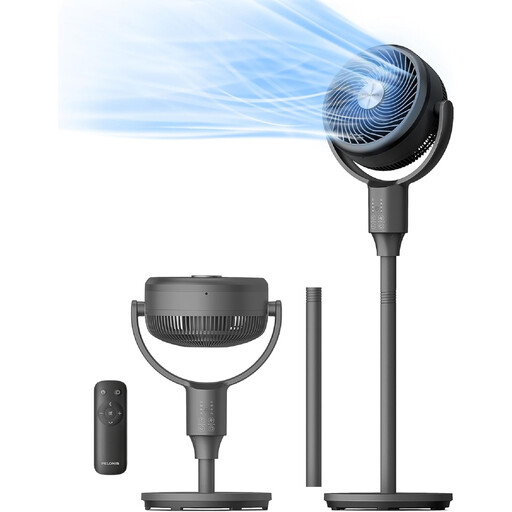
Why This Fits Their Persona: Perfect for those who want to cool an entire living room or home office evenly without a constant, direct airflow in their face. Ideal for creating a comfortable and productive environment.
This model tackles the "powerless breeze" pitfall. Instead of a weak, direct stream, the OmniFlow 3D oscillation (135° horizontal and 90° vertical) focuses on efficiently circulating air throughout the entire room.
True 3D air circulation for an even temperature. The height-adjustable stand makes it flexible for use near a desk, sofa, or bed.
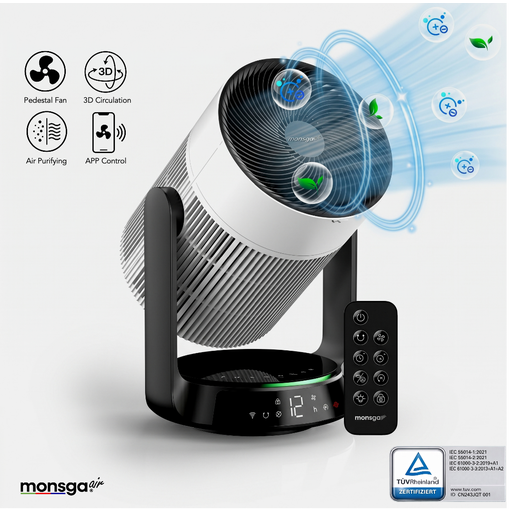
Why This Fits Their Persona: For those who want more than just cooling. This device combines a powerful air circulator with an air purifier, ideal for people with allergies or for use in enclosed, poorly ventilated spaces.
This isn't a fan with a gimmicky extra feature. The 2-in-1 function is serious, with a specified CADR (Clean Air Delivery Rate) of 280 m?/h, which substantiates its effectiveness against allergens and particulate matter.
Combines powerful 360° air circulation with effective air purification. Fully controllable via an app, remote control, or the touch panel.
A fan with a remote control offers optimal convenience. We have compiled a complete, up-to-date list of models that meet strict selection criteria and safety regulations.
A normal fan, like a classic desk or pedestal model, creates a direct, tangible airflow in one direction. This feels pleasant if you are sitting directly in its path. An air circulator is designed to move all the air in the room. It creates a vortex that sends air from the floor to the ceiling and along the walls, resulting in a more even temperature and a subtler, indirect breeze.
A fan advertised as 'quiet' typically has a noise level between 20 and 35 dB on its lowest setting. 25 dB is comparable to a whisper and is perceived as very quiet by most people, especially in the bedroom. Always check the specifications, as the noise can increase to 45-55 dB on higher settings, which is comparable to a quiet office or gentle rain.
Generally, fans are energy-efficient devices. An average fan consumes between 30 and 60 watts. Models with a modern DC motor are often even more economical, sometimes using only 18 to 30 watts. For comparison, a portable air conditioner can easily consume 1000 watts or more. A fan is therefore a cost-effective way to provide cooling.
