
Vandaag of morgen in huis

Kwaliteit gegarandeerd
Download de app
Categorieën

A fan that's too noisy for the bedroom, or a model that barely moves the air in a large living room—these are common frustrations. The search for an effective and quiet air circulation solution can be complex. Modern air circulators offer more than just a simple breeze; they are engineered for comfort, efficiency, and a healthy indoor environment. This guide will help you make an informed decision based on key specifications.
Before diving into specific models, it's helpful to understand the key parameters. These criteria will help you determine which device best meets your needs.
One of the most critical factors, especially for use in a bedroom or office, is the noise level, measured in decibels (dB). An ideal silent fan for the bedroom should produce less than 30 dB on its lowest setting. For reference, 20 dB is comparable to the sound of rustling leaves, while 30 dB is equivalent to a whisper.
The effectiveness of a powerful fan is determined by its airflow (measured in cubic meters per hour, m³/h) and its range (in meters). For a fan for a large room, high airflow is essential to circulate air throughout the entire space and prevent 'dead spots' with no circulation.
A smart fan offers convenient control via a smartphone app or with voice assistants like Alexa. A fan with a remote control has become a standard feature in this segment, allowing you to adjust settings without getting up.
Some models go beyond simple air circulation. A 2-in-1 fan and air purifier is an excellent solution for those with allergies or anyone who prioritizes a healthy indoor environment. These devices filter dust, pollen, and other particles from the air while providing a cooling effect.
Oscillation (the rotation of the fan head) ensures better air distribution. Advanced models offer 3D oscillation, where the head moves both horizontally and vertically. A height-adjustable standing fan provides added flexibility to direct the airflow precisely where you need it.
Based on the criteria above, we have selected models that stand out for their specifications and features.
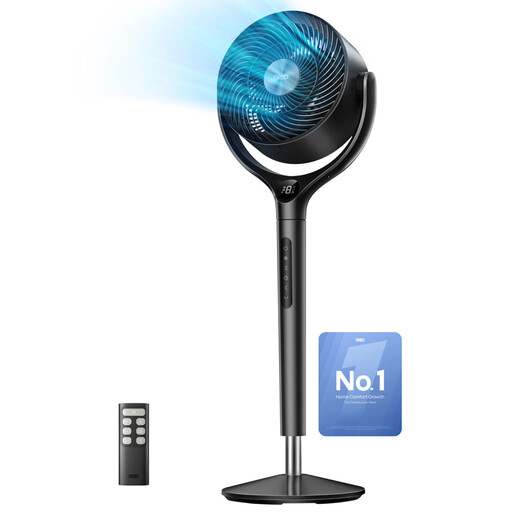
Why We Chose It The DREO Turbo Air Circulator is engineered for maximum airflow over long distances. According to the manufacturer, its TurboWind technology projects an airstream up to 30 meters, making this model ideal for large, open-plan spaces.
Key Features
Who is this for? This model is an excellent choice for users seeking a powerful yet quiet solution for large living rooms, lofts, or open-plan offices where extensive range and high airflow are required.
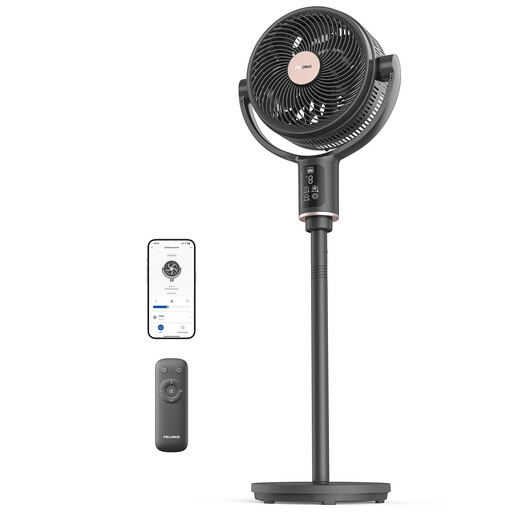
Why We Chose It The PELONIS fan combines smart technology with a unique dual-blade design. This model is engineered for seamless smart home integration, offering control via WiFi, an app, and voice assistants.
Key Features
Who is this for? This fan is ideal for the tech-savvy user looking for the convenience of a smart fan that can be fully integrated into an existing smart home ecosystem.
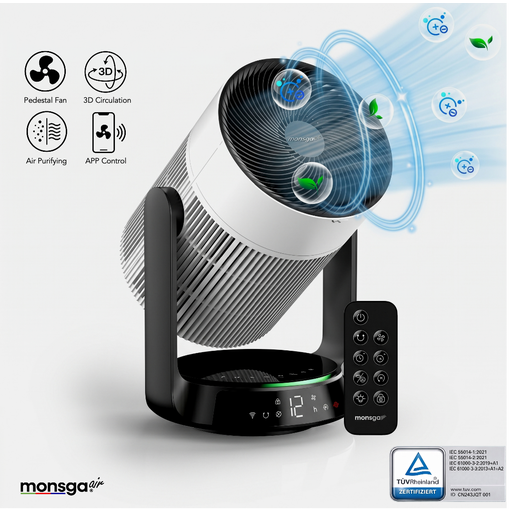
Why We Chose It The Monsga AP200 is a multifunctional device that combines a powerful air circulator with an air purifier. This makes it a year-round solution: cooling in the summer, circulating warm air in the winter, and purifying the air during allergy season.
Key Features
Who is this for? This model is the perfect choice for users who prioritize a healthy indoor environment, such as those with allergies, or for anyone looking for a versatile, year-round appliance.
The models above represent the cutting edge in silent air circulation, smart features, and air purification. If your ideal model isn't listed here, or if you're looking for a fan with other specific features, countless alternatives are available. Many models offer an excellent balance of price, performance, and functionality.
Browse our full range of Remote Control Fans.
What is the difference between a fan and an air circulator? A traditional fan creates a direct airstream for localized cooling. An air circulator is designed to move all the air in a room. By creating a powerful, focused jet of air that bounces off walls and ceilings, it generates a vortex effect that balances the temperature throughout the entire space.
How much noise does a 'silent' fan make? A fan is considered silent when it produces a noise level of around 20-30 dB on its lowest setting. This is quiet enough not to be disruptive during sleep or focused work. Always check the product specifications for the exact dB level.
Can an air circulator help with the energy bill? Yes. By using an air circulator in conjunction with an air conditioner or heater, cooled or heated air is distributed throughout the room much more quickly and evenly. This helps the room reach its target temperature faster, allowing the thermostat to turn off sooner and helping you save energy.