A QHD work monitor is a good fit if you mainly want to see your timeline, voiceover and notes alongside your existing screen. A colour-focused 4K monitor is more appealing if you also want to assess your walking-tour footage in SDR. Also check your computer’s video output, whether it can supply power over USB-C, the space available on your desk and your editing software’s colour settings. Resolution and stated colour coverage alone do not guarantee accurate reproduction.
Who would benefit from a second screen?
Video editor with a crowded timeline
You want to spread your video editing, voiceover and notes across two screens. Depending on your software settings, the second screen can also show only the video preview. Adobe explains how to do this in Premiere using Mercury Transmit.
Creator reviewing walking-tour footage
You also check colour and detail, and want to set the display mode to match your intended SDR output. Stated colour coverage is a useful starting point, not a guarantee of how the screen will look in your own setup.
Laptop editor using two screens
You want a second monitor with as few separate cables as possible. Check that your laptop supports the video output you need and, if you want to charge it over USB-C, provides enough power.
What should you look for?
QHD work monitor
A good fit if: you mainly want to place your timeline, text and other editing windows alongside your existing screen.
The trade-off: QHD has a lower resolution than 4K and, on its own, tells you nothing about colour reproduction.
Colour-focused 4K monitor
A good fit if: as well as editing, you want to review your walking-tour footage for a Rec.709 SDR workflow. BenQ and ASUS list a Rec.709 mode or preset for specific models.
The trade-off: manufacturer specifications do not measure your setup. Make sure your monitor and editing software settings also match your output.
4K monitor with USB-C
A good fit if: your laptop can use a suitable USB-C connection for video, data and, potentially, power. LG lists power delivery of up to 96 W for the 27UP850K-W.AEU.
The trade-off: the stated charging power does not prove that your laptop will receive enough power or support the display mode you want over that cable.
| What to consider |
What should you check? |
Who is this important for? |
| Room for your timeline and windows |
Compare the screen size and resolution with your desk and existing monitor. Decide whether you want to extend your workspace or put the video preview on the second screen. |
I want to see my timeline, voiceover and preview side by side without constantly switching between windows. Around 36% of consumers say workspace for the timeline is their top priority. |
| Colour and detail |
Check whether the exact model has a suitable colour mode and set it to match your intended output. Also check the terms of any calibration options. |
If I review the channel footage myself, I want to check colour and detail rather than just move editing windows around. Around 29% of consumers say image review is their top priority. |
| Laptop connection and power |
Compare your computer’s video output and power requirements with the connections and specifications of the exact monitor model. |
I want to connect my laptop to a second screen without finding out that it lacks the display or charging feature I need. Around 21% of consumers say laptop connectivity is their top priority. |
| Fit and adjustability |
Compare the dimensions, stand, height adjustment and any VESA mounting options of the exact model with the space available. |
When I set up two screens on one desk, I want to position them so they fit my setup. Around 14% of consumers say physical fit is their top priority. |
Common mistakes
-
Mistaking an HDR effect for proof of accurate SDR colour
For the 27UP850K-W.AEU, LG describes an effect that gives SDR content an HDR-like appearance. That is not the same as checking whether your monitor displays the intended SDR output.
For an SDR project, set your display and editing software’s colour settings to match the output format you have in mind.
-
Assuming every USB-C port supports video and provides enough power for your laptop
Features and charging power vary between monitor models, and need to suit your laptop’s capabilities and requirements.
Compare the connection and power specifications of both devices before choosing a one-cable setup.
-
Treating a QHD work monitor and a colour-focused 4K monitor as interchangeable
A QHD model and a model with a dedicated Rec.709 mode are designed for different uses. That difference alone does not determine which monitor is right for your editing setup.
First decide whether you mainly need the second screen for editing windows or also want to use it to review your footage.
Brands to consider
BenQ
The DesignVue PD2705U is worth considering if you’re looking for a 27-inch 4K screen with a dedicated Rec.709 mode.
- BenQ lists 99% Rec.709, a factory calibration report and 65 W USB-C power delivery for this model.
- These are manufacturer specifications, not an independent measurement. Check that 65 W meets your laptop’s power requirements.
Dell
The Pro Plus P2725DE is an example of a 27-inch QHD work monitor with a USB-C hub.
- Dell specifies a resolution of 2560 × 1440 pixels and a USB-C hub for this model.
- These product specifications are not an independent assessment of its suitability for colour work.
ASUS
The ProArt PA279CRV is a model-specific 4K option with a Rec.709 preset.
- ASUS lists 4K, a Rec.709 preset and 96 W USB-C power delivery for this 27-inch IPS model.
- The stated colour accuracy in the product specifications is not an independent measurement of the unit you receive.
LG
The UltraFine 27UP850K-W.AEU is a 27-inch 4K model with USB-C for a laptop setup.
- LG lists DCI-P3 95% as a typical value, USB-C power delivery of up to 96 W and an adjustable stand.
- DCI-P3 coverage does not confirm that the screen is calibrated for Rec.709. An HDR effect for SDR images does not prove that SDR is reproduced accurately either.
EIZO
The ColorEdge CS2740 is a specialist 27-inch 4K option for anyone looking to include screen calibration in their workflow.
- EIZO describes hardware calibration with ColorNavigator and connections via USB-C, HDMI and DisplayPort.
- A more involved calibration workflow is not necessarily needed for every narrated walking-tour video.
Monitors at Joybuy
This selection includes QHD and 4K monitors for use as a second editing screen. Focus on workspace, connections and how the monitor will sit alongside your existing screen.
 No image available
Philips 27E1N1800AE/00 27-inch 4K UHD IPS monitor
A 27-inch 4K screen for displaying editing windows or footage alongside your existing monitor.
Resolution: 3840 × 2160. The product name lists 60 Hz, 4 ms, HDMI, DisplayPort and a height-adjustable stand.
View at Joybuy
 No image available
AOC GAMING Q27G4ZDR QHD QD-OLED monitor
A QHD option if you mainly want to use your second monitor as extra workspace for editing windows.
The product name lists 26.5 inches, 2560 × 1440 pixels, 240 Hz and a height-adjustable stand.
View at Joybuy
 No image available
INNOCN CB27U1 27-inch 4K UHD monitor
A 4K screen for a laptop setup. Check that the connections and power delivery suit your computer.
The product name lists IPS, 3840 × 2160 pixels, 120 Hz and USB-C with 90 W Power Delivery. The product information also mentions HDMI, DisplayPort and an adjustable stand.
View at Joybuy
 No image available
ASUS ProArt OLED PA32UCDM 31.5-inch 4K QD-OLED monitor
A larger 4K screen for viewing editing windows and footage on one second monitor.
The product name lists 31.5 inches, 3840 × 2160 pixels and QD-OLED. The product information warns that the panel may be susceptible to burn-in, and recommends using screen protection and varying the content displayed as precautions.
View at Joybuy
 No image available
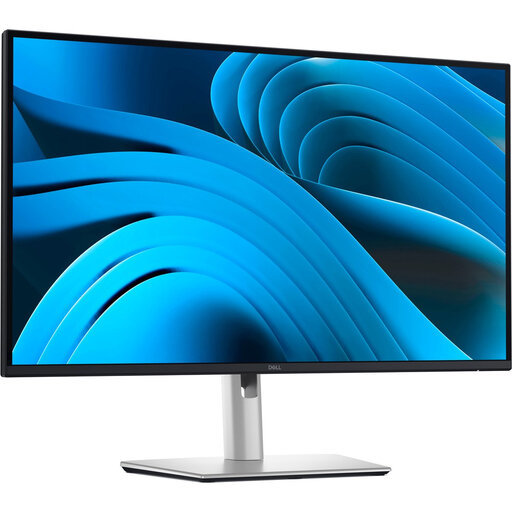
Dell Pro Plus P2725DE 27-inch QHD monitor
A QHD work monitor for a second workspace with your timeline, voiceover and other windows.
The product name lists 2560 × 1440 pixels. The product information mentions an IPS panel, 100 Hz, USB-C with 90 W Power Delivery and an adjustable stand.
View at Joybuy
Frequently asked questions
How can you use the second screen for a large video preview?
According to Adobe, in Premiere you can enable Mercury Transmit and then select the connected monitor for Program Monitor output. If you use other software, check its settings.
Do both your laptop and monitor need USB-C?
No, your chosen model may offer a different video input. If you want video and, potentially, charging over a single USB-C cable, compare your laptop’s video and power capabilities with those of the exact monitor model. For example, BenQ specifies DisplayPort Alt Mode and 65 W for the PD2705U.
Is a Rec.709 mode enough to review your video accurately?
No, a Rec.709 mode alone does not guarantee how your finished video will look. Set your monitor and editing software to match your intended output too. Adobe describes a Direct Rec.709 SDR preset for Premiere.
What should you check to find out how much power a monitor uses?
Check the energy label and product information for the exact screen. The European Commission lists an energy label scale from A to G for electronic displays. The label alone cannot calculate the energy use in your particular situation.
What are your rights if a monitor bought online is disappointing or faulty?
According to the Dutch government, where the rules apply to a distance purchase, you have a 14-day cooling-off period. In the Netherlands, there is also no fixed statutory guarantee period; if a product is faulty, the seller must provide a solution.


