
Pattern drafter working with multiple windows
You’re drawing pattern pieces while keeping instructions and a photo in view. In that case, usable screen space and readability matter more than gaming specifications.


A 27-inch QHD monitor is a practical choice if you want to view pattern drawings, instructions and reference photos side by side, and your chosen scaling makes everything easy to read. A 27-inch 4K monitor offers more pixels for fine lines and details. If photo colour matters, also compare the stated colour gamut and calibration for each model. For extended use, check how adjustable the monitor is. If you’re using a laptop, make sure its USB-C port supports video output and provides enough power for charging.
You’re drawing pattern pieces while keeping instructions and a photo in view. In that case, usable screen space and readability matter more than gaming specifications.
You use reference photos to explain fabrics or steps, and want to distinguish stated colour coverage from resolution alone.
You spend long periods working on guides and want to adjust your screen position. For a single-cable setup, the connection must also support your laptop’s video output and power requirements.
Start by considering what you need to fit on screen at the same time. Factor in colour, posture and connections too if they’re important to the way you work.
| What to consider | What should you check? | Who should pay particular attention? |
|---|---|---|
| Workspace and readability | Compare 27-inch QHD (2560 × 1440) with 4K (3840 × 2160), taking into account the space available on your desk and the scaling in your software. | If I want to keep pattern pieces, instructions and photos open at the same time, I need enough usable space without the screen dominating my desk; around 33% of consumers prioritise workspace. |
| Colour in reference photos | Check the stated colour gamut and any calibration information for the exact model; resolution alone says nothing about colour coverage. | If the colour of the fabric in my reference photos is part of the guidance, I want to know what colour information the model provides; around 27% of consumers give photo colour top priority. |
| An adjustable workspace | Check for height adjustment, tilt, monitor arm compatibility and potential reflections in your workspace. | For longer drawing sessions, I want to be able to adjust the monitor to suit my workspace; around 20% of consumers prioritise adjustability. |
| Connecting a laptop and peripherals | Check that your laptop’s USB-C port supports video output, the charging power required, the monitor’s ports and the cables supplied. | If I want to connect my laptop and peripherals easily, the monitor needs to suit my laptop’s connections and power requirements; around 20% of consumers make this their top priority. |
Resolution tells you how many pixels a screen has. Manufacturers specify colour coverage and calibration for each model, and this information isn’t provided in the same way for every screen.
Compare the colour claims for the exact model. Treat them as manufacturer specifications, not as independent measurements.
A USB-C connection alone doesn’t tell you whether your laptop can output video through that port or whether the monitor provides enough power for it.
Check your laptop’s video output and compare its power requirements with the monitor model’s specifications.
Depending on the connections available, you may still need a separate power adapter or another connection.
The screen needs to fit on your desk and be positioned so you can view it comfortably.
Measure the available space and check the stand, height adjustment and position in relation to windows.
According to ACM ConsuWijzer, your statutory rights exist alongside the guarantee offered by the retailer or manufacturer.
Check what additional damage cover or service the paid-for protection actually provides.
An optional premium may overlap with rights you already have under the statutory guarantee; its value depends on the terms and conditions.
The Pro Plus P2725D is a 27-inch QHD monitor for drawing and reading text, with a height-adjustable screen.
The DesignVue PD2705Q combines QHD with BenQ’s stated colour coverage and USB-C, making it an option for those who also work with reference photos.
The ProArt PA279CRV is a 27-inch 4K model for anyone who wants to compare stated colour spaces as well as fine detail.
The 27E1N1800AE/00 is a 27-inch 4K monitor with an IPS panel and a height-adjustable stand.
The FlexScan EV2740X is a 27-inch 4K model for a permanent laptop workspace where docking features are also important.
These products suit QHD and 4K workflows for pattern drawings, instructions and reference images. With 4K, check that your computer and software can display the resolution at a comfortable, readable scale.
 No image available
A QHD option for viewing pattern drawings, instructions and reference images side by side.
27 inches; 2560 × 1440; Rapid IPS panel.
QHD has fewer image pixels than 4K; check readability with your preferred scaling setting.
 No image available
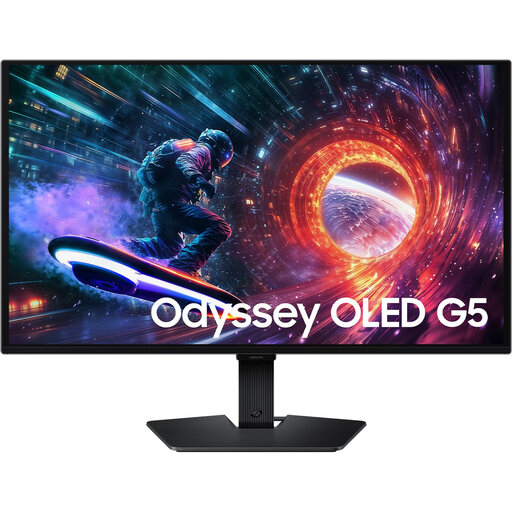
A 27-inch QHD option for work that involves viewing pattern drawings and instructions alongside reference images.
2560 × 1440; OLED panel; 180 Hz.
QHD has fewer image pixels than 4K; check that your chosen scaling makes everything easy to read.
 No image available
A QHD screen for viewing pattern drawings and instructions alongside photos in one workspace.
2560 × 1440; VA panel; 180 Hz.
QHD has fewer image pixels than 4K; your chosen scaling also affects readability.
 No image available
A 4K option if you want extra image pixels for fine pattern details and reference photos, with a suitable scaling setting.
27 inches; 3840 × 2160; IPS panel.
 No image available
A QHD option for viewing pattern drawings, text and reference images side by side.
2560 × 1440; IPS panel.
QHD has fewer image pixels than 4K; check readability at the scaling setting you use.
No, 4K isn’t essential for everyone. Check whether QHD displays your drawing, text and photos at a readable scale. The 27-inch 4K models reviewed offer more pixels, but that alone doesn’t guarantee better colour reproduction.
No, resolution alone says nothing about colour coverage or calibration. Compare the stated colour space and calibration information for the exact monitor model.
No, the USB-C connection alone doesn’t guarantee this. Check that your laptop can output video through that port and compare its power requirements with the monitor’s stated output. BenQ lists 65 W for the PD2705Q, while EIZO lists up to 94 W for the EV2740X.
For eligible online purchases from a business, consumers generally have a 14-day cooling-off period. The Dutch government lists some exceptions, so check the terms of your specific purchase. Different rules apply when buying from a private seller.
No, a commercial or manufacturer’s guarantee doesn’t replace your statutory rights. According to ACM ConsuWijzer, you have statutory rights alongside any guarantee from the retailer or manufacturer; what an additional guarantee covers depends on its terms and conditions.