For text, music notation and page layouts, an adjustable 27-inch QHD monitor may be enough; a 27-inch 4K model offers more pixels for fine detail. If you assess reference images for colour, colour features may carry more weight, but a wide colour gamut alone does not guarantee a match with a print. Also check your laptop’s connectivity and the monitor stand’s adjustment options.
Who is this monitor for?
Text and notation creator
You put together explanations and music notation, and want to assess small symbols and page layouts clearly. The 27-inch models mentioned come with QHD or 4K resolution; BenQ, Philips and Dell publish these specifications for their respective models.
Reference image editor
You use images as a reference for the content, so you pay attention to detail, colour features and how colour management fits into your workflow. BenQ and ASUS list colour features for the models discussed here; these product specifications are not independent test results.
Laptop user with long working sessions
You want to position the monitor comfortably and check whether the connection to your laptop supports video, data and sufficient power delivery. Check your laptop’s ports as well as the specifications of the exact monitor model.
What should you look for when choosing?
27-inch QHD work monitor
A good fit if: you mainly work with text, music notation and page layouts, and don’t need 4K.
Trade-off: the 27-inch models mentioned have fewer pixels at QHD than at 4K; also check the ports available on the exact version.
27-inch 4K for image references
A good fit if: you want to view fine details in notation and reference images, and extra pixels matter to you.
Trade-off: colour features are only relevant if they suit your images and colour management workflow; they don’t prove that a print will match.
4K with a highly adjustable stand
A good fit if: you often want to reposition the monitor to view pages in landscape or portrait orientation.
Trade-off: check the adjustments and ports available on each version; a typical gamut figure doesn’t tell you how accurately an individual screen displays colour.
| What to consider |
What should you check? |
Who is this important for? |
| Small notation and page layouts |
Compare the resolution of the exact model and view your documents at your preferred screen size and display scale. |
When I check notation and pages side by side, I want to see the detail without having to set the text to an uncomfortable size. Around 28% of consumers prioritise readability and layout. |
| Reference images and colour |
Check the colour features of the exact model and decide whether your workflow requires colour profiles and a proof print. |
When images are important references, I want to assess detail and colour differences; a screen specification doesn’t automatically predict the printed result. Around 22% of consumers put image assessment first. |
| Screen position |
Check the stand’s height, tilt and pivot adjustments, and consider the light in your workspace. |
When I’m working on the guide for a long time, I want to adjust the screen to suit my workspace. Around 17% of consumers prioritise adjustability. |
| Connecting a laptop |
Compare your laptop’s video output and power requirements with the monitor’s ports and stated power delivery. |
When I want to connect my laptop to a monitor, I want to know whether the combination supports video and provides enough power. Around 17% of consumers start with connection convenience. |
| Cost versus features |
Compare the same version and only pay for features you need in your own workflow. |
If text and notation make up most of my work, I want to avoid letting features for advanced colour work influence my choice when I won’t use them. Around 16% of consumers prioritise balancing cost against the features they need. |
Common mistakes
-
Assuming a wide colour gamut guarantees an accurate print
A colour gamut is a screen specification, while a soft proof also uses colour profiles in your workflow. A screen specification alone therefore doesn’t confirm that the final print will match.
Choose colour features to suit your images and intended output. Adobe explains colour management and soft proofing for assessing output; check important prints separately too.
Colour management and checking the output may add extra steps to your workflow.
-
Treating the Dell P2725D and P2725DE as the same version
The P2725DE is a separate USB-C hub monitor. If you’re relying on the ports on that version, confusing it with the P2725D could leave you with a different connectivity solution.
Compare the full model code and the ports on the monitor you’re being offered with the connections on your laptop.
If the version you choose doesn’t have the connection you expect, you may need a separate connection or solution.
-
Assuming every USB-C port delivers enough power
A USB-C connection doesn’t guarantee that every laptop will receive video and charge sufficiently through a single cable. The video connection and power delivery required must be suitable for both devices.
Before buying, compare your laptop’s video support and power requirements with the specifications of the exact monitor version.
You may still need your laptop charger if the monitor’s power delivery isn’t sufficient.
Brands to compare
BenQ
The DesignVue PD2705U reviewed here is a 27-inch 4K model for checking detail, with an sRGB mode.
- BenQ lists 99% sRGB, USB-C with 65 W Power Delivery and an adjustable stand for the PD2705U.
- These are BenQ’s specifications and colour claims for this model, not independent test results or proof that a print will match.
ASUS
ASUS describes the ProArt PA279CRV as a 27-inch 4K monitor with colour features for creative image work.
- ASUS lists factory calibration, 99% Adobe RGB and DCI-P3, and USB-C with 96 W Power Delivery for this model.
- The benefits of a wide colour gamut depend on your images and colour management workflow; these features don’t automatically apply to other ProArt models.
LG
The UltraFine 27UP850K-W reviewed here is a 27-inch 4K model with USB-C and an adjustable stand.
- LG lists height, tilt and pivot adjustment, and a typical colour gamut of 95% DCI-P3 for this model.
- A typical colour gamut figure alone doesn’t tell you how accurately a particular unit displays colours or prints.
Philips
The 27E1N5600AE/00 is a 27-inch QHD USB-C monitor for document work with a compatible laptop.
- Philips describes video, data transfer and charging via USB-C for this model.
- Check your own laptop’s requirements; these features aren’t necessarily available on other version codes.
Dell
The Pro 27 Plus P2725D is a 27-inch QHD monitor with an adjustable stand for document-focused work.
- Dell lists a resolution of 2560 × 1440 pixels at 100 Hz and an adjustable stand for the P2725D.
- Don’t confuse the P2725D with the separate P2725DE USB-C hub monitor.
Monitors at Joybuy
These monitors are options to compare when laying out text and music notation alongside reference images; the selection includes both QHD and 4K models.
 No image available
LG UltraFine 27U711B-B 27-inch 4K IPS monitor
A 27-inch 4K option for viewing fine details in notation and reference images.
The product name specifies an IPS panel and 4K UHD; the product description gives a resolution of 3840 × 2160 pixels.
View at Joybuy
 No image available
MSI MAG 322UP QD-OLED E16 31.5-inch 4K UHD monitor
A larger 4K screen for viewing reference images and fine notation details; bear in mind its 31.5-inch diagonal measurement.
The product name specifies QD-OLED and 4K UHD. The product description gives a resolution of 3840 × 2160 pixels and colour coverage of 99% DCI-P3 and 98% Adobe RGB; these are product specifications, not independent test results.
View at Joybuy
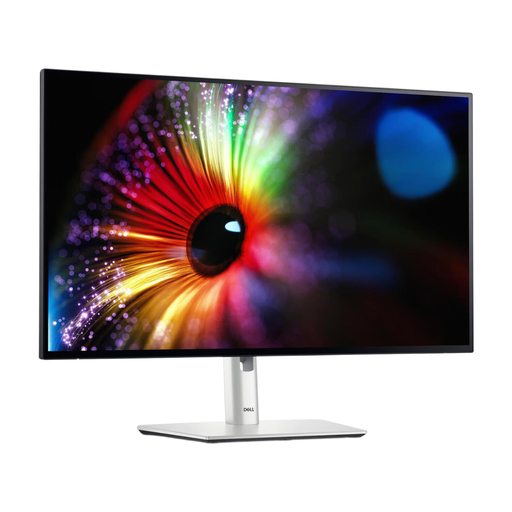 No image available
Dell UltraSharp U2724D 27-inch QHD monitor
A QHD option for working with text and music notation on a 27-inch screen.
The product name specifies 2560 × 1440 pixels. The product description mentions height adjustment and pivot; check that these settings suit your workspace.
View at Joybuy
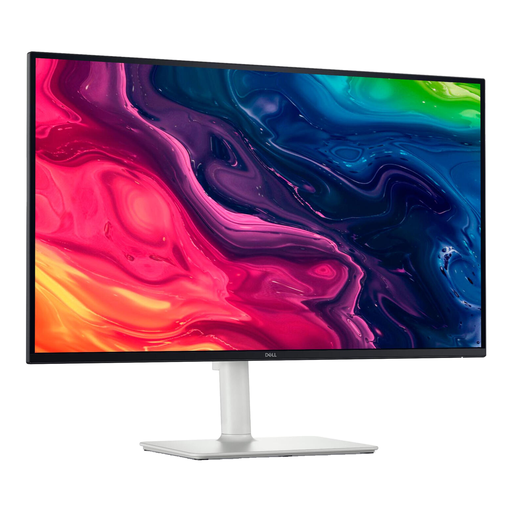 No image available
Dell Plus S2725QS 27-inch 4K Ultra HD monitor
A 27-inch 4K option for viewing fine details in notation and reference images.
The product name specifies 3840 × 2160 pixels. The product description mentions an IPS panel and a height-adjustable, tilting stand.
View at Joybuy
 No image available
Dell UltraSharp U2725QE 27-inch 4K Ultra HD monitor
A 27-inch 4K option if you want to assess fine details in notation and reference images.
The product name specifies 3840 × 2160 pixels. The product description lists 99% DCI-P3 and Display P3 colour coverage; these are product specifications, not independent test results.
View at Joybuy
Frequently asked questions
Is a monitor with a wide colour gamut enough for a guide that will be printed?
No, a wide colour gamut doesn’t prove that a print will match. Adobe describes colour profiles and soft proofing for assessing output; check the final print as well.
Can I connect my laptop to the monitor and charge it with one cable?
Only if the laptop supports the required video connection and the power delivery is suitable for it. BenQ lists USB-C with DisplayPort Alt Mode and 65 W Power Delivery for the PD2705U; ASUS lists DisplayPort via USB-C and 96 W Power Delivery for the PA279CRV.
What are the Dutch rules for working with a screen for extended periods?
According to Arboportaal, for an employee who works with a screen for more than two hours a day, the screen and keyboard must not be attached to each other. This information relates to work and isn’t a general product specification for every individual buyer.
How can I compare monitors’ energy consumption?
Compare the energy label for the exact version. The European Commission states that electronic displays carry an energy label and that model information can be compared through EPREL.
What if my monitor doesn’t work properly after I buy it?
The Dutch Government states that there is no fixed statutory guarantee period in the Netherlands, because product lifespans vary. If there’s a problem, check the product information and the warranty terms that apply to your purchase.


