
Puzzle filmer using a phone
You want a stable overhead view without your hands in shot. The phone holder’s size, the arm’s reach and the space available on your work surface will determine which setup is right for you.


For a small puzzle, a stable overhead setup is a sensible choice if you want to film it directly from above; just check that the support reaches the centre of your work surface. For a larger puzzle, you’ll also need to check that the light and camera frame cover the whole surface. If you see reflections on glossy pieces or the dark background looks too bright, a separately adjustable light beside the camera may work better than a ring light directly above the puzzle. This is not a measured comparison of footage.
You want a stable overhead view without your hands in shot. The phone holder’s size, the arm’s reach and the space available on your work surface will determine which setup is right for you.
You want to adjust the angle of the light when reflections hide details. Being able to direct the light independently of the camera may matter more than having a ring around the lens.
You need to consider the puzzle size, camera frame and light coverage together. Comparing the light’s diameter alone won’t tell you whether the whole work surface will be clearly visible.
First decide how the camera and light will sit above or beside the puzzle. Then use a test recording to check that the pieces remain visible against the dark background.
Choose this if: you want to film a relatively small puzzle directly from above with a compatible smartphone, and have limited space for a floor stand.
Bear in mind: the arm’s reach, how it attaches to the table and whether the whole puzzle fits in shot.
Choose this if: you have room to position the light separately and want to adjust its brightness or angle. NEEWER lists the RL-18 as having a diameter of 45 cm and a tilting mount.
Bear in mind: a floor stand is not automatically an overhead arm; check how you can safely position your camera above the puzzle.
Choose this if: a test shot with overhead lighting shows distracting reflections, or you want to direct the light differently across the dark background.
Bear in mind: the camera and light each need their own position, and you may need to experiment with the angle and shadows.
| What to consider | What should you check? | Who is this important for? |
|---|---|---|
| Stable overhead view and workspace | Measure the distance from the edge of the table to the centre of the puzzle, and check that the arm and phone holder can reach the desired frame. | If I want to film the puzzle directly from above and keep both hands free while assembling it, I’ll focus on reach and a stable attachment. Around 33% of consumers give an overhead view top priority. |
| Reflections and dark background | Check whether you can adjust the brightness and light angle; make a test recording with the actual puzzle and background. | If glossy pieces hide details or the background looks too bright, I want to be able to change the direction of the light. Around 33% of consumers prioritise controlling reflections. |
| Lighting and detail across the whole puzzle | Compare the puzzle size with the camera frame, and assess the lighting from edge to edge in a test shot. | If I want to capture a larger puzzle in full and keep it clear, I’ll assess coverage alongside the shooting distance. Around 25% of consumers give full coverage top priority. |
| Ready-to-use kit and suitable power supply | Check what’s included in the box, the holder’s size, and whether the connection and support suit your setup. | If I want to get started without needing extra parts, I’ll check that the supplied holder and power supply suit my phone and table. Around 9% of consumers mainly choose products that are ready to set up straight away. |
An adjustable light head or included phone holder doesn’t prove that the camera can be positioned above the centre of the puzzle.
Before buying, check the camera mount, arm reach and working height separately.
Light can reflect off glossy pieces. Extra light can also change how the dark background looks.
Make a test recording at different angles and brightness settings; move the light if you see reflections.
The diameter won’t tell you whether the puzzle, camera and light can all be set up properly on your table.
Measure your work surface and assess the camera frame, holder and support as one complete setup.
The Ring-10 Topshot is described as a compact ring light with an arm and phone holder for overhead filming.
NEEWER describes the RL-18 as a larger ring light kit with a floor stand and adjustable brightness.
The SK-K190 is described as a vlogging kit with a ring light, tripod and smartphone holder.
The Godox manual describes the LR150 as a ring light that can be positioned separately, with adjustable brightness and colour temperature.
These Joybuy products are relevant to ring lighting and separately adjustable light for filming a puzzle; check that each product’s support and light position suit your work surface.
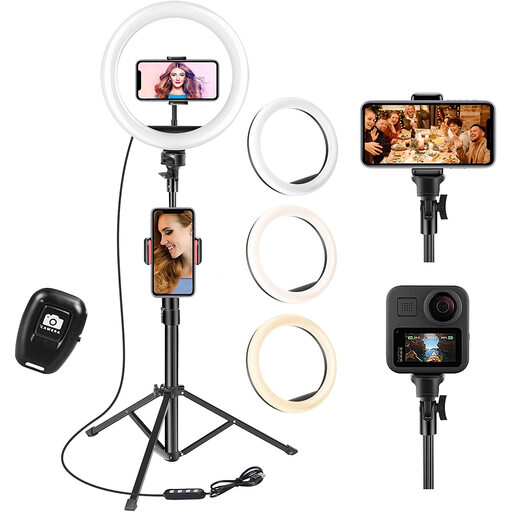 No image available
The listed phone holder may be useful for smartphone videos; check whether the tripod can provide the overhead view you want.
The product name lists a remote control, a 63-inch tripod, 3 colour modes and 10 brightness levels.
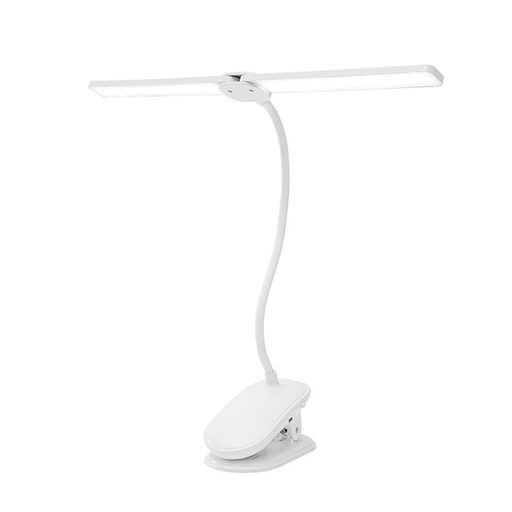 No image available
The two light heads and flexible arms provide independently adjustable lighting; check whether the clamp fits the edge of your table.
The product name lists 3 colour modes, 360° rotating light heads and a rechargeable design. According to the product information, the clamp is designed for surfaces up to 5 cm thick.
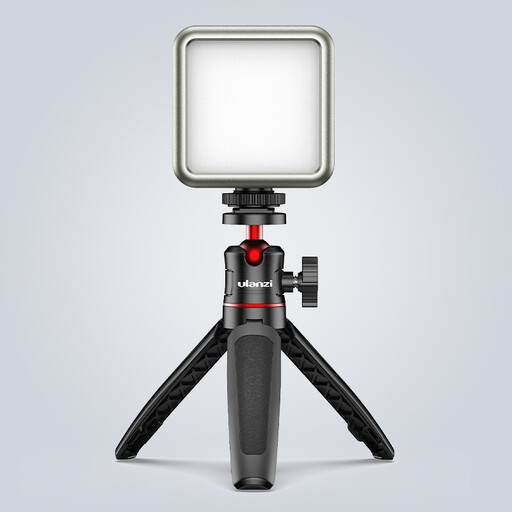 No image available
This camera video light may suit a setup with separately adjustable lighting; check how you can achieve the angle you want.
The product name lists a 2000 mAh battery, dimming, an adjustable range of 2500 K–9500 K and a magnet on the back. According to the product information, use a standard 5 V adapter, keep the light dry and avoid looking directly at the LED panel from close up.
 No image available
A compact magnetic video light is worth considering as a separate light source; check that you have a suitable place to position it.
The product name lists a built-in 500 mAh battery.
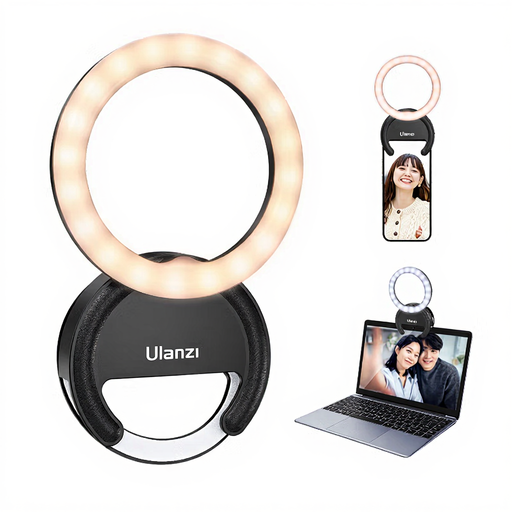 No image available
The ring light clips directly onto a smartphone, so its angle is tied to the phone’s position.
The product name lists 3 colour temperatures from 3000 K–7000 K and 5 brightness levels.
Start by making a test recording with the actual puzzle. Change the angle or position of the light and adjust its brightness if reflections hide details; a ring light directly above the work surface won’t suit every reflective surface. A polarising filter can reduce glare on certain surfaces, but it isn’t a guaranteed solution for your puzzle.
No. Check whether the camera can reach a position above the centre of the puzzle, and whether the table edge, arm reach and phone size are compatible. A tilting ring light on a standard tripod doesn’t, by itself, guarantee an overhead view.
Follow the chosen model’s manual for power and setup. Godox advises keeping the LR150 dry; this instruction applies to that model.
For a standard online consumer purchase, you generally have a cooling-off period of up to 14 days after delivery, subject to legal exceptions. ACM ConsuWijzer also explains that your statutory guarantee applies alongside any seller’s guarantee if a product used normally does not do what you could reasonably expect.
No. The European Union describes CE marking as the manufacturer’s declaration that the product complies with the applicable EU rules; it is not an independent quality mark. Whether marking is required depends on the rules that apply to the specific product. Check the product information for the light and any power supply included.