Who is this buying guide for?

For quiet working

You write and create pages in a quiet room and want to avoid fan noise. Compare a confirmed fanless design with the software you need and the screen space that suits your work. Apple confirms that the MacBook Air with M5 has a fanless design.

For creating print-ready puzzle pages

You work with grids, text and images, and want to check the page layout and PDF carefully. Your layout software’s system requirements and print margins matter here: Adobe lists 8 GB of RAM as the minimum and 16 GB as the recommended amount for InDesign 21.3 and later.

For working with browser-based tools

You’re creating a simple book using online tools and want to check whether your files are available offline and your own printer works. Google explains the options and limitations for offline files and Chromebook printers.

What should you look for when choosing?

MacBook Air with M5

A good fit if: you don’t want to hear a laptop fan and the software you need works on macOS. Choose between 13 and 15 inches based on portability and the space you need for your pages.

Bear in mind: a fanless design doesn’t mean there’ll be no other noise. Also check the connections you need for your printer or monitor.

Windows laptop for desktop publishing

A good fit if: you use Windows software or want a larger page preview. For InDesign 21.3 and later, Adobe lists 8 GB of RAM as the minimum and 16 GB as the recommended amount.

Bear in mind: screens, memory and accessories vary by model code. Unless the exact model is confirmed as fanless, don’t assume it will be quiet.

Chromebook for browser-based tools

A good fit if: you use suitable browser-based tools or Google Docs tools, and test in advance that your files are available offline and your printer works.

Bear in mind: ChromeOS isn’t listed among the system requirements Adobe has reviewed for InDesign. Google says Chromebook printing requires a compatible internet-connected or USB printer; Bluetooth printing isn’t supported.

What to consider What should you check? Who is this important for?
Fan noise Check whether the exact model has a fanless design; don’t infer this from another specification. In a quiet study, I don’t want to hear a fan while I’m writing; around 36% of consumers give fan-free quiet their highest priority.
Layout and print-ready PDF Check your software’s operating system and RAM requirements, then export a sample. Check margins and bleed; Canva says these settings aren’t available in Canva Docs. If I want to align grids and clues precisely, I need to be able to check the PDF before printing; around 36% of consumers prioritise print-ready layouts.
Browser and printer Test the complete book, offline access and the connection to your own printer. Chromebook printing requires a compatible internet-connected or USB printer. If I want to keep using my existing browser tools, I need to know first whether my files and printer will work with them; around 18% of consumers make this their main priority.
Screen and workspace Compare the full model code, screen resolution, keyboard layout and the connections you need. If I want to view the puzzle grid alongside the clues and a page preview, screen space is essential; around 10% of consumers put workspace at the top of their list.

Pitfalls to avoid when buying

  • Assuming a large screen means the laptop runs quietly

    A screen or processor specification won’t tell you whether a laptop has a fan or how audible it is while you work.

    Check the cooling system for the exact model or look for a relevant noise measurement. Apple specifically confirms that the MacBook Air with M5 has no fan.

  • Buying a Chromebook without testing your software and printer

    ChromeOS isn’t listed among the system requirements Adobe has reviewed for InDesign. According to Google, you’ll need a compatible printer to print from a Chromebook.

    Create a complete sample book in advance, test offline access and print a page using your own printer.

  • Assuming every version in a laptop range is the same

    Memory, keyboard layout and included accessories can vary between models.

    Compare the full model code, RAM, ports, keyboard layout and what’s included in the box.

    Some HP models reviewed are sold without the recommended adapter; check the details for the exact model.

  • Checking the page edges only after printing

    Text or elements close to the trim line may be cut off in print. Canva recommends checking margins and bleed for designs that support these settings.

    Review the final PDF page by page and print a sample copy first if needed.

Brands to consider

Apple

The MacBook Air with M5 is an option if a confirmed fanless design matters to you; the range includes 13- and 15-inch models.

  • Apple confirms the fanless design and says the 15-inch model offers more room for multitasking.
  • Check that your software works on macOS and that the connections are suitable for your printer and monitor. Fanless doesn’t mean the whole workspace will be silent.

Lenovo

The IdeaPad Slim 3i 15 is a Windows option with a spacious screen for laying out documents.

  • For model 83K100S7MH, Lenovo lists 16 GB of RAM, a 512 GB SSD and a 15.3-inch screen with a resolution of 1920 × 1200 pixels.
  • There’s no confirmation that this model is fanless; check the full configuration and connections.

ASUS

The Vivobook 16 could suit you if a spacious page preview matters.

  • For the M1605YA-MB560W, ASUS lists a 16-inch screen with a resolution of 1920 × 1200 pixels and 8 GB of RAM.
  • For InDesign 21.3 and later, Adobe lists 8 GB as the minimum and 16 GB as the recommended amount. Don’t use the screen specification to judge how noisy the laptop is.

HP

The OmniBook 5 range includes 16-inch models; compare the configuration you’re considering.

  • For the 16-bm0631ndx, HP lists 16 GB of RAM and a 512 GB SSD.
  • HP doesn’t confirm that this range is fanless. The recommended adapter is sold separately with some models.

Acer

Chromebook Plus could work for a browser and printer setup you’ve tested in advance; it isn’t automatically a replacement for all desktop publishing software.

  • For the Chromebook Plus 516 CB516-1HT-54CM, Acer lists ChromeOS, 8 GB of memory and a 16-inch screen with a resolution of 1920 × 1200 pixels.
  • Check offline use and your printer. ChromeOS isn’t listed among the system requirements Adobe has reviewed for InDesign; Google explains the requirements for Chromebook printing.

Laptops at Joybuy

This selection includes Windows laptops for desktop publishing and a MacBook Air for anyone looking for a fanless design.
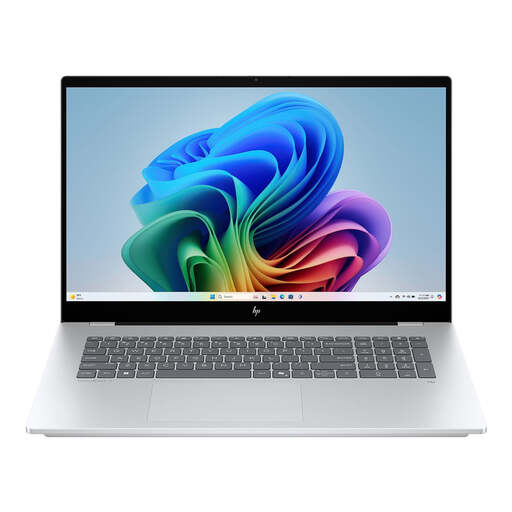
HP OmniBook 7 NG AI PC 17-dc0051nd D75LTEA#ABH

HP OmniBook 7 NG AI PC 17-dc0051nd D75LTEA#ABH

The large screen could suit you if you want a spacious page preview and use Windows desktop software.

The product description lists Windows 11, 16 GB of RAM and a 17.3-inch Full HD screen. The charger must be purchased separately.

View at Joybuy

HP OmniBook X Flip NG AI PC 16-as0050nd D75LQEA#ABH

HP OmniBook X Flip NG AI PC 16-as0050nd D75LQEA#ABH

This Windows model could suit you if you use desktop publishing software and want a large workspace for your pages.

The product description lists a 16-inch OLED touchscreen with a 16:10 aspect ratio and 24 GB of memory. The charger must be purchased separately.

View at Joybuy

MSI Venture 16 AI A2HMG-068NL 16-inch, Solid Gray

MSI Venture 16 AI A2HMG-068NL

This Windows configuration is worth considering if you use desktop publishing software and want to view page elements side by side.

The product name lists an Intel Core Ultra 7 255H, 32 GB DDR5 RAM, a 512 GB SSD and Windows 11 Pro. The product description lists a 16-inch screen with a resolution of 1920 × 1200 pixels, a 144 Hz refresh rate and an anti-glare finish. No power adapter is included.

View at Joybuy

Apple MacBook Air 15-inch M5 16GB 512GB, Starlight, QWERTY

Apple MacBook Air 15-inch M5, 16GB, 512GB, Starlight, QWERTY

This model could suit you if you use macOS and don’t want a laptop fan as a source of noise. Apple confirms that the MacBook Air with M5 has a fanless design.

The product description lists 16 GB of memory, 512 GB of storage and a 15.3-inch screen. The power adapter isn’t included; according to the description, you’ll need an adapter rated at 35 W or higher.

View at Joybuy

Lenovo IdeaPad Slim 5 15ARP10, 15.3-inch, QWERTY

Lenovo IdeaPad Slim 5 15ARP10, 15.3-inch, QWERTY

This Windows laptop could suit you if you use desktop publishing software and want a page preview with extra vertical space.

The product description lists a Ryzen 5 7535HS, 16 GB of memory, a 512 GB SSD and a screen resolution of 1920 × 1200 pixels with a 16:10 aspect ratio. The keyboard has an English EU layout and is backlit. The power adapter isn’t included.

View at Joybuy

Frequently asked questions

Do I need 16 GB of RAM to create a puzzle book?

Not as a general rule. For Adobe InDesign 21.3 and later, Adobe lists 8 GB of RAM as the minimum and 16 GB as the recommended amount. Also check the other requirements for your chosen software and model.

How do I check my puzzle book before printing?

Create a sample PDF and review every page, especially grids and text near the edges. For designs that support these settings, Canva recommends checking margins, bleed and crop marks; according to Canva, these settings aren’t available in Canva Docs. Check the export format with your printer.

Will my existing printer work with a Chromebook?

Only if your printer and connection are compatible. Google says you can print from a Chromebook using compatible internet-connected or USB printers, but not via Bluetooth. Test your printer before choosing a laptop.

What warranty and cooling-off period apply to an online purchase in the Netherlands?

When you buy as a consumer in the Netherlands, you’re entitled to a product that meets legal requirements; there’s no fixed statutory warranty period. For distance purchases from a business, you’ll generally have 14 days to change your mind, subject to applicable exceptions. A commercial or manufacturer’s warranty doesn’t replace your statutory rights.

Can I share other people’s puzzles or images in a book?

You generally need permission to distribute other people’s copyright-protected text and images, unless an applicable legal exception or licence allows you to use them. What’s permitted depends on the material and how you intend to use it; different rules apply to a copy made at home for personal use.
