
Vandaag of morgen in huis

Kwaliteit gegarandeerd

Welkomstaanbiedingen ontgrendelen: GRATIS bezorging | Tot 80% korting | Gratis 30 dagen JoyPlus-proefperiode
Download de app
PUXI EVA slippers are popular as lightweight house slippers, bathroom slippers and footwear for the beach or garden. But a soft sole doesn’t automatically mean a slipper fits well or feels safe on a wet floor. If you only consider colour or a low price, you could end up with a style that’s too narrow, holds water or slips off your feet with every step.
This guide helps shoppers in the Netherlands compare PUXI EVA slippers by fit, material, drainage and intended use.
A smooth EVA sole doesn’t offer the same grip as one with deep grooves and a textured surface. The tread on the outsole is particularly important in a bathroom, by a swimming pool or on a wet patio. Consider the surface you’ll be walking on, too: no slipper can make every floor completely slip-proof.
According to the product description, the PUXI Wave Bathroom Slippers have a wave pattern, deep grooves and raised dots on the outsole. These are features you can check for yourself, and they’re more useful than the “non-slip” label alone.
Going up a size doesn’t always make slippers more comfortable for wide feet. Your heel may start to slip around, while your forefoot still doesn’t have enough room. Instead, look for a style specifically described as having a wider shape, a wider instep or a roomier toe area.
According to the product specifications, the PUXI Banana Boat Slide Slippers are designed with a wide fit. They’re a practical option if you find regular slippers tight around the front of your feet.
Slippers with ventilation holes aren’t automatically quick-drying bathroom slippers. Check where the holes are and whether water can drain away from the footbed. A closed footbed may stay damp for longer after a shower.
The PUXI Wave models are described as having a drainage midsole. The PUXI Litchi Wood has side openings for water drainage and ventilation. According to the product description, these features are designed to reduce water build-up; actual drying time depends on the amount of water, temperature and ventilation.
EVA is a synthetic foam material often used to make lightweight slippers. The specifications for the PUXI models mentioned here state that they’re made entirely or mainly from EVA. In practice, that means:
The manufacturer recommends cleaning EVA with lukewarm water and keeping the slippers out of direct sunlight while they dry. They may have a slight storage smell when they arrive. Leave them in a well-ventilated, shaded place before wearing them.
If you’re looking for comfortable house slippers or slippers for indoor and outdoor wear, it’s worth comparing three features:
A massage texture or raised section in the footbed won’t feel the same to everyone. If you have sensitive feet or a specific foot complaint, don’t rely solely on a product claim.
The PUXI size chart gives recommended foot lengths. For many models, the sizing is as follows:
| EU size | Recommended foot length | |---|---:| | 35-36 | 230 mm | | 37-38 | 240 mm | | 39-40 | 250 mm | | 40-41 | 260 mm | | 42-43 | 270 mm | | 44-45 | 280 mm |
The size chart differs slightly for some of the Star Sleep and Soft Cake models: size 42-43 is listed as suitable for a foot length of approximately 265 mm. Measure both feet while standing and compare the longer one with the chart for the specific product. If you’re between sizes or want extra room, check the fit and advice on the product page rather than automatically ordering a size up.
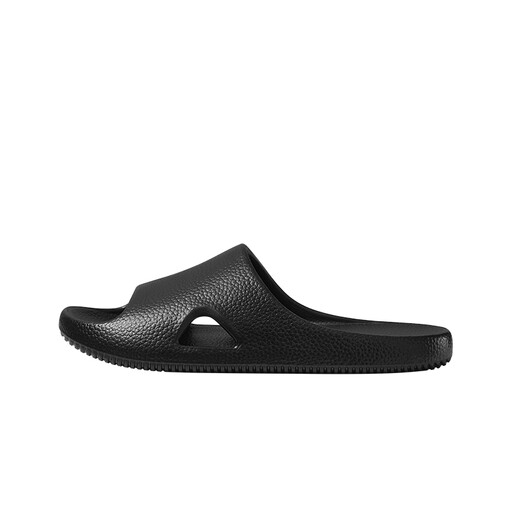
Why it suits this shopper: A simple unisex slide for wearing at home, in the bedroom and for short trips outside. Size 37-38 is recommended for a foot length of 240 mm.
According to the product description, the side openings are designed to allow water to drain away and air to circulate. Check that the thin sole offers enough support for how you plan to use the slippers.
One-piece EVA construction, a lightweight sole, light arch support and a leather-look texture.
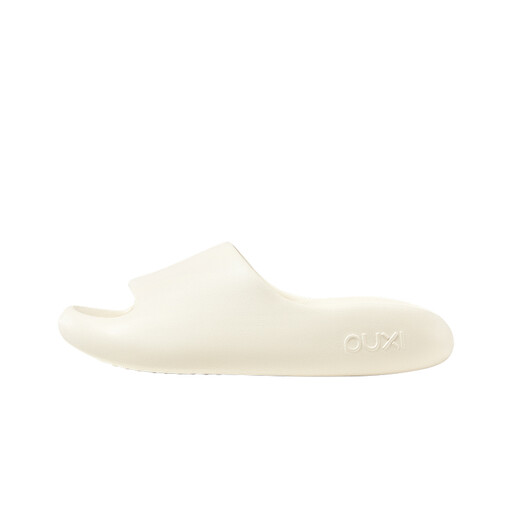
Why it suits this shopper: A thicker slide for anyone looking for a more contoured footbed and extra sole height for everyday wear indoors and out.
The footbed is contoured and the opening is wider. This gives you more information about the shape than you’d get with a completely flat slipper, though fit is still a personal matter.
3 cm EVA sole, a grippy grid texture, a fully covered toe and, according to the product specifications, a footbed with light arch support.
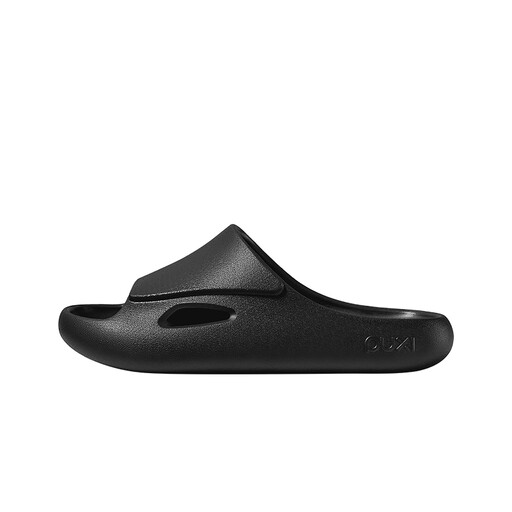
Why it suits this shopper: Designed for bathrooms, showers and other damp areas, where drainage and a well-defined sole tread matter.
The drainage midsole and wave-pattern tread are clearly described. According to the product description, the footbed is contoured to help keep your foot in place.
A quick-drying design according to the product description, water drainage through the midsole, and an outsole with deep grooves and texture.
Rinse EVA slippers with clean water after wearing them in the bathroom or at the beach. Leave them upright or separated from each other to dry in the shade. Direct sunlight and high temperatures can warp the material. Check the soles regularly for wear, especially if you wear the slippers outdoors. Less tread means less grip, whatever the original packaging said.
Colour and material may look different depending on the light, viewing angle and screen settings. Compare the product photo with the description, but bear in mind that it may not look exactly the same on every screen.
We’ve put together a complete, up-to-date list of products that meet these strict selection criteria and the applicable European safety regulations.
According to the product description, the PUXI Wave Bathroom Slippers are specifically designed for damp areas. The drainage midsole and sole tread are useful features to look for. Always take care when wearing slippers on wet floors and check that the size gives your feet enough support.
Measure your longer foot in millimetres and compare it with the size chart for the model you’ve chosen. For many PUXI models, size 37-38 is recommended for a foot length of about 240 mm, and size 42-43 for about 270 mm. Some models have different recommendations, so always check the individual product page.
It depends on how far you walk, the surface, your body weight, moisture and how well you care for them. Wearing slippers indoors generally puts different demands on the sole than walking every day on tiles, concrete or tarmac. Replace them when the tread looks worn smooth, the sole becomes misshapen or your foot no longer feels stable in the footbed.
