
Vandaag of morgen in huis

Kwaliteit gegarandeerd

Welkomstaanbiedingen ontgrendelen: GRATIS bezorging | Tot 80% korting | Gratis 30 dagen JoyPlus-proefperiode
Download de app
You usually buy a pushchair for everyday use, not for a pretty product photo. Yet it’s often the little details that become irritating after a few weeks: a frame that barely fits in the hallway, a basket that quickly gets too heavy or wheels that don’t roll as smoothly over cobbles. This guide helps you compare pushchairs and buggies on the features that really matter in everyday use.
A pushchair may be described as compact but still be too wide for a narrow storage space or car boot. Always check:
A lightweight pushchair is especially useful if you regularly use stairs, public transport or a car. Be sure to distinguish between the weight of the pushchair itself and its total weight with the carrycot, accessories and luggage.
A pushchair suitable from birth must offer a completely flat or newborn-suitable position, or be used with a compatible baby carrycot. A standard buggy with only a partially reclining backrest isn’t automatically suitable for a newborn.
Also check the maximum weight limit. On a double pushchair, the weight limit may differ for each seat. The recommended age and maximum weight matter more than general claims such as “suitable for all ages”.
A pushchair fan or universal pushchair organiser can be handy, but always check that its fastening, cables, loose parts and weight limit suit the way you plan to use it. Don’t load an organiser so heavily that it makes the pushchair unstable. A fan must be securely attached and always used around children under supervision.
Don’t just look for “up to 4 years”; check the stated maximum weight. For example, one model may be suitable from birth up to 22 kg, while another has a lower limit. For a twin buggy or double pushchair, check the maximum weight per seat as well as the overall width.
A 5-point safety harness helps keep your child securely in place while you’re out and about. Use the harness as described in the instructions, and check that the buckles, brakes and locks are working properly before every walk.
Swivel front wheels are often handy for pavements, shopping streets and cycle paths. On sand, woodland paths or uneven cobbles, an all-terrain pushchair with larger wheels and adjustable suspension can be easier to manoeuvre. Lockable front wheels can provide better stability in a straight line on rougher ground.
Check the product specifications: “all-terrain” on its own doesn’t tell you much. Look at the type and size of the tyres, the suspension and the stated intended use. Puncture-proof EVA wheels are described as preventing punctures, but that doesn’t make a pushchair suitable for every surface.
A one-handed folding mechanism is useful when you’re standing by the car with a baby in your arms. After unfolding the pushchair, check that all the locks have clicked or are visibly secured. Keep sand and dirt out of the wheels, and let wet fabrics dry completely before storing the pushchair.
For a carrycot, check the permitted weight, the stability of the surface it’s placed on and when you should move your baby to the pushchair seat. According to the product information, the Chicco Seety Carrycot is suitable from birth up to 9 kg, or around 6 months. The manufacturer also states that it meets standard EN 1466 for carrycots and stands. Don’t use a carrycot as an unattended sleeping space unless the product information says that this is allowed.
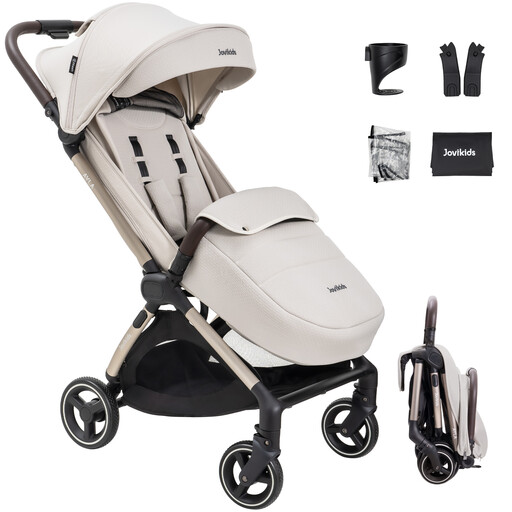
Why it suits this profile: This pushchair is designed for everyday use from birth to 4 years, combining a one-handed folding mechanism with compact storage. It’s a practical choice for families looking for a straightforward pushchair for the city, car journeys and short outings.
The product listing mentions a compact design, shock absorption and all-terrain EVA wheels. Before buying, check the exact dimensions and weight limit in the latest product specifications.
One-handed folding; the product listing includes a rain cover, footmuff, storage bag and cup holder.
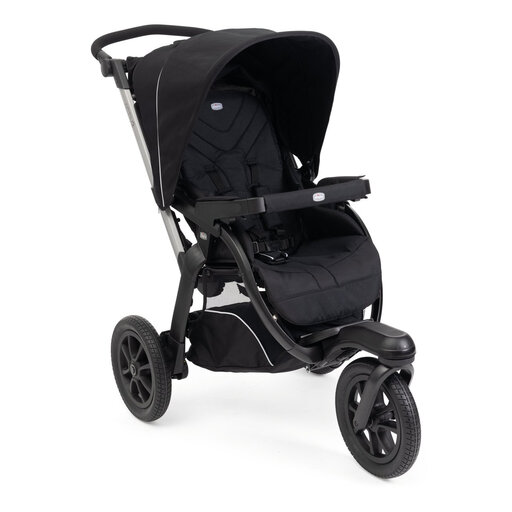
Why it suits this profile: For families who often go for walks outdoors, the three wheels, XL wheels, two-position suspension and maximum weight limit of 22 kg are useful specifications to consider.
The specifications list the wheel type, suspension and front-wheel lock separately, helping you assess what “all-terrain” means in practice.
Fully adjustable backrest; compatible with the stated carrycots and car seats when used with adapters.
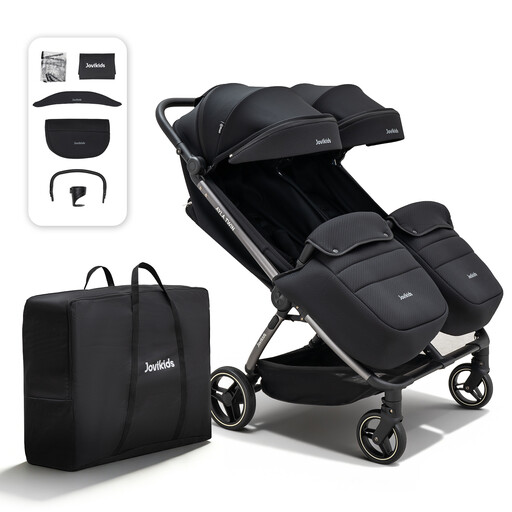
Why it suits this profile: This twin buggy is designed for parents travelling with two children who value one-handed folding, shock absorption and included accessories.
The double design means you don’t have to take two separate pushchairs. Check the frame width and doorways before placing your order.
The product name states that it’s suitable from birth; all-terrain wheels, a rain cover, footmuff and storage bag are also listed.
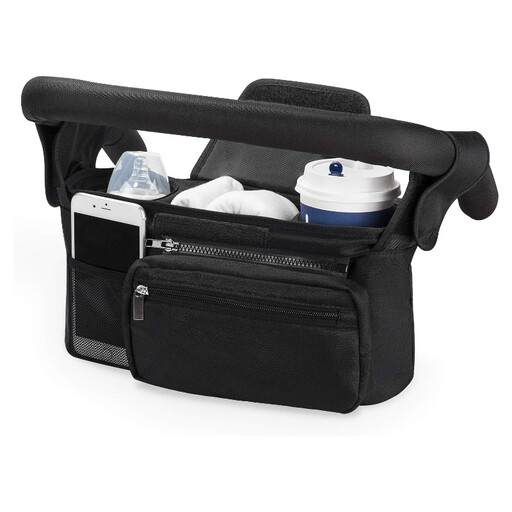
Why it suits this profile: For walks around town, this organiser gives you space for everyday essentials such as your phone, cup and purse, so you don’t have to keep searching in your shopping bag.
The organiser has fastening hooks and hook-and-loop straps. Check that it’s fitted securely, don’t overload it, and keep small detachable parts out of children’s reach.
Removable phone and wrist strap pocket; design includes an insulated cup holder and shoulder strap.
We’ve put together a comprehensive, up-to-date list of products that meet these strict selection criteria and current European safety requirements.
It depends on your child’s development and the manufacturer’s instructions. A buggy is suitable only when its backrest, harness and maximum weight limit are right for your child’s age and weight. Don’t rely on the age shown on the packaging alone.
How long it lasts depends on the load, maintenance, storage and how often you use it. Check the frame, brakes, harness, wheels and folding lock regularly. Stop using the pushchair if any parts are damaged or once the maximum weight has been reached.
Pay particular attention to the folded size, weight and how you’ll transport the pushchair. A compact buggy is handy for trains, planes or a small car boot. For newborns, check that it offers a fully flat position or can be used with a suitable carrycot. Only add accessories such as an organiser or pushchair fan after checking that they can be attached securely and safely.
