
Vandaag of morgen in huis

Kwaliteit gegarandeerd

Welkomstaanbiedingen ontgrendelen: GRATIS bezorging | Tot 80% korting | Gratis 30 dagen JoyPlus-proefperiode
Download de app
If you’re looking for Purina One cat food 800 g, you probably want to buy a suitable bag of dry food without paying too much for marketing jargon. But at first glance, the range can seem confusing: chicken, salmon, turkey, junior, senior, indoor, sterilised, sensitive and urinary care. The right choice depends above all on your cat’s age, lifestyle and condition.
A pack labelled “chicken” or “salmon” isn’t automatically suitable for every cat. First, check whether it is labelled as complete pet food and which life stage it is intended for. An adult cat has different nutritional needs from a kitten or a senior cat.
Check the ingredients list too. For example, Purina One Adult Chicken lists chicken at 17%, alongside ingredients including dried poultry protein and wholegrain cereals. Salmon is listed as the first ingredient in the salmon variant’s product description. This makes it an option for cat owners specifically looking for salmon cat food, although whether an individual cat accepts it will depend on the cat.
Variants for sterilised cats, indoor cats, sensitive digestion or urinary care are tailored to particular dietary situations. They are no substitute for a diagnosis or dietary advice from a vet.
Claims about their effects should also be read in the right context. For example, Purina One Sensitive product information says that the claim about reducing unpleasant stool odour is based on Purina’s own research. This is not a guarantee for every cat. If digestive or urinary problems persist, or your cat’s eating habits change, it’s best to speak to a vet.
An 800-gram bag is handy for trying a variant first. However, the actual cost depends on the daily portion, which varies according to your cat’s weight, age, activity level and body condition. According to the product information, an adult cat weighing 2 to 4 kg should have around 35 to 65 grams of Purina One Adult Chicken per day. Always follow the latest feeding guidelines on the packaging and adjust the portion if your cat’s weight changes.
Start by choosing the right category:
So a kitten won’t automatically benefit from adult cat food, even if it enjoys the kibble. The age guidance is one of the most important details on the packaging.
An indoor cat usually gets different amounts of exercise from a cat that spends a lot of time outdoors. According to the product information, Purina One Indoor Adult with turkey and cereals is tailored to cats that live mainly indoors. The recipe includes chicory and fibre; according to the brand, these are intended to support digestion and the passage of hair through the digestive system.
Purina One Sterilcat Beef & Grain is a targeted option for cats after sterilisation or neutering. The product information mentions an adjusted protein-to-fat ratio and balanced minerals. This makes it relevant if you’re looking for food for sterilised cats, but the daily portion is still important to help prevent weight gain.
Don’t compare products by the name on the front alone. Check:
According to the product information, Purina One Adult Chicken contains 34% protein, 14% fat and 2.5% crude fibre. The Urinary Care variant also lists 34% protein and 14% fat, along with fish oil and a mineral balance that the manufacturer says is intended to support the urinary tract. This is urinary cat food for adult cats, not a veterinary diet for a diagnosed condition.
If you think your cat may have sensitive digestion, check the ingredients list for Purina One Sensitive Turkey & Rice. According to the description, turkey is the first ingredient in this variant and it contains no added wheat. Always introduce new food gradually, for example by mixing it with your cat’s usual food over several days.
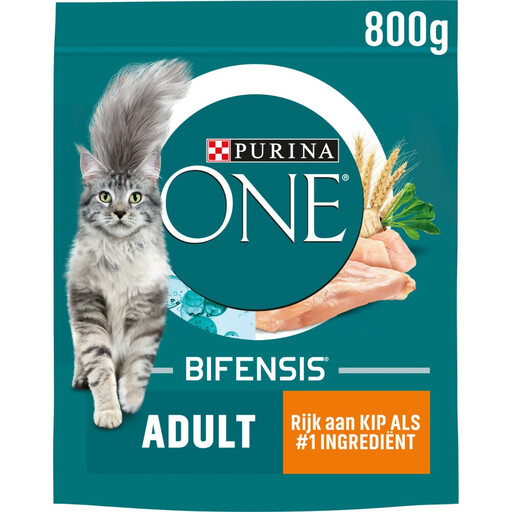
Why it suits this profile: A straightforward choice for an adult cat aged 1 year and over if you’re looking for a standard chicken and wholegrain variant.
The age range, variant and net weight of 800 g are clearly stated. That way, you won’t buy a junior or specialist formula when you don’t need one.
34% protein, 14% fat and taurine, with no added colourings, artificial flavourings or artificial preservatives, according to the product information.
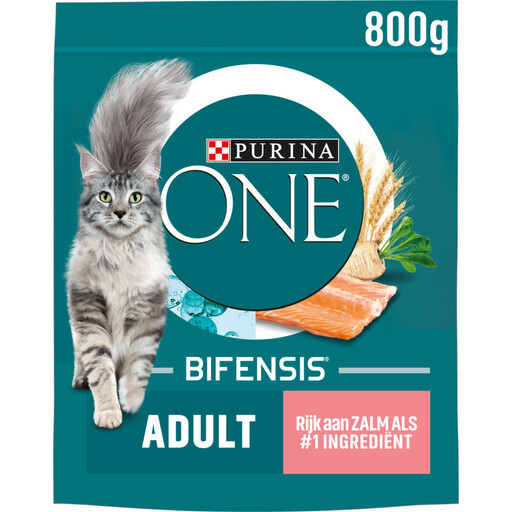
Why it suits this profile: Suitable for adult cats and owners who specifically want a variant with salmon as the first ingredient, according to the product description.
The choice is based on the specific ingredients and age guidance, not just a general claim about flavour or vitality.
Complete food for adult cats; the product information lists salmon as the first ingredient and mentions vitamins and minerals.

Why it suits this profile: Designed for cats that live mainly indoors and need regular attention to portion control, activity and hairballs.
The variant isn’t chosen for flavour alone: it combines turkey with a formula intended for indoor cats, according to the product description.
Contains turkey, wholegrain wheat, 2% dried chicory and fibre; the product description says it supports digestion and the passage of hair through the digestive system.

Why it suits this profile: Intended for kittens from weaning to 12 months, when an adult formula is not yet the right choice.
The clear age range helps you avoid confusing kitten food with adult cat food.
Contains chicken, fish oil and nutrients tailored to support growth, muscle mass and skeletal development, according to the product description.
For other situations, you could also consider Purina One Sterilcat Beef & Grain 800 g, Purina One Senior Chicken 800 g, Purina One Urinary Care Chicken 800 g or Purina One Sensitive Turkey & Rice 800 g. Check the current packaging, ingredients and feeding guidelines for each variant.
We’ve put together a complete, up-to-date list of products that fully meet these strict selection criteria and the applicable European safety regulations.
It depends on your cat’s weight and activity level. If the recommended portion is 50 grams a day, 800 grams will last around 16 days. The bag will run out sooner if you have several cats or feed larger portions. Store the food in a tightly sealed container in a cool, dry place.
It’s better to make the change gradually. Over about a week, mix a little more of the new food with the old food each day. This makes it easier to see whether your cat likes the flavour and whether their stools remain normal.
A standard Urinary Care variant is not the same as a veterinary diet. If you notice blood in your cat’s urine, straining, frequent small wees or other unusual behaviour, contact a vet. Always make sure your cat has plenty of fresh drinking water.
