
Vandaag of morgen in huis

Kwaliteit gegarandeerd

Welkomstaanbiedingen ontgrendelen: GRATIS bezorging | Tot 80% korting | Gratis 30 dagen JoyPlus-proefperiode
Download de app
Puppies grow quickly, but not every puppy has the same nutritional needs. A Chihuahua needs different kibble from a Labrador, while a sensitive puppy may react differently to chicken, grains or a sudden change of food. If you choose based only on words such as “natural”, “grain-free” or “high-protein puppy food”, you could end up paying more than you need to or picking a product that isn’t right for your dog.
The main pitfalls to watch out for:
First, check whether the product is intended for puppies and the age range it covers. Some puppy kibble is suitable from weaning until around 12 months, while larger breeds take longer to mature. Also check whether there are separate options for:
Kibble size and nutritional density can vary between options. Puppies of large breeds need to grow steadily; overfeeding can put unnecessary strain on their developing bodies. Follow the feeding guide on the packaging and adjust the amount according to your puppy’s weight, age, activity level and body condition.
The label should clearly state whether the product is a complete pet food or a complementary pet food. Complete pet food is intended as a daily meal when fed according to the instructions. A supplement, such as psyllium powder or a digestive paste, has a different purpose and shouldn’t replace your puppy’s main food.
Also check the analytical constituents:
A high protein content may appeal if you have an active puppy, but always compare the full nutritional composition. For example, Orijen Puppy Formula lists a minimum of 38% crude protein and 18% fat. These are verifiable details from the label, not a guarantee of a particular result for every dog.
Chicken-based dog food is a common choice, but not every puppy tolerates the same animal protein source. If you’d like to try fish, look for dog food with fish, such as a variety made with ocean fish. If you suspect a food sensitivity, it’s best not to introduce several new ingredients at once.
If a product is sold as hypoallergenic puppy food, check the exact ingredients carefully. “Low allergen” or “grain-free” doesn’t automatically mean it’s suitable for every dog with symptoms. If diarrhoea, vomiting, itching, reduced appetite or growth problems persist, speak to a vet as a priority.
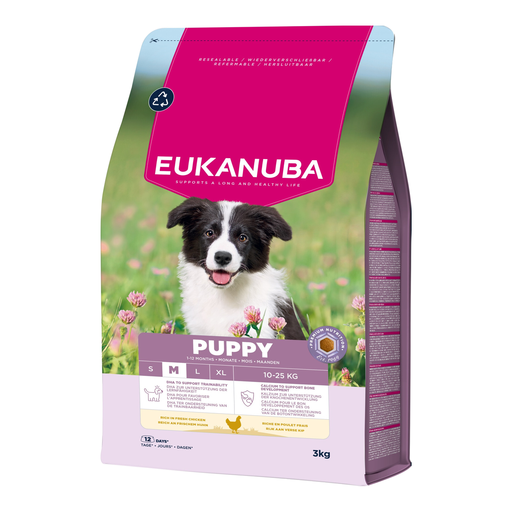
Why it suits this buyer: The 3 kg pack is a manageable size for a first purchase, and this variety is intended for puppies of medium-sized breeds aged 1 to 12 months.
The age and breed guidance reduces the chance of choosing an unsuitable adult food. Check that your puppy falls within the specified medium-sized breed group.
According to the product information, the formula contains chicken, DHA, calcium and a fibre blend with FOS, MOS and beet pulp.
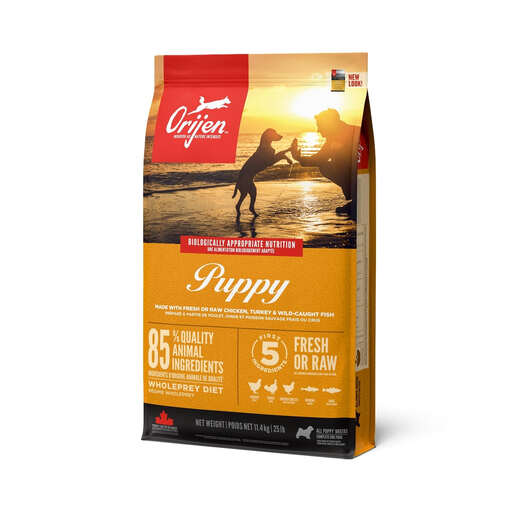
Why it suits this buyer: This large pack is aimed at households with a larger puppy or several dogs who already know that the food agrees with them.
The product specifications clearly list the animal ingredients and analytical values. Only buy a large bag once you’ve checked how well your puppy tolerates the food.
According to the product description, this is grain-free puppy food with chicken, turkey and fish, and a minimum of 38% crude protein and 18% fat.
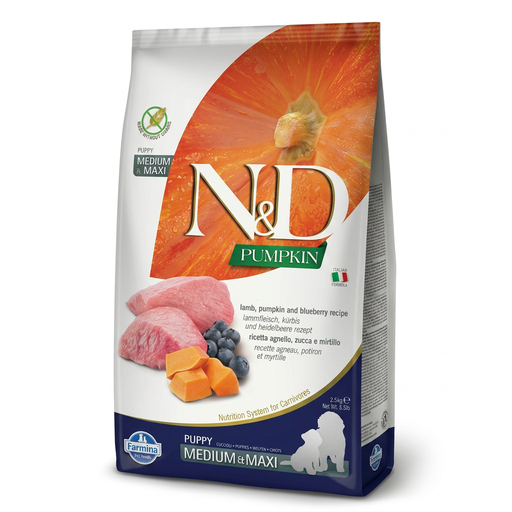
Why it suits this buyer: This variety is formulated for medium and large-breed puppies, with lamb and fish listed as animal ingredients.
The breed size is specified, so you’re not relying on the term “grain-free” alone. If your puppy is sensitive, always check the full ingredients list first.
According to the product information, this is a complete food with lamb, herring, pumpkin and a grain-free recipe.
We’ve put together a complete, up-to-date list of products that meet these strict selection criteria and current European safety requirements.
Gradually switch to a new puppy food over 7 to 10 days, for example. Start by mixing in a small amount of the new food, then increase it as long as your puppy’s stools and appetite remain normal. Always provide fresh drinking water.
Store an opened bag in a cool, dry place and seal it securely. You may want to note the date you opened it. An airtight storage container is handy for a large bag, but ideally keep the food in its original packaging inside the container. This keeps the batch number and best-before date to hand.
Only use supplements such as psyllium or digestive paste according to the label. If diarrhoea persists, or you notice blood in your puppy’s stools, vomiting or lethargy, seek veterinary advice.
Puppies under around six months old are often fed three to four meals a day. After that, you can usually gradually reduce the number of meals. The right amount is shown on the packaging and depends on your puppy’s age, weight, breed size and activity level.
No. Grain-free puppy food may be a good choice if you want to avoid grains or are looking for a particular recipe, but grain-free doesn’t automatically mean better or hypoallergenic. Check the full ingredients list and switch foods gradually.
It depends on your puppy’s weight and recommended daily portion. A 3 kg bag is handy for trying the food first; larger 11.4 or 15 kg bags are most practical when your puppy tolerates the food well. Work out the daily cost based on the recommended amount, not just the purchase price.
