
Vandaag of morgen in huis

Kwaliteit gegarandeerd

Welkomstaanbiedingen ontgrendelen: GRATIS bezorging | Tot 80% korting | Gratis 30 dagen JoyPlus-proefperiode
Download de app
Puppies grow quickly, but not every bag of puppy food is right for every dog. Breed size, age, energy needs, kibble size and ingredients all make a difference. So eye-catching packaging or a long list of added ingredients doesn’t tell you enough.
Here are three common pitfalls:
Check the packaging for:
There are options for small dogs, such as puppy food for small breeds. Medium and large dogs often have different nutritional guidelines while they’re growing. For large breeds, it’s particularly important to adjust portions according to age, weight and activity level. Overfeeding can lead to weight gain that’s too rapid.
According to its product information, Eukanuba Life Care puppy large is intended for large-breed puppies aged 1 to 12 months. A longer puppy period is specified for giant breeds. This kind of age guidance is more useful than a general label such as “for all dogs”.
Ingredients are generally listed in descending order by weight. So check:
For example, puppy food with chicken may list chicken as a fresh or dried ingredient. Puppy food with fish may be worth considering if you’re looking for an alternative to chicken, but always check the full ingredients list. Puppy food with lamb doesn’t necessarily contain lamb alone. Some recipes combine lamb with chicken or fish.
Grain-free puppy food contains no grains, but that doesn’t automatically make it suitable for every puppy. Grains are often replaced with ingredients such as sweet potato, peas or chickpeas. So look at the whole recipe, not just the words “grain-free”.
If your puppy has recurring digestive problems, itching or a suspected food sensitivity, it’s a good idea to consult a vet. Product information can help you compare foods, but it doesn’t replace personalised nutritional advice.
Kibble size also deserves attention. A small puppy may struggle with large kibble, while a large puppy may benefit from a size that encourages slower eating. Always provide fresh drinking water, too, and follow the feeding transition instructions. A gradual changeover over about a week is recommended for several products.
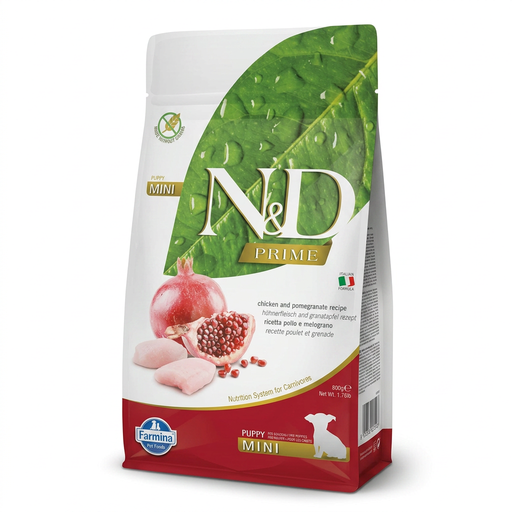
Why it suits this profile: The 800g pack is handy if you’d like to see whether your small puppy takes to the kibble before buying a larger supply.
The product information specifically describes it as complete food for small-breed puppies. Always check the current packaging and feeding guidelines.
Chicken as the main animal protein source, a grain-free recipe, and stated DHA, omega 3 and omega 6 levels.
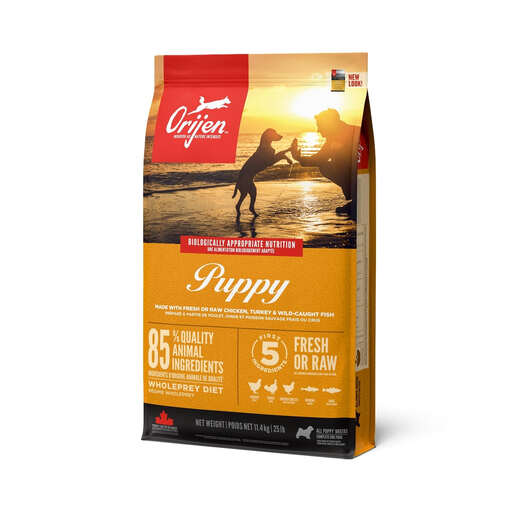
Why it suits this profile: This large pack is designed for puppies of different breeds and suits households looking to stock up on dry puppy food.
The product information lists puppies of all breeds as its intended audience and recommends a gradual changeover over 7 to 10 days.
According to the product information, the formula contains 85% animal ingredients, at least 38% crude protein and no grains.
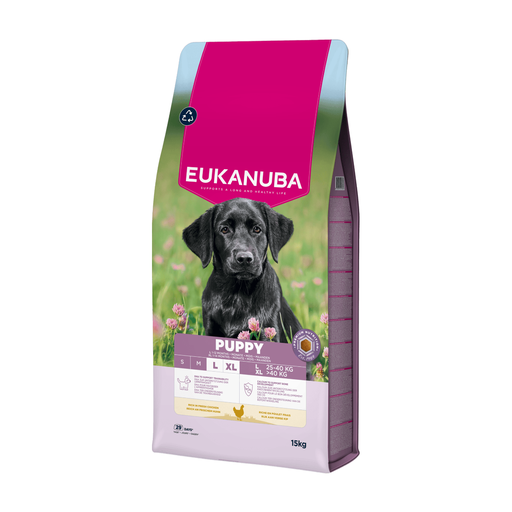
Why it suits this profile: The large bag is practical for owners of large-breed puppies or breeders who feed regularly and want a product tailored to the breed size.
According to the information provided, this product is specifically tailored to large-breed puppies. That means you don’t need to work out how much of a general adult kibble to feed.
According to the product description, this is 100% complete dry food with chicken, DHA, calcium, sources of fibre, and omega 3 and 6.
We’ve put together a complete, up-to-date list of products that meet these strict selection criteria and the applicable European safety regulations.
Young puppies often have several meals spread throughout the day. The right frequency depends on age, breed size and the guidance on the packaging. Divide the recommended daily amount between meals and adjust the portions if your puppy’s weight or body condition changes.
Gradually mix the new food with your puppy’s current food. Start with a small amount of the new food and increase it over about 5 to 10 days. Stop or slow the changeover if you notice clear digestive problems, and ask a vet for advice if needed.
This depends mainly on expected adult size. Small dogs can switch sooner than large breeds, which take longer to finish growing. Follow the age guidance for your chosen product and regularly check your puppy’s weight and body condition.
