
Vandaag of morgen in huis

Kwaliteit gegarandeerd

Welkomstaanbiedingen ontgrendelen: GRATIS bezorging | Tot 80% korting | Gratis 30 dagen JoyPlus-proefperiode
Download de app
Bringing a new puppy home is a joyous occasion. But with joy comes responsibility, and one of the first major decisions is choosing the right puppy food. The shelves are lined with bags that make lofty promises. How can you tell what's genuinely good for your growing dog and what's just clever marketing? As a Joybuy Product Recommendation Officer, I'll help you cut through the noise and make a practical choice.
Choosing the wrong puppy kibble can lead to unnecessary costs and even health problems. Let's first look at the most common pitfalls.
To sidestep these pitfalls, you can focus on a few verifiable specifications. This will help you see past the marketing and choose a food that truly supports your puppy's growth.
Puppies need a lot of protein to build muscles and tissues. The quality of that protein is crucial.
The size of the breed determines the growth rate and, consequently, the nutritional needs.
A grain-free formula is primarily useful if your veterinarian has diagnosed a grain allergy or intolerance. For most puppies, grains like rice or oats are an excellent source of energy and fibre. If you opt for natural puppy food without grains, check what the grains have been replaced with. Ingredients like pumpkin or sweet potato offer more nutritional value than just starch.
To help you get started, we've highlighted a few products that suit different needs and situations. These recommendations are based on their specifications, not marketing claims.
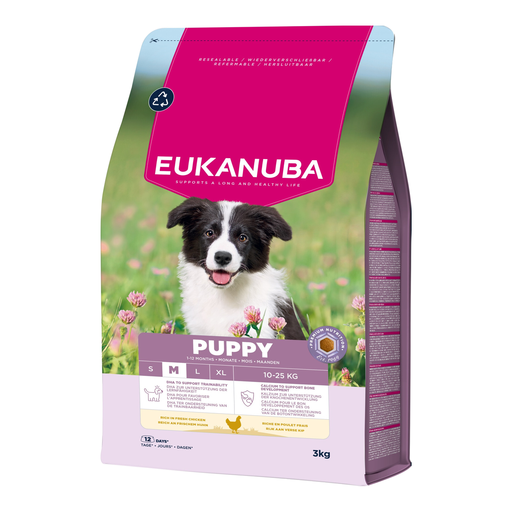
Why This Fits Their Persona: A reliable, complete food that supports the growth of medium-breed puppies with scientifically backed ingredients. Ideal for owners who want a solid start without getting lost in complex formulas.
Eukanuba focuses on a complete and balanced formula specifically for medium breeds, avoiding the 'one-size-fits-all' trap. The ingredient list is clear and geared towards functional nutrition.
According to the manufacturer, it contains DHA to support learning ability and a blend of prebiotics (FOS, MOS) for healthy digestion.
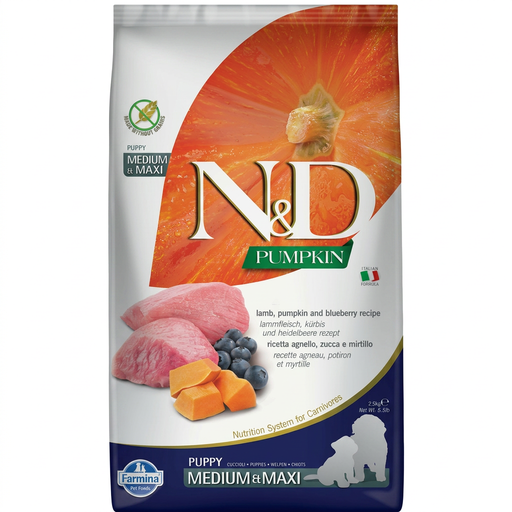
Why This Fits Their Persona: Specially formulated for puppies that may react sensitively to grains or common proteins like chicken. Lamb is often a highly digestible alternative, making this a popular choice for an elimination diet or sensitive stomachs.
This food goes beyond the 'grain-free hype' by replacing grains with nutritious pumpkin and using a high-quality animal protein source (lamb). The focus is on total nutritional value.
Grain-free formula with a high percentage of animal protein (96% according to Farmina) and pumpkin, which is known for its positive effects on digestion.
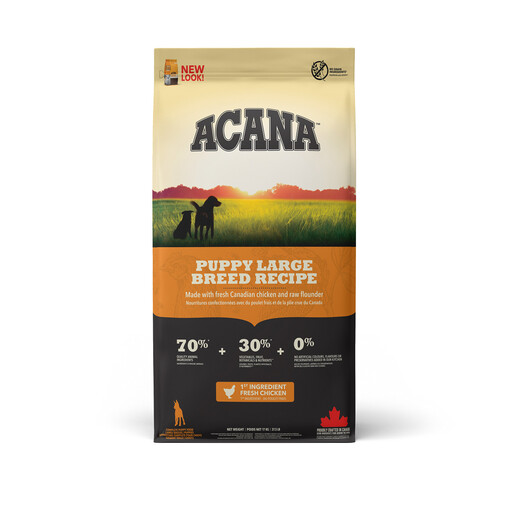
Why This Fits Their Persona: Large breeds need a diet that manages their growth to prevent joint problems. This formula is specifically tailored for this, and the large 17 kg bag is practical and more economical for a dog with a big appetite.
Acana directly addresses the 'one-size-fits-all' problem with a formula for large breeds. According to the manufacturer, it contains adjusted mineral levels to support healthy skeletal development.
Rich in protein from free-run chicken and wild-caught flounder to build muscle mass, with a controlled calorie content for balanced growth.
We have compiled a complete, up-to-date list of products that meet these selection criteria and current regulations.
The right amount depends on the brand and type of food, as well as your puppy's age, weight, and activity level. Always start with the feeding guidelines on the packaging. Monitor your puppy's body condition: you should be able to feel the ribs, but not see them. Adjust the amount if your puppy becomes overweight or underweight.
This depends on your dog's expected adult size.
A sudden change in food can cause gastrointestinal upset. Therefore, transition gradually over a period of 7 to 10 days. Start with 75% of the old food and 25% of the new food. Every few days, increase the proportion of the new food until you have completely switched over.
