
Vandaag of morgen in huis

Kwaliteit gegarandeerd

Welkomstaanbiedingen ontgrendelen: GRATIS bezorging | Tot 80% korting | Gratis 30 dagen JoyPlus-proefperiode
Download de app
Bringing a new puppy home is an exciting and joyful time. Beyond picking out a bed and toys, finding the right puppy food is one of the most crucial decisions you'll make. The shelves are lined with bags promising healthy growth, but how do you know what's truly best for your dog? Many well-intentioned choices turn out to be less than ideal. Let's walk through the most common pitfalls so you can avoid making the wrong choice.
The first pitfall is choosing a food with a vague "all life stages" claim. A puppy's nutritional needs are fundamentally different from those of an adult dog. A second common mistake is ignoring the breed's size. Puppy food for large breeds has a different formulation than food for small dogs to prevent growing pains and joint issues. Finally, there's the trend of grain-free puppy food. While this can be a great solution for some pups, it's not automatically the superior choice for every dog.
To see through the marketing claims, focus on a few concrete specifications on the packaging. These factors are crucial in determining the quality of dog food for puppies.
Puppies need high-quality protein to build muscle and tissue. The most important indicator of quality is the protein source.
Your dog's adult size determines its nutritional needs during its growth phase.
Not every puppy reacts to food in the same way.
Based on these objective criteria, we have selected several products that cater to the diverse needs of puppy owners.
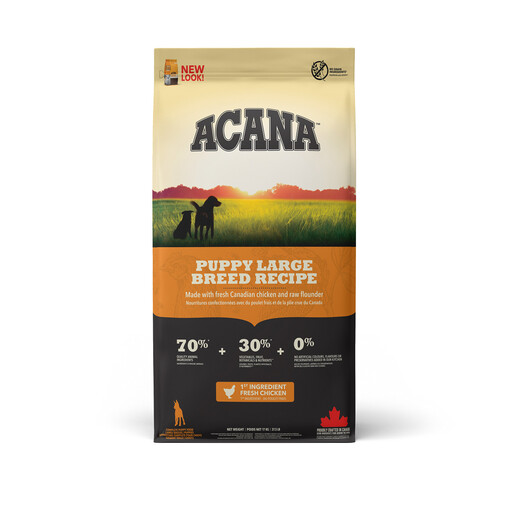
Why This Fits Their Persona: Ideal for owners of a Labrador, Golden Retriever, or German Shepherd puppy. This food is formulated for controlled growth to support healthy joint development.
This is not a generic food, but specifically puppy food for large breeds. It helps avoid the pitfall of overly rapid growth with its adjusted energy and mineral content.
Rich in animal proteins from free-run chicken and wild-caught flounder. Contains fruits and vegetables as a natural source of vitamins.
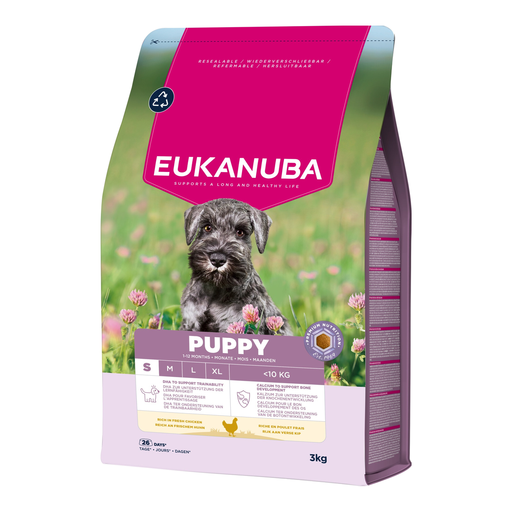
Why This Fits Their Persona: Suitable for owners of a Chihuahua, Dachshund, or French Bulldog puppy. The formula is tailored to the high energy needs and small jaws of this type of dog.
This puppy food for small breeds has a higher energy density and a smaller kibble size, thereby bypassing the 'one-size-fits-all' food trap.
According to Eukanuba, the added DHA supports trainability. The hexagonal kibble and DentaDefense system help keep teeth clean.
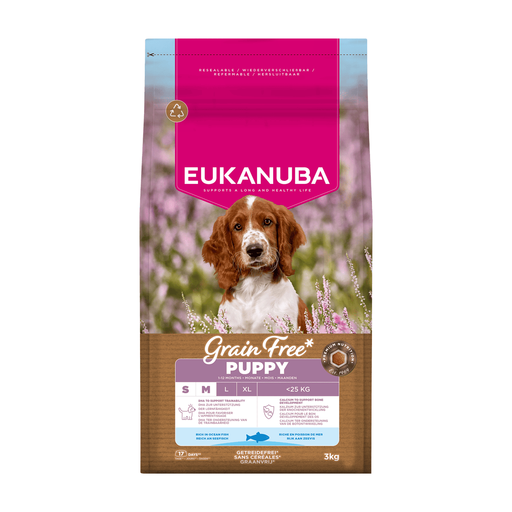
Why This Fits Their Persona: A great choice for owners who notice their puppy doesn't react well to food containing grains or chicken. Suitable for small to medium breed puppies.
This product addresses the 'grain-free hype' in a functional way. It's not a fad, but a targeted solution for puppies that genuinely benefit from a grain-free puppy food.
Low-allergen recipe with ocean fish as the protein source. Chicken- and gluten-free. Uses sweet potato and peas as alternative carbohydrate sources.
We have compiled a complete and up-to-date overview of products that meet these selection criteria and current guidelines.
The right amount depends on your puppy's age, weight, breed, and activity level, as well as the specific food. The feeding guide on the packaging is a good starting point. Monitor your puppy's body condition and adjust the amount as needed. A puppy should be lean; you should be able to feel the ribs, but not see them. When in doubt, consult your veterinarian.
This depends on your dog's adult size.
Not necessarily. Grain-free puppy food is primarily beneficial for puppies with a diagnosed grain allergy or sensitivity. For most puppies, high-quality grains like rice or oats are an excellent source of energy and fibre. The quality of the protein source and the overall composition of the food are often more important than the presence or absence of grains.
