
Vandaag of morgen in huis

Kwaliteit gegarandeerd

Welkomstaanbiedingen ontgrendelen: GRATIS bezorging | Tot 80% korting | Gratis 30 dagen JoyPlus-proefperiode
Download de app
A puppy grows quickly and therefore needs different food than an adult dog. However, not every product labelled “puppy” on the packaging is automatically well-suited to your dog. Breed size, age, kibble size, ingredients and daily amount all make a difference.
When you buy puppy food online, you mainly come up against three pitfalls:
So a suitable choice doesn’t start with a flashy claim, but with the information on the label.
Check whether the product is intended for puppies and up to what age. Some varieties are suitable from around 8 weeks to 12 months, while large or very large breeds may need puppy or junior food for longer.
Also pay attention to the expected adult size:
The classification varies by brand. So use the table on the packaging and look at the expected adult weight, not just your pup’s current weight.
On the label you’ll find crude protein, crude fat, fibre, ash and moisture. These percentages are useful for comparison, but they don’t individually tell you how your dog will react to the food.
With high-protein puppy food, the source matters. A product where chicken, lamb, cod or fish clearly appears at the top of the ingredients list gives you more information than a general mention like “meat and animal derivatives”. Also look out for possible combinations of protein sources. Puppy food with chicken, for example, may also contain egg, herring or other fish.
Examples from the range:
These are verifiable product specifications, not a guarantee of a particular effect. According to the brands’ own information, these recipes are designed to meet the nutritional needs of growing puppies. Always check the current packaging.
With dry puppy food, omega-3 and omega-6 fatty acids, DHA, calcium and phosphorus may be listed on the label. Some products also contain ingredients such as chicken cartilage, glucosamine, chondroitin, prebiotics or fish oil.
Don’t form any medical expectations from this. According to Farmina’s product description, certain puppy foods contain DHA and EPA, and chicken cartilage as a source of glucosamine and chondroitin. That doesn’t automatically mean the product prevents or treats joint problems.
Also check:
A sensitive digestion doesn’t automatically call for grain-free food. Look at the overall composition and consult a vet if problems persist.
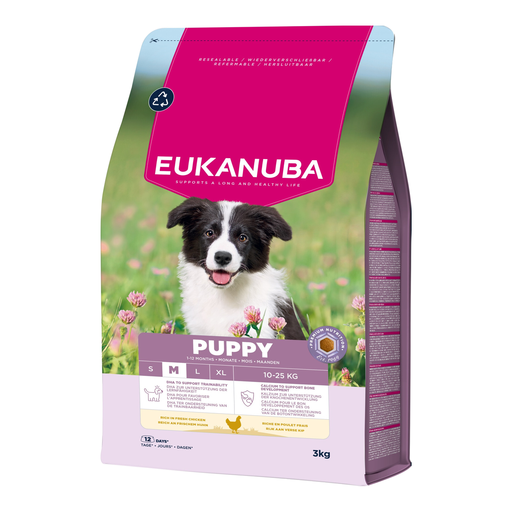
Why this fits the profile: The 3 kg bag is manageable for a first purchase and the variety is, according to the product information, intended for medium-sized puppies from 1 to 12 months.
You don’t have to buy a large bag straight away before you know whether your puppy will accept the kibble.
Chicken as a named protein source, DHA, calcium and a fibre mix with FOS, MOS and beet pulp according to the product description.
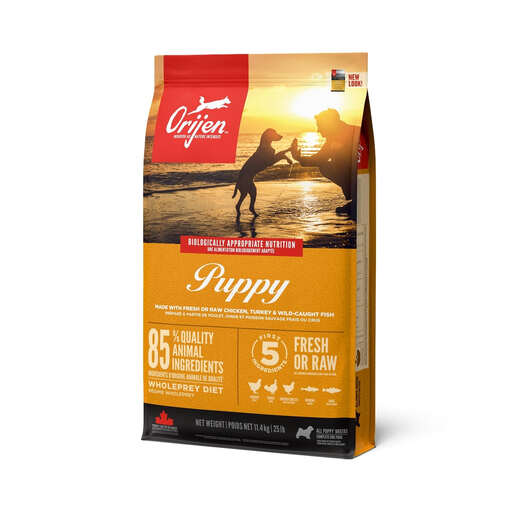
Why this fits the profile: A large bag with an extensive ingredients list suits households that are deliberately looking for a high-protein puppy food with multiple animal sources.
The product information gives concrete percentages and individual animal ingredients, rather than just a general protein claim.
According to the product description, 85% animal ingredients, a minimum of 38% protein and a grain-free composition.
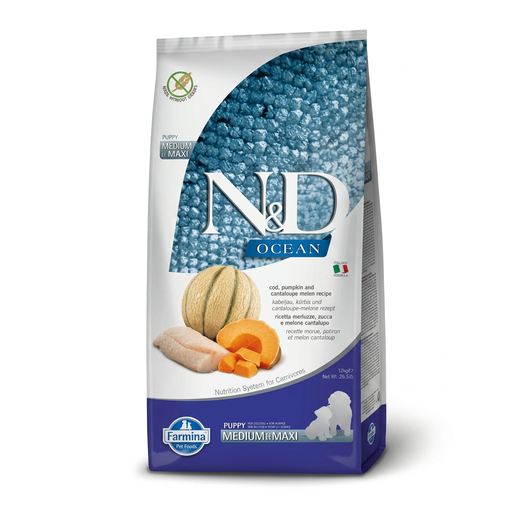
Why this fits the profile: The variety is aimed at medium and large puppies and uses cod as the primary protein source, which could be interesting for households wanting to avoid chicken.
The ingredients list makes the fish source and the addition of pumpkin clear; always check whether all the ingredients used suit your situation.
Cod, herring oil and pumpkin are mentioned in the ingredients; the bag contains 12 kg.
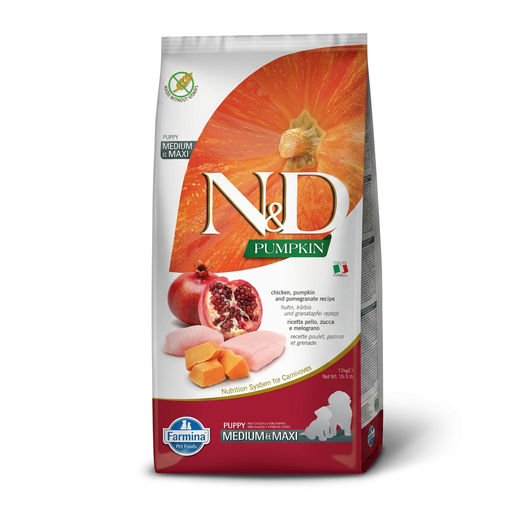
Why this fits the profile: The large bag and the indication for medium to large breeds suit multiple puppies or a household with high consumption.
The feeding guide includes amounts by weight and age. This helps you avoid seeing a large bag as permission for larger portions.
According to the product information, 34% crude protein, 20% fat, no grains and pumpkin as a named ingredient.
We’ve put together a full, up-to-date list of products that fully meet these strict selection criteria and comply with current European safety regulations.
Don’t just give your puppy the same food as an adult dog. In the range, you’ll sometimes see product titles that mention “puppy” while the description refers to an adult variety. So always check the life stage on the label.
Also, a recipe with lamb or fish isn’t automatically suitable for a sensitive dog. Eukanuba Life Care Puppy & Junior Small/Medium Lamb & Rice, according to the product description, contains chicken alongside lamb. So if you want to avoid chicken completely, you must read the full ingredients list.
Store puppy kibble in a sealed container, in a cool, dry place. Weigh out portions, keep an eye on body condition and adjust the amount according to age, activity and development. If you notice persistent diarrhoea, vomiting, itching or poor growth, it’s wiser to seek veterinary advice than to keep switching food.
That depends on the expected adult size. Small and medium-sized dogs often switch over earlier than large breeds. Follow the brand’s guideline and discuss the transition with your vet or breeder.
Not as a standard. Grain-free puppy food can suit a particular composition or preference, but “grain-free” on its own says nothing about the overall nutritional balance. Check the ingredients, analytical constituents and whether it’s labelled as complete food.
Gradually mix the new food with the old food. A practical approach is to increase the proportion of new food over about 5 to 10 days. Monitor stools, appetite and weight, and always provide fresh drinking water.
