
Vandaag of morgen in huis

Kwaliteit gegarandeerd

Welkomstaanbiedingen ontgrendelen: GRATIS bezorging | Tot 80% korting | Gratis 30 dagen JoyPlus-proefperiode
Download de app
A new puppy brings a lot of joy, but also a great deal of responsibility. One of the first and most important decisions you'll make is about their nutrition. The shelves are packed with different types of puppy food, each making its own promises. So, how do you know which is the right choice for your young dog?
As a Joybuy Product Recommendation Officer, I'm here to guide you. In this article, we'll cut through the marketing jargon and focus on what truly matters: the nutritional needs of your growing puppy. We'll provide you with practical advice to make an informed decision, ensuring your dog gets a healthy and energetic start in life.
Before we dive into specific products, it's helpful to know what to look for. The right puppy kibble lays the foundation for a healthy life. Here are three key points to consider.
Not all puppies are the same. The nutritional needs of a Chihuahua puppy differ significantly from those of a Great Dane puppy.
The ingredient list tells you more than the front of the bag. Pay close attention to the first few ingredients, as they make up the bulk of the food.
Always choose a food explicitly labelled as 'puppy food' or 'for puppies'. These formulas are specially designed with the right balance of proteins, fats, vitamins, and minerals that a growing dog needs. Adult dog food lacks this specific balance required for healthy development.
Based on product specifications and ingredient compositions, we've highlighted a few popular choices for you.
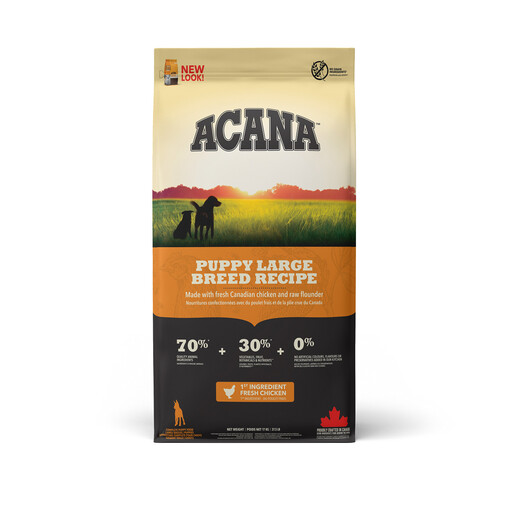
Why it stands out: This food from Acana is specifically developed for the controlled growth of large-breed puppies. The formula is rich in animal protein from free-run chicken, cage-free eggs, and wild-caught flounder to support strong muscle mass without overloading the joints.
Pros:
Who is it for?: Ideal for owners of large-breed puppies (with an expected adult weight of 30 kg or more) who are looking for a protein-rich food that supports growth.
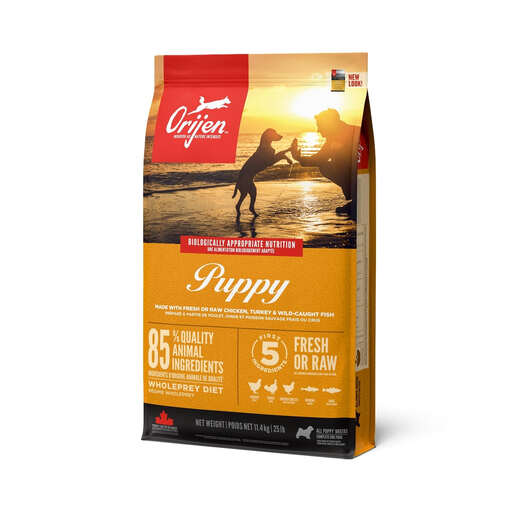
Why it stands out: Orijen is known for its "Biologically Appropriate" philosophy. According to the manufacturer, this food contains 85% animal ingredients, including free-run chicken, turkey, and whole eggs. The WholePrey ratios (meat, organs, cartilage) mimic a natural diet.
Pros:
Who is it for?: Suitable for puppies of all breeds, and especially for owners who prefer a very high-protein, grain-free diet for their pup.
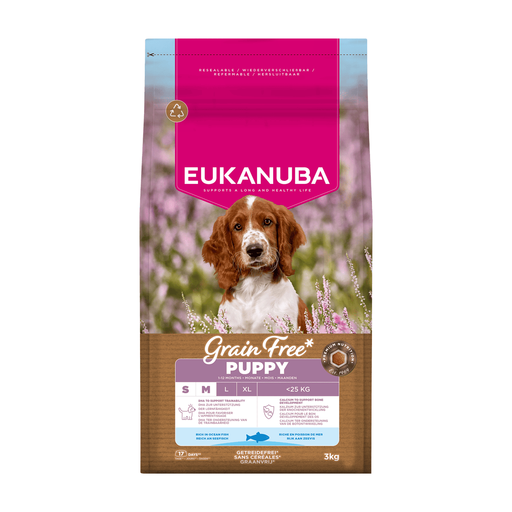
Why it stands out: This grain-free formula from Eukanuba is specially designed for puppies of small and medium breeds with potential sensitivities. According to the manufacturer, the recipe is low-allergen and uses ocean fish as the primary protein source, which is a great alternative to chicken.
Pros:
Who is it for?: An excellent choice for puppies of small to medium breeds, especially if there's a suspected digestive sensitivity or allergies to grains or chicken.
The right food is a personal choice and depends on your puppy's unique needs. Is your pup a different size, or are you looking for a specific formula not mentioned here? No problem. Many more high-quality options are available.
Browse our full range and discover more choices in our Vet-Recommended Premium Dry Dog Food category.
The right amount of food depends on your puppy's age, weight, breed, and activity level. Always consult the feeding guide on the puppy food packaging as a guideline. Divide the daily portion into several small meals (3-4 per day for young puppies). Keep an eye on your pup's weight and body condition, and adjust the amount as needed. When in doubt, it's always wise to consult your veterinarian.
The transition to adult food depends on the breed size. A general guideline is:
Not necessarily. Grain-free food is an excellent choice for puppies with a diagnosed grain allergy or intolerance. For most puppies, high-quality grains (like whole grain rice or oats) are a perfectly healthy source of energy and fibre. The overall quality of the ingredients and the total composition of the food are more important than whether or not it contains grains.
