
Vandaag of morgen in huis

Kwaliteit gegarandeerd

Welkomstaanbiedingen ontgrendelen: GRATIS bezorging | Tot 80% korting | Gratis 30 dagen JoyPlus-proefperiode
Download de app
Puppies grow quickly. That means a bag of puppy dog food is not automatically suitable for every dog. A small terrier has different kibble dimensions and energy needs from a young dog that will eventually weigh 35 kg. Terms such as “grain-free”, “high-protein” and “natural” also say little on their own about whether a complete food is suitable.
Pay particular attention to these three common pitfalls:
Choose a product whose legal name or product description states that it is complete food for puppies. This means it is intended to be fed as a daily staple, in line with the feeding guidelines on the packaging. Also check the recommended age range. Some products are suitable from around eight weeks to twelve months, while others are intended for all life stages.
Puppy food with chicken, lamb or fish can all be suitable. The chosen protein source is mainly relevant if your dog prefers a particular flavour or if you want to avoid certain ingredients. For a dog with a sensitive stomach, it is sensible to review the full ingredient list and consult a vet if problems persist.
Grain-free puppy food contains no grains, but it is not automatically necessary for every puppy. Manufacturers may use sweet potato, peas, chickpeas or potato instead of grains, for example. So look at the full ingredient list, crude protein content, fat content and available nutritional information.
As a verifiable example, Farmina N&D Premium Chicken Puppy/Small Breed lists 36% crude protein and 22% crude fat. The product information includes 28% deboned chicken and 27% dried chicken among the ingredients. The claim of 98% animal protein should be understood as referring to the proportion of protein from animal sources, not to 98% chicken in the bag.
With dog food containing DHA, it is useful to check whether DHA is actually included in the analytical information. This Farmina variant lists 0.70% DHA. That is a product specification; it is not a guarantee of any particular development or health outcome.
When choosing dog food for small breeds, look for smaller kibble and a portion size suited to a lower body weight. According to the product information, the 2.5 kg Farmina N&D Prime Chicken Puppy Mini is intended for small breeds.
For a medium or large-breed puppy, variants for medium/maxi breeds are a more logical choice. With large breeds, steady, controlled growth is more important than providing unlimited energy. Follow the feeding table on the packaging and adjust the amount according to age, activity level and body condition. “Dog food for large breeds” is therefore not a licence to feed larger portions.
Ingredients such as chicken cartilage, glucosamine or chondroitin are often associated with joint support in product information. Phrase this carefully: these are added components of the recipe, not a guarantee of healthy joints. If you have concerns about growth, weight or movement, ask a vet for advice.
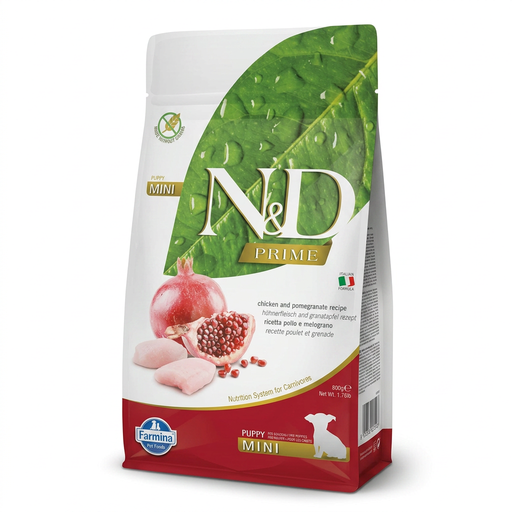
Why it suits this profile: The smaller pack is practical for trying the food first. According to the product information, this variant is intended for small breeds and contains chicken as its main animal protein source.
The product description explicitly states that it is complete puppy food for small breeds. This means you do not have to rely solely on the term grain-free.
800 g pack; 36% crude protein; DHA, omega-3 and omega-6 are listed in the product specifications.
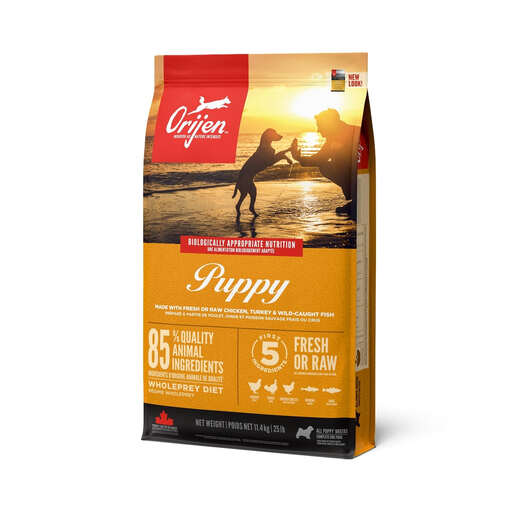
Why it suits this profile: The large pack is designed for puppies of all breeds and can be practical for households with several dogs or a larger puppy.
The product information states a minimum of 38% crude protein and provides separate feeding instructions by age, weight and breed size.
85% animal ingredients according to the product description; 11.4 kg pack; grain-free recipe.
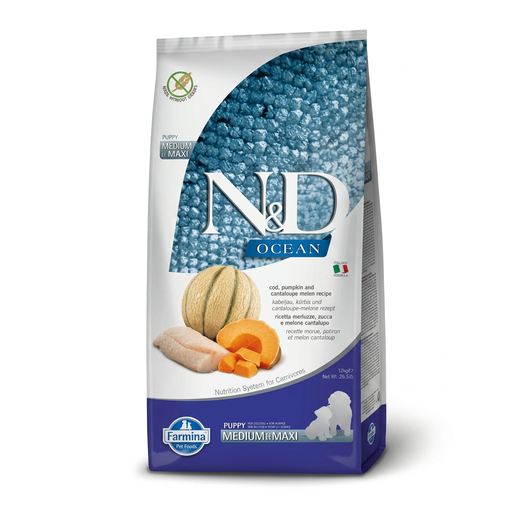
Why it suits this profile: This fish-based puppy food contains cod, dried cod and herring among its listed ingredients and is intended for medium and large breeds.
The protein source is clearly listed in the recipe. This makes comparisons easier than relying on general terms such as premium or natural.
12 kg pack; cod as the primary protein source; pumpkin and fish oil included in the recipe.
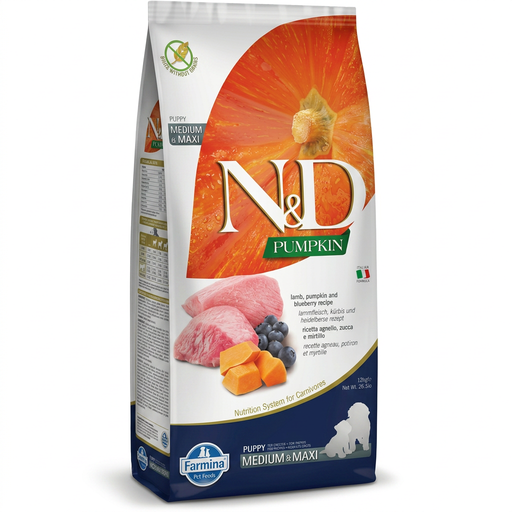
Why it suits this profile: A large bag is suitable for feeding a medium or large-breed puppy regularly. The recipe includes lamb, herring and pumpkin among its listed ingredients.
The product name and legal description identify medium/maxi puppies as the target group. Always check the current feeding table on the packaging as well.
12 kg pack; grain-free recipe according to the product description; lamb and fish as animal ingredients.
We have put together a complete, up-to-date list of products that fully meet these strict selection criteria and the applicable European safety regulations.
Look for a clear, straightforward ingredient list and do not automatically choose grain-free puppy food. A grain-free product may still contain several alternative carbohydrate sources. Introduce new food gradually. If diarrhoea, vomiting, itching or reduced appetite persists, it is sensible to consult a vet.
This varies according to breed size. Small dogs can usually switch to adult food earlier than large breeds. Follow the manufacturer’s age guidance and take the expected adult size into account. If you are unsure, discuss when to switch with your vet or breeder.
No. A high protein percentage is only one factor to consider. Also check that the food is complete, intended for puppies and supplied with a suitable feeding table. For large breeds in particular, portion control and steady growth are more important than simply choosing the highest figure on the packaging.
