
Workshop host with a group
You want to make enough pumpkin soup for everyone and time the preparation to be ready for serving. Pot capacity, a timer and the cooking method all play a part.


Choose the capacity based on the number of participants and how much soup you want to serve. A timer can help if you have a set serving time, but it won’t speed up slow cooking. For a short workshop, cooking on the hob may fit the schedule better. Smooth pumpkin soup also needs a separate blending step, and a keep-warm setting is no substitute for checking the food’s temperature.
You want to make enough pumpkin soup for everyone and time the preparation to be ready for serving. Pot capacity, a timer and the cooking method all play a part.
You want participants to experience the process within the time available. Planning to slow-cook in advance or choosing another cooking method can make all the difference.
You’re looking for an appliance that fits the space available and is practical to clean afterwards, with safe, stable positioning in mind.
For consumers making pumpkin soup at a cookery workshop, key considerations include the quantity required, serving time, shared workspace and workshop duration.
Suitable for: a small group and enough time to start cooking in advance.
Consider: according to Tristar, the Tristar VS-3915 has a capacity of 3.5 litres and no timer.
Suitable for: a workshop with a planned serving time and a suitable quantity of soup.
Consider: according to Tristar, the Tristar VS-3920 has a capacity of 4.5 litres, a timer and a keep-warm function; slow cooking still takes time.
Suitable for: a quantity for a group that requires a larger pot. Russell Hobbs says the inner pot of the MaxiCook 22750-56 can be used on a hob; Instant Pot says the Superior has a sauté function in the appliance.
Consider: check the workspace required and how the inner pot can be used for the exact model.
Suitable for: a short programme where slow cooking wouldn’t be ready in time. According to Crock-Pot, the Crock-Pot CSC051X has a separate pressure-cooking function; the Netherlands Nutrition Centre also describes pumpkin soup cooked on the hob.
Consider: pressure cooking, cooking on the hob and slow cooking are different methods; allow time to blend the soup too.
| Consideration | What should you check? | Who is this important for? |
|---|---|---|
| Quantity of soup | First work out how many portions you want, then check the quantity of ingredients and liquid against the instructions for the exact model. Manufacturers list different nominal pot capacities, such as 3.5 litres for the Tristar VS-3915 and 7.1 litres for the Instant Pot Superior; these figures are not a measured quantity of soup. | If I want to cook for the whole group in one go, I choose based on the quantity needed, not just the stated number of portions. Around 36% of consumers say having enough soup for the group is their top priority. |
| Serving time | Check the timer and cooking time for the exact model. Tristar lists a timer for the VS-3920, but no timer for the VS-3915; a keep-warm function doesn’t automatically show the temperature of the soup. | If I want to serve the soup at a set time, I consider the schedule and check the temperature while keeping it warm. Around 29% of consumers prioritise serving time and cooking schedule; for food preparation covered by NVWA rules, temperature checks should be part of the process. |
| Workspace and cleaning | Measure the available space and check the instructions for the inner pot and dishwasher use for your chosen model. The Tristar VS-3915 manual requires a flat, stable surface and at least 10 cm of clear space around the appliance; Instant Pot says the Superior has a dishwasher-safe inner pot. | If participants are cooking and tidying up together, I want to know where the appliance can be placed safely and which parts I can clean. Around 21% of consumers give workspace and tidying up top priority. |
| Workshop duration | Compare the time available with the recipe, and allow for preparation and blending. The Netherlands Nutrition Centre describes pumpkin soup cooked on the hob and then blended; a pressure function is not the same as a quick slow-cook setting. | If participants are only starting during a short workshop, I want to know whether the chosen method will produce soup in time. Around 14% of consumers give getting a quick result within the schedule top priority. |
The portion size you want and the ingredients in the soup determine how much you need; the nominal pot capacity isn’t a calculated quantity of soup per participant.
Work out the total quantity before buying and check the filling instructions for the exact model.
If the pot turns out to be too small, you may need to cook a second batch or use an extra pot.
An appliance setting doesn’t show the actual temperature of the soup. The NVWA sets out temperature checks for food preparation covered by the applicable rules.
Measure the food temperature if keeping it warm is part of your serving plan, and follow the rules that apply to your workshop.
Allow for a digital probe thermometer and a process for checking the temperature.
The Netherlands Nutrition Centre’s pumpkin soup recipe includes a separate blending step after cooking.
Allow time and use safe handling when blending hot soup, and check what equipment is available.
If there’s no stick blender or food processor available, you’ll need to arrange one.
According to Crock-Pot, the Crock-Pot CSC051X has both a pressure-cooking function and a slow-cooking function, but these are different cooking methods.
Decide in advance which method you want to demonstrate and follow the instructions for the relevant setting.
The models mentioned offer either a compact manual option or a larger digital version.
The MaxiCook 22750-56 is a larger slow cooker with an inner pot that Russell Hobbs says can be used on a hob.
According to the manufacturer, the Superior is a larger slow cooker with several cooking functions.
The CSC051X is a multicooker for anyone who wants a separate pressure-cooking function as well as slow cooking.
These product options include slow cookers and multicookers with a slow-cook function for different group sizes, schedules and workshop durations.
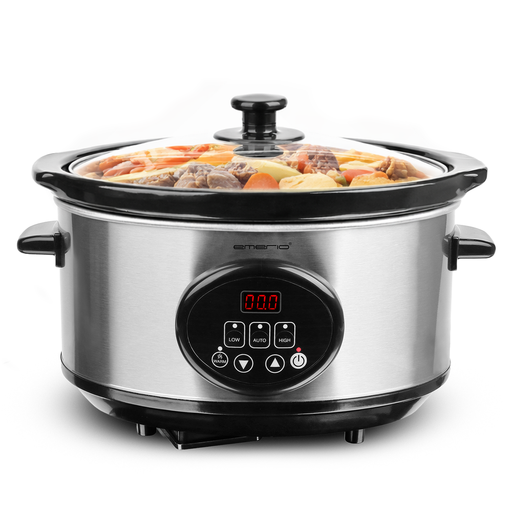 No image available
A digital timer and keep-warm function suit a planned serving time.
The description lists three settings and a removable ceramic pot.
 No image available
According to the product description, this multicooker also has a slow-cook function for workshops where slow cooking is required.
The description lists 14 cooking functions, a capacity of 6 litres and a capacity for 6–8 people.
Pressure cooking and slow cooking are separate functions; follow the filling and pressure-release instructions when pressure cooking.
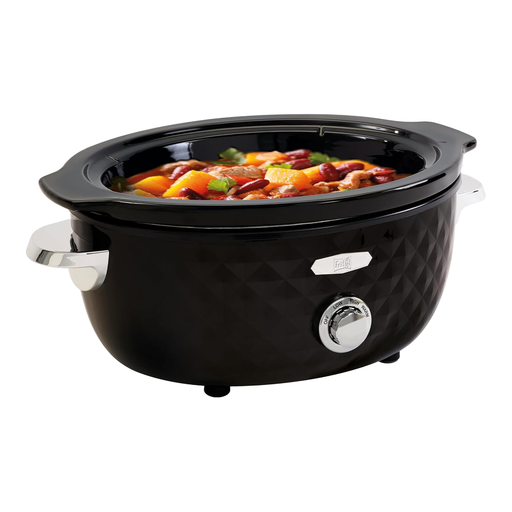 No image available
The stated capacity for 1–4 people may suit a smaller workshop group.
The product information lists a ceramic pot, four heat settings and dishwasher-safe parts.
According to the description, the ceramic pot must not be used on a hob, in an oven or in a microwave.
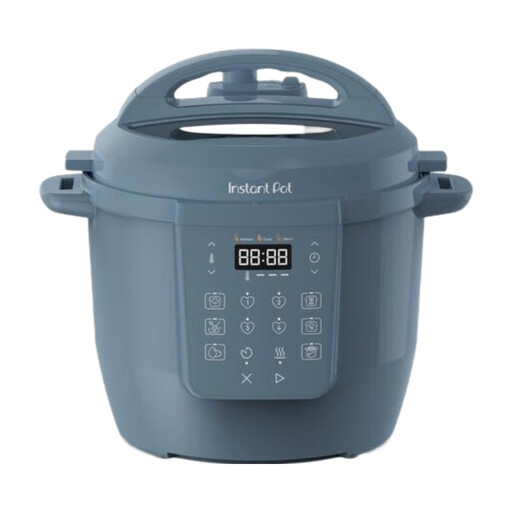 No image available
The slow-cook function and delayed start may suit cooking that’s timed to be ready for serving.
The product information lists up to six portions, a stainless steel inner pot and a keep-warm function.
Pressure cooking and slow cooking are separate functions. Follow the filling limits and pressure instructions, and don’t open the lid while the float valve is raised.
 No image available
The larger capacity and timer with delayed start may help when planning soup for a group.
The description lists up to ten portions, 12 programmes and a keep-warm function.
The pressure and slow-cook settings are separate functions; when pressure cooking, follow the filling limits and instructions for opening the pot.
Don’t assume you can without planning the timing. The Netherlands Nutrition Centre’s recipe cooks the pumpkin on the hob and blends the soup afterwards; it isn’t a slow-cooker recipe. If you’re demonstrating slow cooking, start in good time and allow time for blending.
Smooth pumpkin soup needs a separate blending step. The Netherlands Nutrition Centre’s recipe uses a stick blender or food processor for this; follow the instructions for blending hot soup safely.
Check the temperature of the soup, as the name of an appliance setting doesn’t prove what temperature the soup has reached. For food covered by NVWA rules for catering, food production and retail, the NVWA recommends keeping food hot at 60 °C or above and checking it with a digital probe thermometer.
It depends on the activity. According to the NVWA, businesses that prepare, process or sell food must work with a food safety plan based on HACCP or an approved hygiene code; the NVWA also mentions individuals who sell food occasionally. The description ‘cookery workshop’ alone doesn’t mean that every private gathering is subject to these business obligations.
Cool leftovers quickly and store them in a sealed container in the fridge or freezer. The Netherlands Nutrition Centre advises not leaving leftovers out of the fridge for more than 2 hours. For commercial activities, also follow the food safety rules that apply to your situation.