
Cook making one fresh portion
Doesn’t want to make more soup than needed, so compares the recipe’s liquid requirements with the pressure-cooking instructions for the chosen model.


An electric pressure cooker is a sensible choice for a single portion of pumpkin soup only if the minimum liquid requirement and fill limits for the exact model suit your recipe; the capacity of the pot alone does not prove this. If you can’t meet those requirements without making extra soup, cooking without pressure or using a regular saucepan is a practical alternative. A larger pressure cooker makes most sense if you’re deliberately making several portions and can store the leftovers properly.
Doesn’t want to make more soup than needed, so compares the recipe’s liquid requirements with the pressure-cooking instructions for the chosen model.
Is looking for a smaller electric pot, while also allowing for a stable position and enough room to use it and release steam.
Prefers to make several portions at once and has room to cool and store the leftovers promptly.
A good fit if: you have limited worktop space and the manual for the exact model confirms that your recipe meets its liquid and fill limits.
Bear in mind: a smaller stated capacity doesn’t prove that one small portion can be safely pressure-cooked.
A good fit if: you’re deliberately making a larger batch of soup and can cool and store the leftovers.
Bear in mind: extra capacity is of little use if you only want to make one fresh portion.
A good fit if: your recipe uses less liquid than the chosen appliance requires for its pressure-cooking programme, or you don’t want to make extra portions.
Bear in mind: blending is a separate step; a soup setting doesn’t automatically mean the appliance will blend the soup until smooth.
| What to consider | What should you check? | Who should pay particular attention? |
|---|---|---|
| Pressure-cooking a small portion | Compare the minimum liquid requirement and fill limits in the manual for the exact model with your recipe. The Netherlands Nutrition Centre uses 300 ml of water for two people in its pumpkin soup recipe; this doesn’t confirm the minimum quantity for a pressure cooker. | I usually cook for myself and don’t want to have to store extra portions. Around 42% of consumers give top priority to making one small portion. |
| Space and positioning | Compare the external dimensions with the space available and follow the positioning instructions in the manual for your chosen model. | I want to fit a pot into my small kitchen without making my work area unusable. Around 25% of consumers give limited space top priority. |
| Storing several portions | Decide how much soup you want to make and whether you have space in the fridge and freezer. The Netherlands Nutrition Centre recommends keeping pumpkin soup in the fridge for two days or in the freezer for three months. | I prefer to make a batch in one go and can cool and store the leftovers promptly. Around 17% of consumers give making several portions top priority. |
| Controls and blending | Check the cooking settings, instructions for releasing pressure, and how to clean the pot and lid. The Netherlands Nutrition Centre and an Instant Pot recipe describe blending as a separate step. | I want to know in advance what I’ll need to do to make the soup smooth and clean the appliance afterwards. Around 16% of consumers give controls, blending and cleaning top priority. |
The stated capacity of the pot and the minimum amount of liquid needed to build pressure are two different things. A small pot capacity therefore doesn’t tell you the minimum amount of soup you need to make according to the manual.
Before choosing the pressure-cooking programme, compare the liquid and fill-limit instructions for the exact model with the quantities in your recipe.
The Tefal CY505E and Philips HD2616/70 models reviewed each have a stated capacity of 6 L. This capacity is mainly useful if you really do want to make several portions.
Choose extra capacity only if the larger quantity suits your eating and storage needs. Also check the fill limits and plan how you’ll store any leftovers.
In the recipes from the Netherlands Nutrition Centre and Instant Pot, blending is a separate step after cooking.
Check which preparation steps the appliance carries out and whether you’ll need a stick blender or other suitable blending equipment.
The Duo Mini and Classic Mini are smaller pressure multicookers worth comparing if worktop space is important.
The All-in-One CY505E is a pressure multicooker with a stated capacity of 6 L, worth considering if you want to make several portions.
The 3000 Series HD2616/70 is a pressure multicooker with a stated capacity of 6 L.
These Joybuy products are electric cooking pots for making soup without pressure. They’re worth considering if you want to cook a small portion without pressure; they aren’t electric pressure cookers.
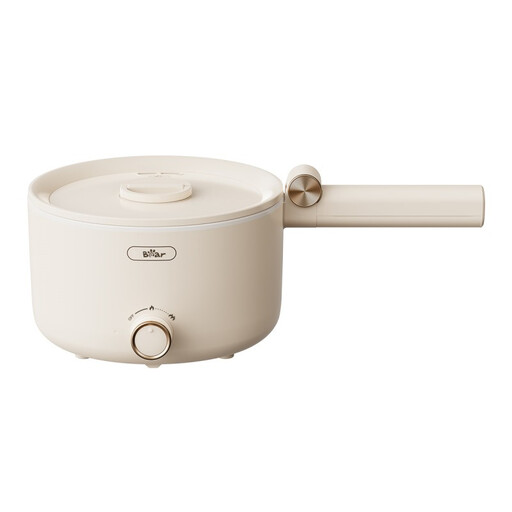 Image unavailable
An option for making a small portion of soup without pressure.
The product information lists a non-stick interior, two power settings and dimensions of 34.2 × 21.1 × 13.2 cm. The operating instructions say the pot must be supervised during use.
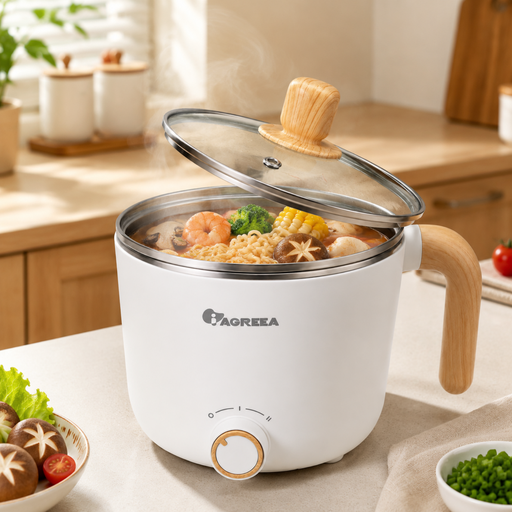 Image unavailable
The product information lists soup-making and use for one to two people.
The inner pot is made of stainless steel, and the model has two power settings: 300 W and 600 W.
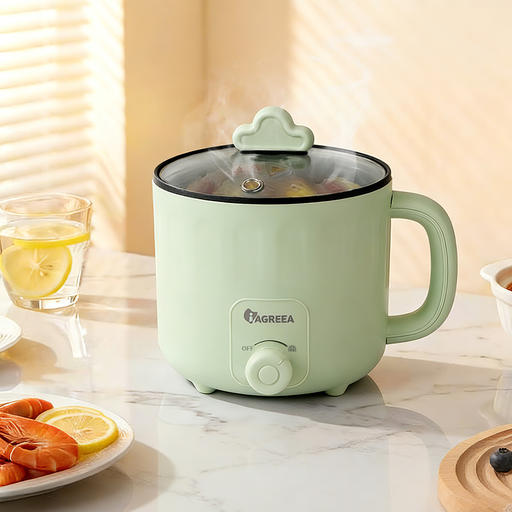 Image unavailable
The product information lists soup-making and use for one person or a couple.
The pot has a stated capacity of 1.6 L and a non-stick coating; its listed power is 600 W. The stated functions include boiling and stewing.
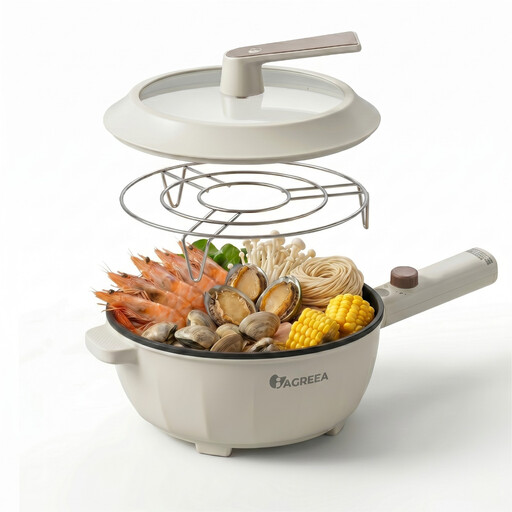 Image unavailable
The product information lists soup-making for one to three people.
The model has a stated capacity of 2.3 L and three power settings.
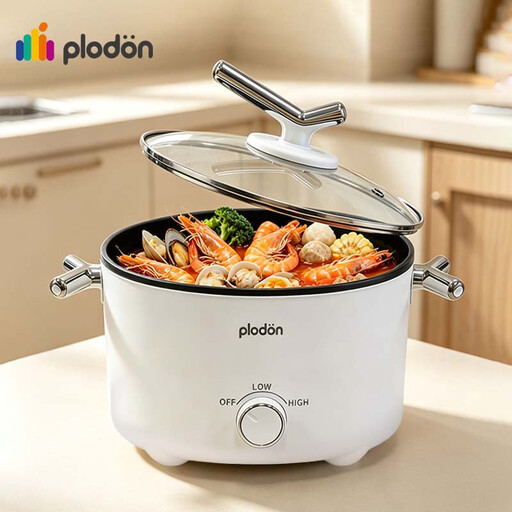 Image unavailable
An electric cooking pot for making soup without a pressure-cooking programme.
The product information lists two heat settings, a glass lid and a capacity of 2.0 L. The operating instructions say not to fill the pot more than two-thirds full.
No, don’t assume it will. The Netherlands Nutrition Centre describes blending as a separate step after cooking; an Instant Pot recipe also includes a separate blending step.
Cool leftovers quickly, seal them well and don’t leave them out of the fridge for more than two hours. The Netherlands Nutrition Centre recommends keeping pumpkin soup in the fridge for two days or in the freezer for three months.
A manufacturer’s warranty is separate from your statutory rights. According to the Dutch Government, a product must meet the standard you’re entitled to expect; there’s no fixed statutory warranty period in the Netherlands. If a product is faulty, contact the retailer.
That depends on the rules that apply to the specific appliance. The European Commission outlines CE marking requirements for certain product groups under harmonised EU rules; the applicable rules must be established for each appliance. A CE marking is a declaration made by the manufacturer.