
Weekend cook with a large baking tray
You want to roast a generous portion of pumpkin cubes at once. So focus on the usable internal dimensions and whether your baking tray will fit.


Start by considering how much pumpkin you want to roast at once. Measure your baking tray or oven dish and compare it with the usable internal dimensions, rather than looking only at the capacity in litres. A freestanding oven could be a good fit if you don't want to use a built-in space; a built-in oven needs a suitable housing space and installation. Compare energy consumption on a like-for-like basis, and only choose extra features if you’ll use them.
You want to roast a generous portion of pumpkin cubes at once. So focus on the usable internal dimensions and whether your baking tray will fit.
You’re weighing up worktop space against an available built-in space. The dimensions and installation requirements will determine which type suits your kitchen.
You want to match the oven size to your usual portions and compare energy consumption per cycle.
A good fit if: you don't want to use a built-in space and have a suitable spot on your worktop.
Keep in mind: the worktop space it needs and the size of the supplied baking tray.
A good fit if: you have a suitable built-in space and need oven capacity or several shelf levels.
Keep in mind: check the housing dimensions, connection and installation instructions for the exact model.
A good fit if: you also need a microwave function and the oven tray and shelf positions suit your dish.
Keep in mind: according to Consumentenbond, combination microwaves often have fewer shelf positions and sometimes no bottom heat. Check the features of the exact model.
| What to consider | What to look for | Who it matters more to |
|---|---|---|
| Space for your baking tray | Measure your tray or dish and compare it with the internal dimensions and supplied baking tray. | If I want to roast a generous portion at once, I need to know whether my tray or dish will actually fit. Around 36% of consumers prioritise having enough baking tray space for their portion. |
| Where it will go | Check the housing dimensions and installation instructions, or measure the space and check the positioning instructions for a freestanding model. | If my kitchen has little spare space, the oven needs to fit in the intended spot or housing. Around 29% of consumers prioritise the space available in their kitchen. |
| Energy use and size | Where applicable, compare energy consumption in kWh per cycle using the same oven setting, and check the oven capacity too. | If I usually cook small portions, I want an oven that suits my needs and to take its energy consumption into account. Around 21% of consumers prioritise this consideration. |
| Cleaning | Check the cleaning instructions for the baking tray and oven interior, and see which cleaning functions the model has. | If cleaning up after roasting is my main consideration, I look at how to care for both the tray and oven interior. Around 14% of consumers make this their top priority. |
Milieu Centraal recommends comparing oven size and energy consumption per use or per year together. The European Commission sets out the applicable scope for energy labelling of ovens; small ovens and appliances with microwave heating are treated separately.
The stated capacity doesn't automatically tell you whether your baking tray or oven dish will fit. Consumentenbond recommends checking the internal dimensions.
Measure the largest tray or dish you plan to use and compare it with the internal dimensions and supplied accessories.
If your tray or dish doesn't fit, you may need a different one or another model.
According to Consumentenbond, combination microwaves often have fewer shelf positions and sometimes no bottom heat, which may affect how your food cooks.
Check the oven functions, tray size and shelf positions of the exact model.
Milieu Centraal recommends considering size and energy use per cooking session together; a larger oven could use more energy than necessary for small portions.
Where applicable, compare energy consumption in kWh per cycle using the same oven setting, and weigh this against your usual portion size.
A freestanding alternative if you're not looking for a built-in oven: according to Inventum, the OV457B has a net capacity of 45 litres and comes with a baking tray.
According to Beko, the BBIE12100BD is a built-in fan oven with a main capacity of 66 litres.
The HBG7741B1 is a built-in oven from the Serie 8 range.
According to AEG, the BP7200B is a built-in oven with a net oven capacity of 71 litres, fan cooking and pyrolytic cleaning.
This Joybuy range includes freestanding fan ovens, built-in ovens and a built-in model with a microwave function. When choosing, check that your baking tray will fit and that the installation dimensions suit your kitchen.
 No image available
A built-in model with fan circulation for oven cooking.
The product description lists a capacity of 70 litres, 3 kW, a grill, ten functions and AquaClean steam cleaning.
 No image available
A freestanding oven with a fan function for anyone who doesn't use a built-in space.
The product details list a capacity of 65 litres, 2,000 W, six cooking functions and a mechanical timer. Place the model on a stable, heat-resistant surface and keep the ventilation openings clear.
 No image available
A built-in oven with fan cooking, including 3D fan cooking.
The product details list a capacity of 66 litres and cooking on up to three levels at once. Check that the housing space matches the model's specific dimensions.
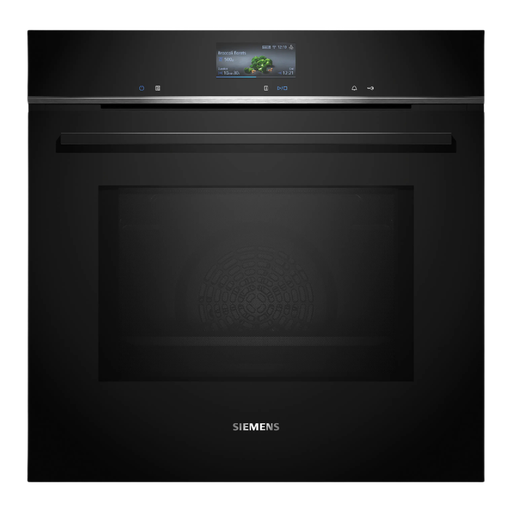 No image available
A built-in model with a microwave function and fan heating; worth considering if you need both functions.
The product details list a capacity of 71 litres and pyrolytic cleaning. Check the housing space and make sure the oven tray suits the dish you’re preparing.
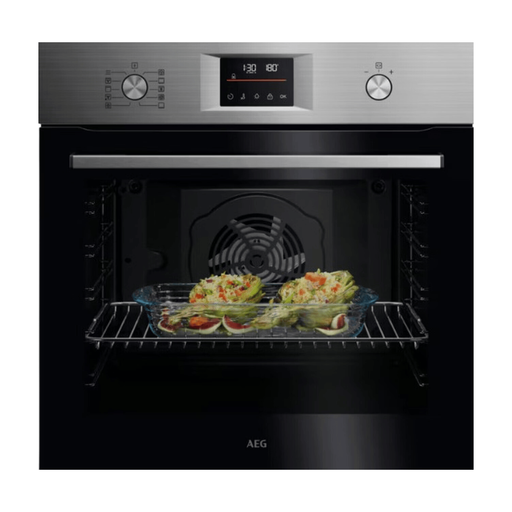 No image available
A built-in oven with fan cooking for anyone looking for a built-in model.
The product details list a capacity of 72 litres, pyrolytic cleaning and 0.52 kWh per cycle in fan mode. Check the housing dimensions and compare energy figures on a like-for-like basis.
There’s no set cooking time for cubes of every size. As a guide, Albert Heijn Allerhande cooks 1 cm pumpkin wedges for around 20 minutes at 200 °C, turning them halfway through. Don’t apply this time without adjustment to cubes of a different thickness or quantity, or cooked using another oven setting; check that your own pieces are cooked through.
For a built-in model, check the housing dimensions and installation instructions for the exact model. For a freestanding oven, measure the intended space and follow the positioning and safety instructions in the manual; the capacity in litres doesn't tell you how much space it needs on the outside.
Voedingscentrum recommends keeping cooked pumpkin in the fridge for up to 2 days or in the freezer for up to 3 months. Don’t leave leftovers out of the fridge for more than 2 hours.
The European Commission states that energy labelling is compulsory for domestic ovens under the applicable rules. Small ovens and appliances with microwave heating are treated separately within the scope, so don't automatically assume that an appliance of this kind doesn't comply with the rules just because it has no label.
According to the Dutch government (Rijksoverheid), there is no fixed statutory warranty period in the Netherlands, but you are entitled to a product that works as it should, and the seller is your first point of contact if something goes wrong. Whether a repair can be carried out free of charge depends, among other things, on the fault, normal use and what you could reasonably expect from the product.