
Vandaag of morgen in huis

Kwaliteit gegarandeerd

Welkomstaanbiedingen ontgrendelen: GRATIS bezorging | Tot 80% korting | Gratis 30 dagen JoyPlus-proefperiode
Download de app
A pull-up bar for home may seem simple: fit a bar and get straight to work on your pull-ups. In practice, the door frame, weight capacity and stability all determine whether your purchase will continue to work well. A cheap pull-up bar that doesn’t fit properly could also damage the door frame or shift while you’re exercising.
Whether you’re a beginner, a calisthenics enthusiast or an experienced athlete, these are the main pitfalls to watch out for:
Before buying, measure the inside width of the door frame and check the depth and shape of the trim too. For an adjustable pull-up bar, the adjustment range matters more than the word “universal”.
According to the product details, the GoZone PULL UP BAR adjusts from 62 to 91 cm. It fits into a door frame without screws or drilling. This makes it practical for rented homes or a small workout space, but only if the frame is sturdy enough. Don’t use this type on glass doors, hollow frames or unstable surfaces.
A freestanding model has different requirements. Measure the available floor space and ceiling height, allowing room for your head and enough clearance to move freely during pull-ups.
Don’t just look at a big number on the packaging. Check:
The product description states that the GoZone bar supports up to 136 kg. The Sportsroyals Power Tower has a stated maximum load of 204 kg. The Sportsroyals dip bar lists a 400 kg static load and a 200 kg dynamic load. These are the manufacturer’s product specifications; they don’t guarantee that every door frame, floor or workout situation can withstand the same load.
A fitness rack, dip station or power tower has to withstand sideways forces during dips and knee raises. So look out for:
The Sportsroyals Power Tower product description mentions steel tubes approximately 2 mm thick, a double triangular base and six height settings from 178 to 235 cm. Another Sportsroyals model has an H-shaped base with eight rubber feet, six height settings from 164.56 to 221.5 cm and resistance bands from 10 to 40 kg. According to Sportsroyals’ own product information, these features are designed to support stability and training variety. Always check for yourself after assembly that the frame doesn’t move.
A door-frame bar is suitable for pull-ups, chin-ups and some floor or core exercises. It takes up very little space and can be put away after use. For heavy dips or intense leg raises, a freestanding station is generally more practical, as it doesn’t transfer the forces to the door frame.
A dip bar is worth considering if you mainly want to do dips, push-ups, reverse pull-ups and basic core exercises. A power tower or pull-up station generally offers more options, such as knee raises, different grips and sometimes support for beginners. On the other hand, you’ll need more floor space and will usually have to assemble it.
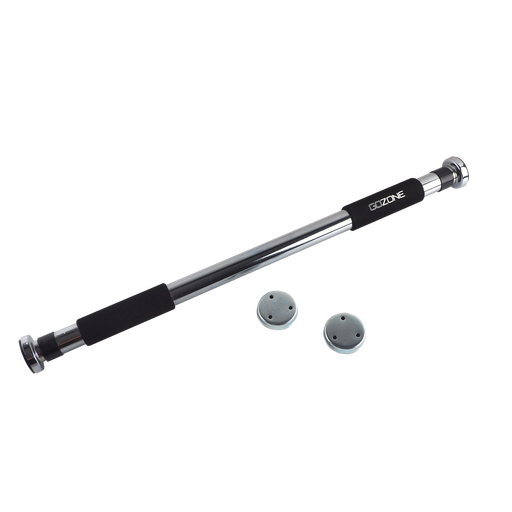
Why it suits this profile: This compact pull-up bar for home is a good choice if you want to start strength training at home without permanent fixtures and have limited storage space.
The 62-91 cm adjustment range lets you check whether it will fit. No screws are needed, but the manufacturer advises using it only with a sturdy, suitable door frame.
Steel construction, foam grips, a stated weight capacity of up to 136 kg and easy removal.
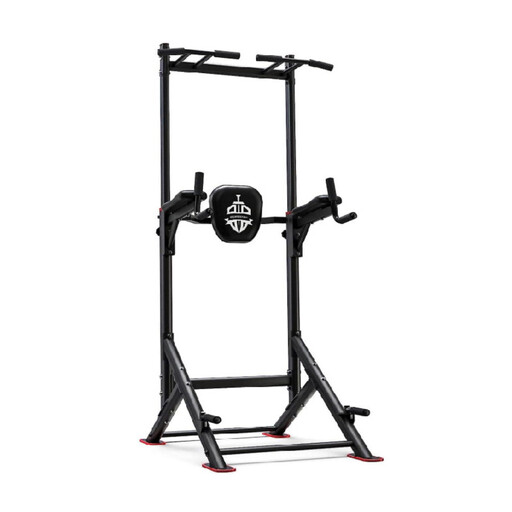
Why it suits this profile: A good choice if you want one fixed workout station for pull-ups, dips, push-ups and vertical knee raises.
The double triangular base and three reinforcement points are clearly described. The height adjusts from 178-235 cm; check all bolts and locking mechanisms after assembly.
Steel frame, a stated weight capacity of 204 kg, multiple grip positions and three push-up angles.
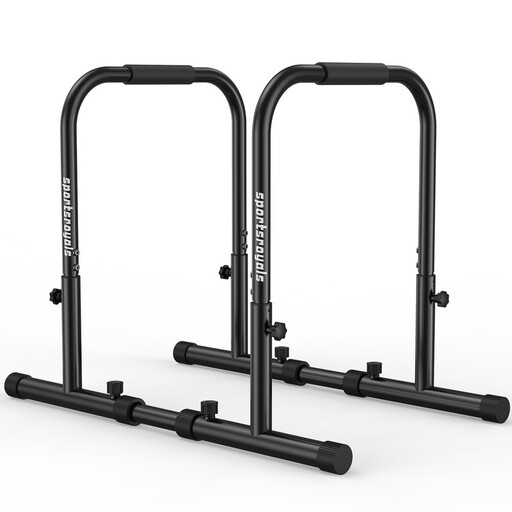
Why it suits this profile: This dip bar is a good fit for calisthenics enthusiasts who want to combine dips, reverse pull-ups, push-ups and stretches in focused workouts.
The manufacturer distinguishes between a 400 kg static load and a 200 kg dynamic load. This avoids confusion, but the dynamic maximum of 200 kg is the relevant figure during exercises involving movement.
Four height settings from 81-96 cm, an H-shaped base, a double bar and non-slip feet, according to the product description.
We’ve put together a complete, up-to-date list of products that meet these strict selection criteria and the applicable European safety regulations.
Before each workout with a door-frame bar, check:
For a power tower or dip station, tighten all bolts according to the assembly instructions. Place the rack on a level, stable floor and check the height pins before use. Wipe steel surfaces with a damp cloth and don’t use abrasive cleaners. Clean foam grips with mild soapy water and leave them to dry.
Only use additional weights or explosive movements if the product information allows them. Stop exercising if the bar or frame becomes damaged.
No. The door frame needs to be sturdy and within the stated adjustment range. Glass doors, hollow frames and unstable surfaces aren’t suitable. Measure the width first and check the condition of the frame.
It can be, if the height is adjustable and you build up your exercises gradually. A freestanding station does take up more space than a door-frame pull-up bar. If your strength is limited, consider a model with support, such as an adjustable pad or resistance bands.
Its lifespan depends on the materials, assembly, how often you use it and how well you maintain it. Regularly check the welds, bolts, foam, rubber feet and locking mechanisms. A weight capacity printed on the packaging doesn’t tell you how long a product will last; correct use and replacing worn parts in good time are just as important.
