Who is this buying guide for?

Protein-conscious snack shoppers

You’re looking for popcorn after school or sport and want to know how much protein your portion actually provides. Consider the snack as part of your overall diet; general sports advice isn’t specifically intended for school-age children. The Netherlands Nutrition Centre distinguishes between ordinary foods and specialist protein products.

Parents weighing up ingredients

You want to choose a snack based on its ingredients, portion size and suitability, rather than just a nutrition claim. The Netherlands Nutrition Centre highlights popcorn as a potential choking risk for young children.

Families looking for a quick snack

You want something that takes little preparation after school and are comparing ready-to-eat popcorn with microwave popcorn. The product instructions may require adult supervision; pack size and storage are also worth considering.

What should you look for when buying?

What to consider What should you check? Who is this important for?
Protein in your portion Compare the protein per 100 g, then work out how much that is in the amount you eat. AH Salted Popcorn lists 8.3 g per 100 g; the 25 g portion stated by AH contains around 2.1 g of protein. If you mainly want to know how much protein you actually eat after school or sport, focus on the portion rather than just the figure per 100 g. For around 36% of consumers, protein is the top priority.
Ingredients and suitability Check the ingredients and allergen information on the packaging. For young children, also bear in mind the Netherlands Nutrition Centre’s advice about choking. When choosing for a child, you’ll want the ingredients and the way the snack is eaten to suit the situation. Around 29% of consumers put ingredients and suitability first.
Ready to eat or needs preparing Check whether the popcorn is ready to eat or needs to be microwaved. Follow the instructions for the exact product, including any warnings about heat, steam and supervision. If you want a quick snack after school, consider how much preparation and supervision it requires. Preparation convenience is the top priority for around 21% of consumers.
Pack size and storage Compare the net weight and check how to store an opened pack. AH recommends closing the pack securely after use. If you’re looking for an amount that suits the occasion and leaves little unused, check the pack size and storage instructions. For around 14% of consumers, quantity and food waste are the top priorities.

Common buying mistakes

  • Judging a small snack as if you were eating 100 g

    The nutrition information per 100 g isn’t the same as the amount of protein in your portion. This can lead you to overestimate how much a small snack contributes.

    Work out the nutrition information for the amount you actually eat, and compare products on the same basis.

  • Treating a protein claim as complete dietary advice

    A nutrition claim doesn’t automatically tell you about the product’s full nutritional content or whether it’s suitable for every child.

    Check the ingredients and nutrition information too, and consider the snack as part of an everyday diet.

  • Treating microwave popcorn as a snack that needs no supervision

    Jumbo’s instructions say that children need adult supervision when preparing its microwave popcorn. AH warns that its variant’s bag and steam can be hot.

    Choose a preparation method that suits the situation and follow the instructions on the exact packaging.

    Microwave preparation takes extra time. If children are preparing the Jumbo variant mentioned, they also need adult supervision.

Popcorn brands to consider

Albert Heijn

The own-brand range includes both ready-to-eat salted popcorn and a salted microwave variety.

  • AH Salted Popcorn lists 8.3 g of protein per 100 g; AH Microwave Popcorn Salt lists 8.6 g per 100 g. These figures apply to these particular varieties and don’t demonstrate performance across the brand as a whole.
  • The microwave variety needs to be prepared; follow the warnings on the packaging.

Jumbo

The own-brand range includes ready-to-eat popcorn and microwave popcorn, with different preparation requirements.

  • Jumbo Salted Popcorn lists 9.4 g of protein per 100 g, while Jumbo Microwave Popcorn Salt lists 9.8 g per 100 g.
  • Jumbo says children must not prepare its microwave variety without adult supervision. The nutrition figures quoted don’t prove that the product aids recovery or is suitable across the brand as a whole.

Lidl

Lidl lists Snack Day Sea Salt Popcorn in a 200 g pack.

  • The product listing specifies the pack size and where it is sold.
  • Lidl’s description of the flavour and crunch says nothing about its protein content.

ALDI

ALDI lists Sun Snacks Salted Popcorn in a 100 g pack; Sun Snacks is the product brand name.

  • The product listing confirms that it’s a salted popcorn variety and gives the pack size.
  • The shop’s description of the flavour isn’t a nutritional assessment.

Popcorn products at Joybuy

The products below are popcorn varieties. Where stated in the product information, they are either ready-to-eat or microwave popcorn; the nutrition figures quoted don’t support the claim ‘high in protein’.
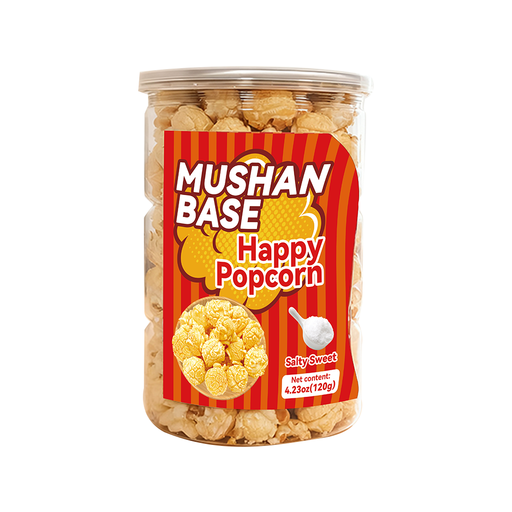
MUSHAN BASE Popcorn Sweet Salty Flavor, 120 g

MUSHAN BASE Popcorn Sweet Salty Flavor, 120 g

A good choice if you’re looking for ready-to-eat popcorn with a sweet and salty flavour.

The product information lists 6.2 g of protein and 27.1 g of sugars per 100 g.

Contains soya; the product information also states that it may contain gluten.

View at Joybuy
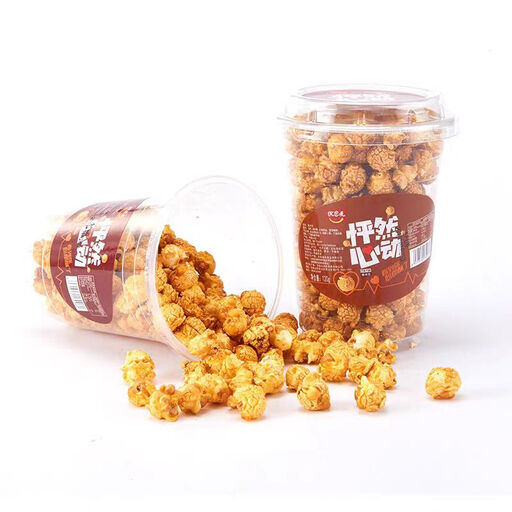
Yousmai Pengranxindong Popcorn Caramel, 120 g

Yousmai Pengranxindong Popcorn Caramel, 120 g

A good choice if you’re looking for ready-to-eat caramel popcorn.

The product information lists 5 g of protein per 100 g and milk as an allergen.

View at Joybuy
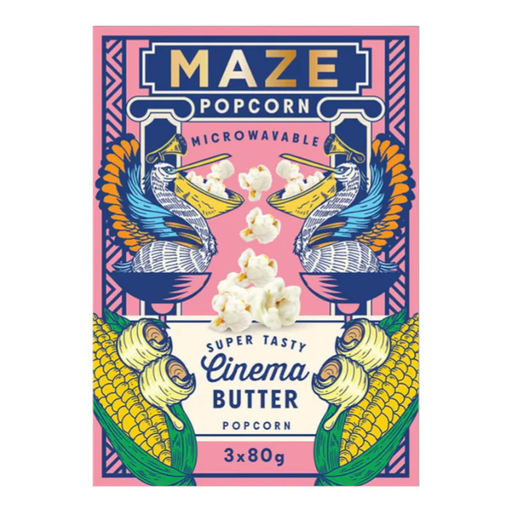
SNACK MAZE Popcorn Cinema Butter, 240 g

SNACK MAZE Popcorn Cinema Butter, 240 g

A good choice if you’re looking for butter-flavoured popcorn.

The product description specifies a 240 g pack and cinema-style butter flavour.

View at Joybuy
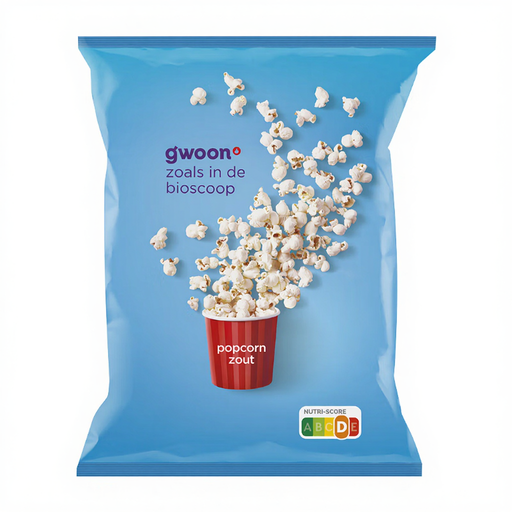
g'woon Salted Popcorn, 100 g

g'woon Salted Popcorn, 100 g

A good choice if you’re looking for salted popcorn.

The product information lists maize, sunflower oil, 1.5% salt and 8.3 g of protein per 100 g.

View at Joybuy
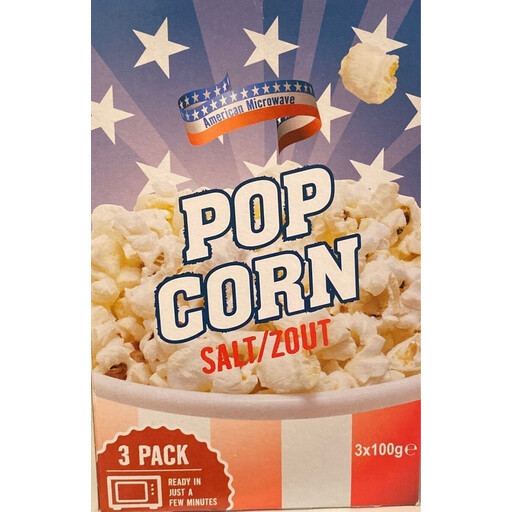
Pop Corn, 3 x 100 g

Pop Corn, 3 x 100 g

A good choice if you want to prepare popcorn in the microwave.

The product information warns that hot steam may escape when opening.

View at Joybuy

Frequently asked questions

Does more protein per 100 g also mean a lot of protein in my snack?

Not necessarily. Multiply the protein per 100 g by the weight of your portion, then divide by 100. The portion shown on a pack is a basis for calculation, not automatically a recommendation for your personal portion size.

Does a child need specialist protein products after every sports session?

You can’t work that out from general sports advice. The Netherlands Nutrition Centre says that recreational athletes don’t need specialist protein shakes or bars, and recommends a varied diet based on the Dutch Wheel of Five for children. This isn’t personalised protein advice for a child.

Can my child prepare microwave popcorn independently?

For Jumbo Microwave Popcorn Salt, Jumbo says an adult must supervise children preparing the popcorn. AH warns that the bag and steam from its microwave variety can be hot. Follow the instructions on the exact packaging.

Is popcorn suitable when younger children are eating too?

Bear the risk of choking in mind. The Netherlands Nutrition Centre lists popcorn as a food to take care with when feeding young children, and advises them to sit calmly while eating. This guidance doesn’t set a general legal minimum age.

How should I store an opened bag of popcorn?

For AH Salted Popcorn, Albert Heijn recommends storing it in a cool, dark, dry place and closing the pack securely after use. For other varieties, follow the storage instructions on the packaging.

Does a label such as ‘high in protein’ prove that popcorn contains a lot of protein?

No. The claim must comply with the applicable EU rules on nutrition claims. Check the nutrition information for the exact variety and consider the amount of protein per portion; the term alone doesn’t tell you how much you’ll actually eat.
