Compare the protein per serving with the energy, salt and ingredients, then consider whether the snack fits into what you eat on a working day. The Netherlands Nutrition Centre gives 6.3 grams of protein and 157 kilocalories for a typical 25-gram handful of unsalted peanuts; these are not product-specific values. A product labelled as containing protein is not, in itself, proof that you need it or that it provides enough nutrition for recovery.
Who is this choice relevant to?
People who exercise and work in an office
You want to know how a nut snack contributes to your protein intake on a working day when you also exercise. The Netherlands Nutrition Centre distinguishes between recreational sport and very strenuous exercise; ordinary foods and your overall diet still matter.
Everyday snackers keeping an eye on portions
You want to weigh up protein against energy, salt and how much you eat. Compare products based on the same quantity, then work out how that relates to your own portion. The Netherlands Nutrition Centre provides general nutritional information for unsalted peanuts, not for every branded product.
Office snackers looking for convenience
You want packaging you can reseal after a snack break, and ingredients that suit the way you use it. The ALDI Notenmix ongebrand product reviewed is described as resealable; this tells you nothing about its protein content.
What should you look for when choosing?
| What to consider |
What should you check when buying? |
Who should consider this most? |
| Protein per snack portion |
Compare protein figures on the same label basis and calculate the amount for your weighed portion. As a general reference, the Netherlands Nutrition Centre lists 6.3 g of protein and 157 kcal per 25 g of unsalted peanuts. |
If you’re considering a nut snack on a working day when you’re also training, you’ll want to know how much protein your portion contributes; around 36% of consumers prioritise protein for sport. |
| Portion size and nutritional balance |
Compare protein, energy, salt, sugar and saturated fat for the same quantity, then assess your own portion. |
If you snack regularly, you’ll want your portion to fit into your daily diet; around 29% of consumers prioritise nutritional balance and portion control. |
| Packaging and storage |
Check the pack weight, whether the packaging is resealable and the storage advice on the label. |
If you use the pack at the office for several snack breaks, you’ll want to be able to store it properly once opened; around 21% of consumers focus mainly on practicality and packaging. |
| Allergens and ingredients |
Read the ingredients and allergen information on the current packaging. Keep the label if you transfer the contents to another container. |
If certain peanuts or nuts aren’t suitable for you, you’ll need to check the ingredients in advance; around 14% of consumers prioritise suitability in relation to allergens. |
Common mistakes
-
Confusing protein per 100 g with protein per snack
A figure per 100 g doesn’t tell you how much protein you’ll get from the portion you actually eat. The Netherlands Nutrition Centre’s general example for 25 g of unsalted peanuts also contains 157 kilocalories.
Compare products using the same quantity, then calculate the amount for your own portion.
A larger portion means eating more of the product and taking in more energy.
-
Assuming a product name containing “protein” means you need recovery nutrition
A product name doesn’t determine whether a snack suits your sporting needs. The Netherlands Nutrition Centre says recreational athletes don’t need protein shakes or bars; that doesn’t make a nut snack essential recovery nutrition either.
Check the nutrition table and consider your usual diet. Don’t let a protein claim determine your choice on its own.
-
Assuming a recall warning applies to every product from that brand
Warnings may apply to a specific product and best-before date. Albert Heijn has issued a warning for AH Pinda’s extra groot gezouten in a tub with a best-before date of 04-11-2026. The Netherlands Food and Consumer Product Safety Authority (NVWA) issued a warning for Trader Joe’s cashewnoten ongezouten 170 gram with a best-before date of 23-09-2026.
Check the exact product name, packaging and date. Don’t eat the affected products, and don’t assume the warning applies to other varieties without evidence.
-
Transferring nuts to another container and throwing away the label
Without the packaging, it’s harder to check the product-specific ingredients, allergen information and storage advice.
Keep the original label or a clear copy showing the product name and best-before date. Follow the storage advice for that exact product.
Brands to compare
Duyvis
Duyvis Pinda’s Ongezouten is an option if you’re looking for unsalted peanuts from this brand.
- Duyvis describes these specific peanuts as salt-free.
- That product description doesn’t prove that they are classified as high-protein or have any effect on sports performance.
Albert Heijn
AH Ongezouten pinda’s are a supermarket own-brand option to compare with other peanuts.
- The product page confirms the product identity.
- Albert Heijn advises checking the current packaging, as product information can change.
Jumbo
The range includes products such as Noten Mix Ongezouten 200 g and Cashewnoten Ongezouten Voordeelverpakking 500 g.
- There are different mixes and pack sizes to consider.
- The term “value pack” doesn’t prove a lower price or higher protein content.
Lidl
Alesto is Lidl’s product range for nuts and dried fruit.
- The range includes nuts for snacking.
- Check the ingredients of a specific mix; the range description doesn’t give product-specific protein values.
ALDI
The range includes products such as TRADER JOE’S Proteïne notenmix and Notenmix ongebrand 200 g.
- The unroasted mix is described as containing hazelnuts, cashews, walnuts and almonds in resealable packaging.
- The name Proteïne notenmix alone doesn’t prove a specific protein value or a high-protein classification.
PLUS
PLUS Pinda’s ongezouten 250 gram is a specific supermarket own-brand option.
- The product page lists the product name and pack weight.
- PLUS notes that product information can change; use the current packaging to compare nutritional values.
Joybuy products for an office snack
These Joybuy products are options to compare when choosing a protein-focused office snack. Check the nutritional values per portion and the ingredients before you decide.
 No image available
Verse Extra Large Roasted Peanuts, 210 g
Roasted peanuts for anyone looking for a peanut snack at the office.
The nutrition table lists 26.0 g of protein and 0.02 g of salt per 100 g. The ingredients are 100% peanuts.
Contains peanuts and isn’t suitable for anyone with a peanut allergy.
View at Joybuy
 No image available
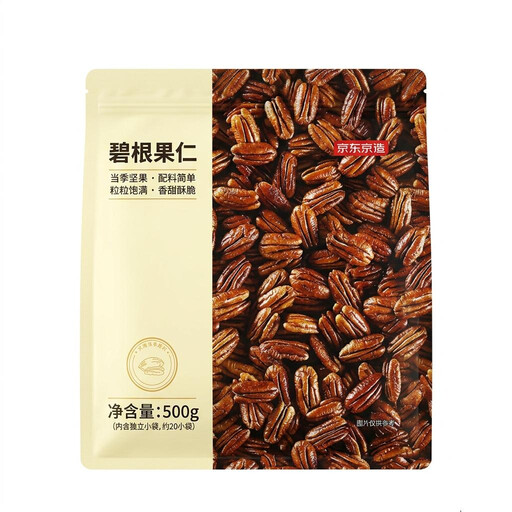
J.ZAO Pecan Halves, Whole Large Kernels, 500 g
An option to compare with peanuts if you’re considering pecans as an office snack.
The nutrition table lists 8.1 g of protein and 2.0 g of salt per 100 g. The ingredients include sugar and salt.
Contains pecans and isn’t suitable for anyone with a pecan allergy.
View at Joybuy
Frequently asked questions
How much protein is in a handful of unsalted peanuts?
The Netherlands Nutrition Centre lists 6.3 grams of protein per 25-gram handful. This is a general nutritional value, not a figure for every brand or variety; check the current product information for those details.
Do recreational athletes need special protein snacks?
Not necessarily. The Netherlands Nutrition Centre says recreational athletes don’t need protein shakes or bars. A nut snack isn’t essential recovery nutrition either; consider your usual diet and how much protein the portion you eat provides.
What does a protein claim on packaging mean?
A claim on a label or in commercial communications must comply with European rules. The European Commission states that only nutrition claims listed in the annex to Regulation (EC) No 1924/2006 are permitted. A product name alone doesn’t tell you how much protein a portion contains.
Where can you check allergens in prepacked nuts?
Read the allergen information on the packaging. According to the NVWA, this information must appear on the label of prepacked products. Keep the label or a legible copy if you transfer the nuts to another container.
Which recall warnings should you check?
For AH Pinda’s extra groot gezouten in a tub, check the best-before date of 04-11-2026; Albert Heijn has warned of possible metal fragments and is recalling the named product. The NVWA issued a warning for Trader Joe’s cashewnoten ongezouten 170 gram with a best-before date of 23-09-2026. Don’t eat the affected products. Check the exact product name and date, even if you’ve kept the packaging.


