A crisps-style snack with added protein can be a handy savoury option with your coffee after exercise, but judge it by the amount you actually eat. According to the Netherlands Nutrition Centre, most people who exercise do not need special protein products. So compare more than just protein: check portion size, energy, fat, salt and ingredients too.
Who might find this option useful?
People who exercise and take a savoury snack with them
If you want something convenient to eat around a workout, compare the protein in the portion you eat with what else you have during the day. The Netherlands Nutrition Centre says most people who exercise do not need special protein products.
Coffee drinkers who keep an eye on portions
A small packet makes it easy to see how much you’re getting. If you’re taking crisps from a larger pack, compare the nutritional information with the portion you serve yourself.
Shoppers who prefer plant-based options or check for allergens
Lentil and soya products differ in their ingredients and allergen warnings. Check the specific flavour and the current packaging before you choose.
What should you look for when choosing?
Start with the portion you’ll actually eat during your coffee break. Only then can you make a meaningful comparison of protein and other nutritional values across packs.
| What to consider |
What to check before buying |
Who is this important for? |
| Protein per portion |
Check the protein per 100 g and per packet or portion of your choice. |
After exercise, I want to know how much protein my savoury snack actually adds to what I eat that day. Around 42% of consumers put this protein contribution first. |
| Portion and nutritional value |
Compare the amount you eat with the stated portion; check energy, fat and salt too. |
With my coffee, I want to choose how much I take from a packet without mistaking the values per 100 g for those of my own portion. This is the most important consideration for around 33% of consumers. |
| Ingredients and allergens |
Read the ingredients list and warnings on the packaging of the variant you choose. |
If I’m looking for a plant-based snack or need to avoid certain ingredients, what’s in it matters more than the protein figure. This is the priority for around 25% of consumers. |
Common mistakes
-
Looking only at the protein claim on the front
A protein claim doesn’t tell you how much energy, fat or salt you’ll get in the portion you eat.
Compare the full nutritional information for the amount you’ll eat, not just the values per 100 g.
-
Treating a large bag as one portion
Albert Heijn lists AH Proteïne Crisps Sweet Chili in a 70 g pack, with a portion size of 25 g. So the values for one portion don’t describe the whole pack.
Pour out the amount you want to eat beforehand, or choose an individual packet if a measured portion is important to you.
If you eat the whole pack, you’ll get more energy, salt and protein than in the stated portion.
-
Assuming vegan or gluten-free means allergen-free
Albert Heijn describes the Sweet Chili variant as vegan and gluten-free, but also says it may contain milk, sesame seeds, soya and lactose.
Check the ingredients and allergen warnings on the packaging of the flavour you’re buying every time.
-
Assuming a flavour is available because it has a product page
A product listing may still be visible even when that flavour is no longer available online. Jumbo stated this for The Organic Crave Protein Chips Paprika & Onion.
Check current availability before buying. If you choose another flavour, compare its nutritional information and ingredients again.
Brands and product ranges to consider
Body&Fit
Body&Fit offers Smart Protein Chips in 23 g packets. For the variant shown, the brand lists 32 g of protein per 100 g and 7.4 g per packet.
- An individual packet makes the portion clear before you start eating.
- The variant shown contains soya protein, has 0.45 g of salt per packet and may contain gluten. Check the specific flavour separately.
Albert Heijn
AH Proteïne Crisps Sweet Chili is a lentil snack in a 70 g pack. For this variant, Albert Heijn lists 26 g of protein and 6.7 g of fibre per 100 g.
- The stated portion of 25 g gives you a guide to measuring out an amount from the larger pack.
- Although this variant is described as vegan and gluten-free, it may contain milk, sesame seeds, soya and lactose.
The Organic Crave
The Organic Crave Protein Chips Paprika & Onion is a 30 g packet made with red lentils. The product listing states 24 g of protein per 100 g and 7.1 g per packet.
- The individual packet makes it easy to keep track of how much you eat.
- Jumbo said this variant was no longer part of its online range. The listing also notes that it may contain milk and soya; check the current packaging and availability.
Joybuy products for your coffee break
These pumpkin crisps are a good fit for a savoury coffee break. Before considering them as a protein option, compare the nutritional information for the amount you eat.
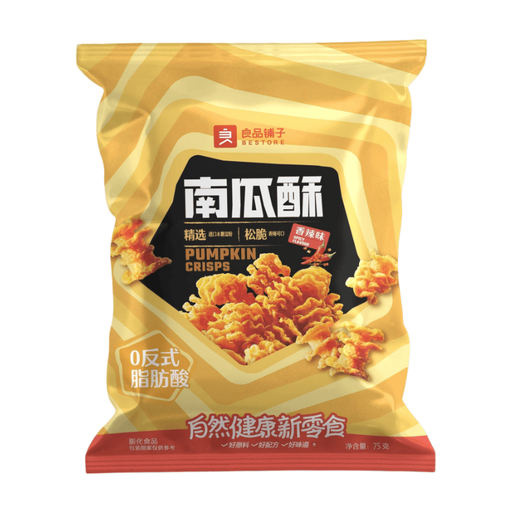 Image unavailable
Bestore Pumpkin Crisps, 75 g
Pumpkin crisps for anyone looking for something savoury to enjoy with their coffee. The pack contains 75 g; use the nutritional information on the packaging to decide what portion suits your snack break.
View at Joybuy
Frequently asked questions
Do you need protein crisps after exercise?
No, most people who exercise don’t need a special crisps snack. According to the Netherlands Nutrition Centre, most people who exercise do not need special protein products. So consider your overall diet rather than treating one snack as a recovery product.
Does a protein claim make crisps a suitable everyday snack?
A protein claim alone doesn’t tell you whether a snack suits your eating occasion. Compare protein, energy, fat, saturated fat, fibre and salt for the amount you actually eat.
Where can you check for allergens in protein crisps?
Check the current packaging for the specific flavour, including the ingredients list and any warnings about possible traces. The Netherlands Food and Consumer Product Safety Authority explains that allergens must be listed on labels of prepacked foods. A plant-based base doesn’t remove the need to check.
Does a protein claim prove that a snack helps with recovery?
No, a protein claim on a snack is not proof of a medical effect or recovery benefit. Nutrition and health claims for foods are covered by Regulation (EC) No 1924/2006. The Netherlands Food and Consumer Product Safety Authority states that medical claims are not permitted for foods.


