What should you look for when buying?
First decide how much you’ll actually want to eat on the go, then compare the nutritional information for that exact variety. This lets you consider protein, energy, packaging and allergen information together.
| What to consider |
What to check when buying |
Who is this important for? |
| Protein per portion |
Convert the value per 100 g to the weight you’ll take with you, and consider the snack alongside the rest of your diet. |
When I choose a snack around my training, I want to know what my own portion adds. Around 36% of consumers prioritise the actual protein contribution. |
| Everyday food choices |
Compare the ingredients, added salt and energy content of the exact variety; weigh out your own portion. |
If you’re mainly looking for a measured, unsalted snack to enjoy with your daily coffee, check the ingredients and portion size. This is the main priority for around 22% of consumers. |
| Taking it with you and storage |
Compare the pack weight with your travel portion and follow the storage advice after opening. |
When I take nuts with me for several days of travel, I want them to be easy to portion and store. This is the most important buying criterion for around 21% of consumers. |
| Cost per portion |
Compare the current price for the same quantity and include any delivery charges. |
For regular snack breaks, I want to know what my own portions cost, not just the price of a pack. Around 14% of consumers prioritise this consideration. |
| Allergen information |
If you have a relevant allergy, check the ‘contains’ and ‘may contain’ statements on the current label. |
If allergen information is the deciding factor in my choice, I check the exact variety before selecting it. This is the top priority for around 7% of consumers; allergen information is also relevant to others when their circumstances call for it. |
Brands and specific varieties
The information below applies to the product varieties named, not to each brand’s entire range. The nutritional values are taken from the labels; check the packaging of the variety you buy.
Duyvis
One specific example is Duyvis Unsalted Peanuts, 235 g.
- Duyvis lists 27 g of protein and 614 kcal per 100 g for this variety.
- The ingredients are peanuts and sunflower oil; the product information notes that it may contain traces of nuts. The nutritional value does not prove a sports or recovery benefit.
Albert Heijn
The range includes separate unsalted peanut and almond varieties that you can compare by ingredients and portion size.
- AH Unsalted Peanuts, 300 g, lists 25 g of protein per 100 g and 25 g portions. AH Unsalted Almonds, 190 g, lists 27 g of protein per 100 g and also specifies a 25 g portion.
- The nutritional values and allergen information apply to these varieties, not to the entire range.
Jumbo
The variety reviewed is Jumbo Unsalted Kingsize Peanuts, 350 g.
- Jumbo lists 25 g of protein per 100 g and 14 portions of 25 g.
- The name Kingsize doesn’t mean this variety provides more protein per equal weight than the AH peanuts reviewed.
Lidl
Lidl Netherlands lists a variety identified as Unsalted Almonds.
- The unsalted almond variety has been identified as a product.
- Use the label for this variety to check its nutritional values and portion size; values for other almond products aren’t necessarily comparable.
ALDI
Under TRADER JOE’S, the range includes roasted unsalted peanuts and a Protein Nut Mix, among other products.
- The peanuts are described as roasted and unsalted; the nut mix is available in salted or seasoned varieties.
- The name Protein Nut Mix does not, in itself, prove a higher protein contribution or a recovery benefit. Check the nutritional value and ingredients of the exact variety.
PLUS
The own-brand variety reviewed is PLUS Unsalted Peanuts, 250 g.
- For this variety, PLUS lists 27 g of protein per 100 g and 99% peanuts, with sunflower oil.
- The product information notes that it may contain cashew nuts; check the current allergen information on the packaging.
Products at Joybuy
This selection includes unsalted peanuts, almonds and nut mixes for a measured snack on the go. Compare the nutritional information for the exact variety with the portion you plan to take with you.
 No image available
g'woon unsalted peanuts, 250 g
Ideal for weighing out your own portion of unsalted peanuts to take with you; compare the nutritional information on the label with your portion.
Contains peanuts and may contain cashew nuts.
View at Joybuy
 No image available
g'woon raw unsalted almonds, 200 g
An unsalted almond variety that you can portion yourself; check the nutrition table for this variety to see how much protein it provides.
View at Joybuy
 No image available
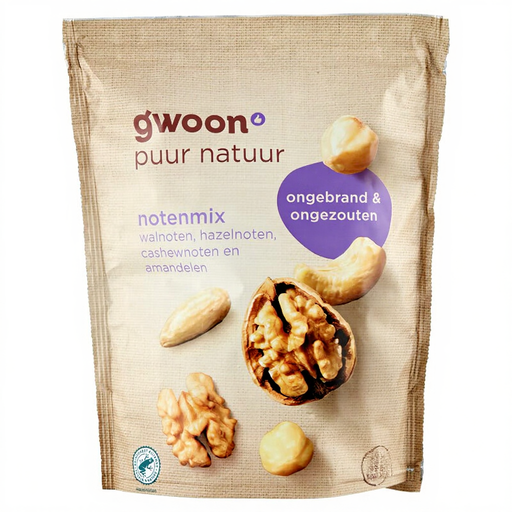
g'woon unroasted unsalted mixed nuts, 500 g
An unsalted nut mix for anyone who wants to take a variety of nuts with them; use the nutrition table to work out the protein contribution per portion.
View at Joybuy
 No image available
Verse roasted Extra Large peanuts, 210 g
Roasted peanuts for a measured snack on the go; check the nutrition table for this variety to work out how much your portion provides.
View at Joybuy
 No image available
g'woon peanuts in shells, 500 g
Bear in mind that peanuts in their shells take a little extra effort to eat, which may be less convenient when you’re having coffee on the go.
View at Joybuy
Frequently asked questions
Is a small handful of nuts enough for recovery after intense exercise?
Consider the portion alongside the rest of your diet and the circumstances of your exercise. After intense exercise, the Association of Sports Nutrition Experts Netherlands recommends 0.2–0.4 g of protein per kilogram of body weight within two hours, particularly if you’ll be exercising again soon. A 25 g reference portion of the Duyvis peanuts reviewed provides 6.75 g of protein; for someone weighing 70 kg, the recommended range is 14–28 g.
Do you need to buy special protein products if you exercise?
Not necessarily. The Netherlands Nutrition Centre says that most people who exercise don’t need special protein shakes or bars if they eat a healthy, varied diet. For nuts too, check the nutritional value of your actual portion and your overall diet, rather than relying on a protein claim alone.
How should you store an opened pack of nuts for several days of travel?
Keep nuts sealed and dry, and follow the advice on the product packaging. The Netherlands Nutrition Centre recommends storing them in a cool place, for example at 10–15 °C; Albert Heijn advises keeping the varieties mentioned in a cool, dark, dry place and sealing the pack properly after use.
Are peanuts a safe substitute for other nuts if you have an allergy?
Don’t assume they’re a safe substitute without checking the allergen information. The NVWA lists peanuts and nuts separately as allergens, and product labels may also mention possible cross-contamination. If you have a known allergy, check the current information for the exact variety and follow your personal allergy advice.
Does a product name containing ‘protein’ prove that nuts help you recover faster?
No. A product name doesn’t prove that it offers a recovery benefit. The NVWA distinguishes between nutrition claims about composition and health claims about effects, so compare the nutritional value of your portion and consider it as part of your overall diet.


