
Vandaag of morgen in huis

Kwaliteit gegarandeerd

Welkomstaanbiedingen ontgrendelen: GRATIS bezorging | Tot 80% korting | Gratis 30 dagen JoyPlus-proefperiode
Download de app
A protein drink may seem simple to choose, but the differences between a whey shake, protein drink, protein water and vegan soya drink are considerable. Eye-catching packaging tells you little about the protein content, shelf life or suitability for your intended use.
Three common pitfalls are:
First, decide when you want to use the drink. After exercising, many people choose whey protein or a protein shake with a clearly stated serving of protein. For use on the go, a ready-to-drink protein shake or protein water may be more practical. If you follow a plant-based diet, you could consider a vegan soya drink, but pay extra attention to the protein content and any added sugar.
A BCAA drink or pre-workout is not the same as a complete protein drink. These products may contain amino acids, caffeine or electrolytes, but sometimes provide little or no protein. According to the product information for Optimum Nutrition Amino NRG + Electrolytes, for example, one can contains amino acids and 100 mg of caffeine, but no significant amount of protein. That makes it a different type of sports nutrition.
Compare products based on an equivalent serving size. According to the product information, a 30 g sachet of Optimum Nutrition Gold Standard Whey provides approximately 24 to 25 g of protein. According to the product description, a bottle of Optimum Nutrition Protein Water contains 16 g of whey protein isolate per 350 ml bottle.
Plant-based drinks often contain less protein. According to the nutrition table, Alpro Soya Drink Original contains 3 g of protein per 100 ml. A 250 ml glass therefore provides approximately 7.5 g of protein. The drink can work well with breakfast, in smoothies or in coffee, but is not directly comparable with a concentrated protein shake.
Whey protein comes from milk. Check for milk allergens and see whether the product also contains soya ingredients, such as soya lecithin. According to the product information, Optimum Nutrition Gold Standard Whey sachets contain milk and soya and may contain traces of peanuts, egg, gluten and nuts, among other allergens.
For a vegan option, do not just look at the front of the packaging. Check that the product is actually labelled as vegan and read the allergen information. According to the supplied product information, Alpro Soya Drink Vanilla is lactose-free, gluten-free and vegan, but does contain soya.
Powder is compact and suitable for a gym bag, office or travel. However, you need a shaker and must mix the serving yourself. The Gold Standard Whey bundle contains individual sachets and a shaker; according to the description, you add 180 to 240 ml of cold water or milk per sachet.
A ready-to-drink beverage saves preparation time. After opening, it often needs to be refrigerated and consumed within a specified period. According to the product information, Nutramino Nutra-GO Shake contains 25 g of protein per 330 ml bottle. This is convenient for use on the go, but a box of bottles takes up more storage space than protein powder.
Do not use a shaker with hot or carbonated liquids if the product instructions advise against it. Also check the cap and seal regularly for signs of wear.
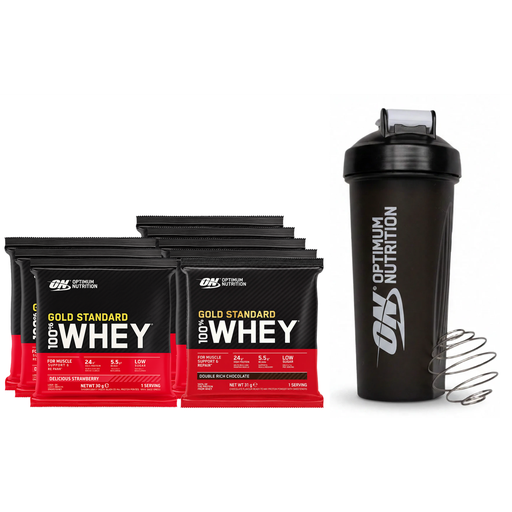
Why it suits this profile: Individual servings make it easy to try whey protein without immediately buying a large pack. The included shaker is useful at home, at the gym and on the go.
The serving size and nutritional values are clearly stated. This means you compare the protein per sachet rather than the pack size or marketing wording.
Approximately 24–25 g of protein per serving; sachets in strawberry and chocolate flavours; shaker with leak-resistant screw cap according to the product description.
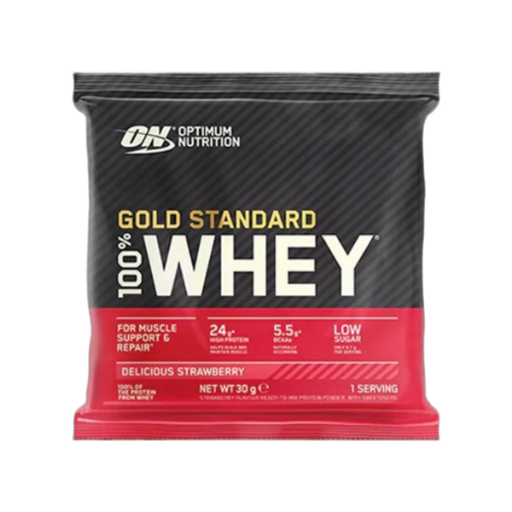
Why it suits this profile: This pack is designed for anyone who wants fixed servings and a familiar whey formula for work, travel or training away from home.
The contents of each sachet and the number of sachets are stated. You therefore do not need to weigh out servings yourself and can calculate the cost per serving straight away.
24 g of protein per serving according to the product description; 24 individual sachets; fewer than 120 kcal per serving according to the information provided.
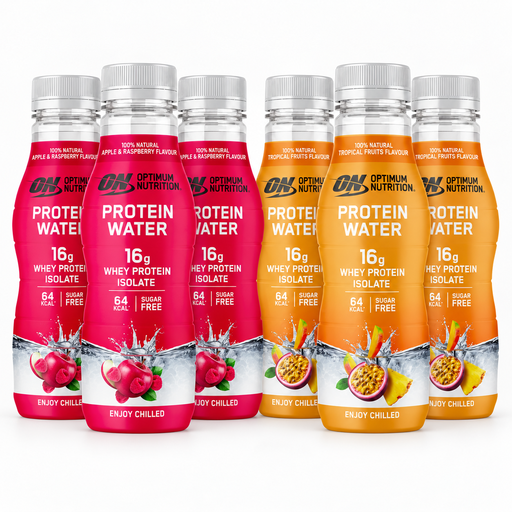
Why it suits this profile: A ready-to-drink protein beverage is ideal for anyone who does not want to mix powder after training or between appointments. The two fruit flavours add variety.
The protein content is stated per bottle. This lets you see immediately that this protein water has a different nutritional profile from a creamy shake.
Six ready-to-drink 350 ml bottles; 16 g of whey protein isolate per bottle; according to the product information, 64 kcal and 0 g of sugar per bottle.
We have put together a complete, up-to-date list of products that fully meet these strict selection criteria and the applicable European safety regulations.
A vegan soya drink is particularly suitable as an everyday drink, with breakfast or in a smoothie. According to the nutrition table, Alpro Soya Drink Vanilla contains 3 g of protein per 100 ml, but also 6.8 g of sugar per 100 ml. According to the product information, Alpro Soya Drink Original contains 3 g of protein and 2.5 g of sugar per 100 ml. If you want to limit your sugar intake, it is worth comparing the different varieties.
A whey shake generally provides more protein per serving, but contains milk and is not suitable for vegans. Check the current packaging, allergen information and preparation instructions with every purchase. Product information may vary by flavour, size or market.
No. You can also have a protein drink between meals, at breakfast or on the go. The most important thing is how much protein you consume throughout the day. A protein drink is a supplement, not a replacement for a varied diet.
Follow the use-by or best-before date on the packaging. After opening, a chilled drink should generally be consumed within the stated period. For example, the product information for Nutramino Nutra-GO Shake states that it should be stored at 0–7 °C and consumed within 24 hours of opening.
That depends on the price per serving, protein content and any delivery costs. Powder is often more efficient to store and allows you to measure out your own servings, while a ready-to-drink beverage saves time. So do not compare only the price per pack. Also compare the price per gram of protein and the preparation required.
