
People who exercise and want a savoury snack
After an intense workout, you’ll want to know how much protein a bag actually provides and how that fits in with what else you eat.


For a savoury post-workout boost, protein crisps are worth considering if the amount of protein in the portion you eat matches what you want to top up. According to the Netherlands Nutrition Centre, most people who exercise do not need special protein products. So compare ingredients, allergens and salt too, and don’t treat a small bag as a complete post-workout meal.
After an intense workout, you’ll want to know how much protein a bag actually provides and how that fits in with what else you eat.
You’re looking for a compact, savoury snack and comparing the protein per portion with how much you want to take with you and eat.
If you have an allergy or dietary requirements, check the ingredients and any warnings about traces of allergens for each flavour.
Decide whether your priority is extra protein or simply a savoury snack. If you’re aiming to increase your protein intake, compare the portion you’ll eat, not just the amount per 100 g.
Choose them when: You want a portable, savoury snack that also provides protein.
The trade-off: A small bag provides a limited amount of protein overall and won’t replace a complete post-workout meal.
Choose them when: Taste and the occasion matter more than extra protein.
The trade-off: According to Albert Heijn’s product information, Lay's Naturel and Pringles Original contain 6 and 6.2 g of protein per 100 g respectively. Don’t choose them to meet a protein target.
Choose them when: You want more than a small bag of crisps, or you already get enough protein from everyday foods.
The trade-off: Quark, yoghurt and tofu don’t have the same crunchy crisp format. However, the Netherlands Nutrition Centre lists foods like these as ways to get protein from everyday meals.
| What to consider | What to check before buying | Who it’s for |
|---|---|---|
| Protein per portion | Compare the protein per bag or portion you’ll eat with the amount per 100 g. | After exercising, I want to know how much protein my portion provides before choosing crisps as a snack. For around 50% of consumers, this protein content would be the main reason to buy. |
| Ingredients and allergens | For each flavour, check the ingredients and both the ‘contains’ and ‘may contain’ statements. | If I need to avoid an allergen, suitability comes before flavour; for around 30% of consumers, this check would come first. |
| Pack size and snacking occasion | Check the pack weight, number of portions and availability when you’re buying. | When I’m out and about, I want a savoury snack that’s easy to take with me, even if extra protein isn’t my main priority. Convenience and pack size would be the main reason for around 20% of consumers. |
A high protein content per 100 g doesn’t tell you how much you’ll get from a small bag. Albert Heijn lists 7 g of protein per 25 g portion for AH Proteine crisps paprika; Jumbo lists 7.1 g per 30 g bag for The Organic Crave Paprika & Onion.
Compare the amount you’ll eat with other foods that are practical for your snack or mealtime.
Salt levels can also vary between flavours: Albert Heijn lists 0.88 g of salt per 100 g for AH Proteine crisps paprika and 2.5 g per 100 g for Body & Fit Smart Protein Chips paprika.
Compare protein, salt, fat, energy and portion size on the same basis, for example per 100 g and per bag.
A dietary claim doesn’t rule out warnings about other allergens. For the protein crisps it looked at, Albert Heijn mentions possible traces of ingredients including milk, sesame and soya.
If you have an allergy, check the current ingredients and allergen information for the exact flavour you’re buying.
Albert Heijn lists 6 g of protein per 100 g for Lay's Naturel and 6.2 g per 100 g for Pringles Original. So the familiar crisp format alone doesn’t mean they’re a high-protein snack.
First decide whether you’re after a regular snack or one that contributes protein. If it’s the latter, check the protein per portion.
The AH Proteine crisps in paprika and sweet chilli reviewed here are lentil snacks in 70 g packs.
The Smart Protein Chips paprika reviewed here are a snack made with soya and potato.
The Protein Chips Paprika & Onion reviewed here are lentil crisps in a 30 g bag.
These lentil wafers are a crunchy alternative if you’re looking for a savoury snack; they aren’t crisps. Check the nutritional information if the protein content is a deciding factor for your post-workout snack.
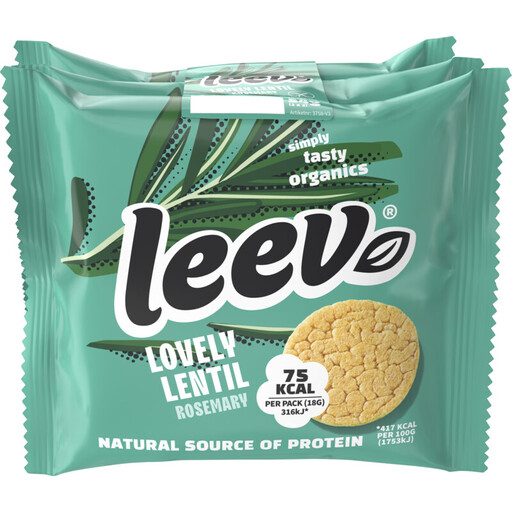 Image unavailable
A good option if you’re after a savoury lentil snack and wafers suit your snacking occasion better than crisps.
Pack size: 54 g. Check the nutritional information for the amount you eat and, if you have an allergy, read the current ingredients and allergen information.
No. You’ll need to check the protein content per portion you eat. The amount per 100 g is useful for comparing products, but a bag or portion may weigh less.
Not necessarily. According to the Netherlands Nutrition Centre, most people who exercise get enough protein from a varied everyday diet. If you fancy a savoury snack, you can take the protein per portion into account without treating the bag as a complete meal.
Yes, check the information for the flavour you choose. Albert Heijn lists soya as an ingredient in Body & Fit Smart Protein Chips paprika and possible traces of ingredients including milk, sesame and soya in the AH Proteine crisps it reviewed. Always check the current packaging.
No. A small bag is a snack with a limited amount of protein per portion. The Netherlands Nutrition Centre also points out that endurance sports require enough carbohydrates as well as protein, so don’t judge a snack on just one nutritional value.