
Families with limited space for positioning
You want to enjoy photos together on a suitably large screen, but can’t place the projector far from the wall. Measure the distance and image width before comparing models.


First, measure the distance to the wall and the available image width. A short-throw or ultra-short-throw projector may be suitable if you have little room to position it. Then consider the ambient light and check that your photo source will work through a supported connection or playback method. A short projection distance won’t solve those other issues by itself.
You want to enjoy photos together on a suitably large screen, but can’t place the projector far from the wall. Measure the distance and image width before comparing models.
You don’t want to view the slideshow only in a darkened room. Weigh the stated brightness against the light in the room and the image size you want.
You want to present photos from a laptop, phone or saved files. The connection and playback method you need will therefore affect your choice.
When choosing a projector for travel photos in a narrow living room, the available distance, ambient light, photo source and ease of setup all play a part.
| What to consider | What should you check? | Who is this important for? |
|---|---|---|
| Image width in a narrow room | Measure the distance from the lens and the usable image width. Compare both with the throw ratio and positioning details for the exact model. | If the projector can’t be placed far into the room, I want to know in advance whether I can achieve the image width I want. Around 36% of consumers give positioning space the highest priority. |
| Visibility in ambient light | Think about when you’ll be watching, how much you can darken the room and how large the image will be. Compare brightness specifications on a like-for-like basis. | If you don’t want to watch in a darkened room every time, pay particular attention to the light in the room and the image size you want. For around 29% of consumers, visibility in ambient light comes first. |
| Playback from your photo source | Check whether your chosen laptop, phone or storage method is supported. Look at both the function of the connection and the supported file playback options. | If I want to show photos from my own device, I want to know in advance which connection I’ll need. Around 21% of consumers give the photo source the highest priority. |
| Setup and maintenance | Check whether a fixed or portable setup suits you, and read the maintenance information for the exact model. | If you plan to move the projector regularly or want to spend as little time as possible on setup and maintenance, factor in these practical considerations. Around 14% of consumers put ease of use and maintenance first. |
A large stated image size doesn’t mean you can achieve it in your room from the distance available.
Measure the distance from the lens to the projection surface and the image width you want. Compare these with the throw ratio for the exact model.
A USB connection may be intended for power or servicing, and won’t necessarily play files.
Check the port’s function and which file formats or playback methods the model supports before relying on direct playback.
A projector that supports a particular input signal doesn’t necessarily have the same native image resolution.
Compare the stated native resolution of the exact model with your photo source and the image size you want.
BenQ offers short-throw and ultra-short-throw models, as well as the portable GV50, which has a standard throw ratio.
The GT2100HDR is a short-throw laser projector that Optoma describes as Full HD for the Dutch market.
Epson describes a Lifestudio range for the Dutch market with ultra-short-throw models, including the EH-LS970.
This selection includes projectors for situations where the projector needs to be positioned close to the projection surface or at a short distance from it. If you’re considering a specific product, also check that it has the required CE marking: the Dutch government lists electronic devices among the products that must carry a CE marking in the EU.
 No image available
A short-throw model to compare if you have limited setup distance; check whether the positioning details allow for the image width you want.
WXGA resolution; 3800 ANSI lumens; DLP; 3D.
 No image available
An option to compare if the projector needs to be positioned close to the projection surface; check the exact distance needed for your chosen image width.
 No image available
A short-throw model to compare for a room with limited setup distance; check the image width at the distance available in your home.
XGA (1024x768); 3600 ANSI lumens; DLP.
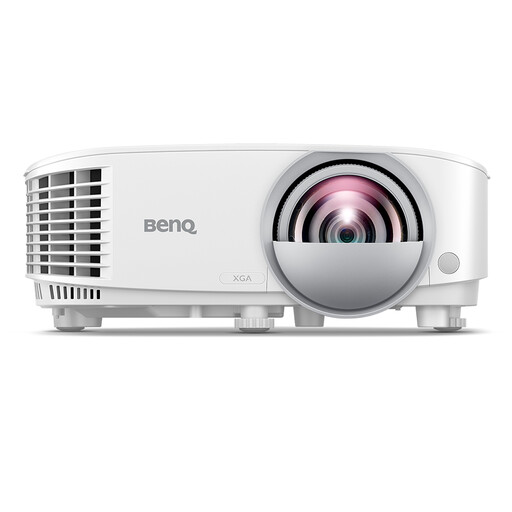 No image available
A short-throw model to compare if you can’t position the projector far into the room; make sure the setup will give you the image width you want.
XGA (1024x768); 3500 ANSI lumens; DLP.
 No image available
A short-throw model to compare if positioning distance is a key consideration; check the connections and presentation options for your photo source.
WXGA (1280x800); 3000 ANSI lumens; 3LCD.
Measure the distance from the lens to the projection surface and the available image width. The throw ratio is the distance divided by the image width; compare both measurements with the positioning details for the exact model.
No, it depends on the function of the port and the supported file playback options. BenQ lists the TH671ST’s USB-A port as a power supply, while the GV50 specifications mention a USB-A reader. Check what the model you choose can play from your files.
According to the Dutch government, when you buy from a business at a distance, you usually have a 14-day cooling-off period. Check the terms that apply to your purchase; the Dutch government says that the same rules don’t apply to online purchases from a private individual.
The retailer is your point of contact for your statutory rights if a product is faulty. According to the Dutch government, if a problem occurs within the first year, the retailer must show that the consumer is at fault. If they can’t, you’re entitled to a free repair or replacement.
Yes. The Dutch government lists electronic devices among the products that must carry a CE marking in the EU. This alone doesn’t confirm whether a particular item for sale or a specific version has been correctly marked.